
How to Make Chicken Stock from Rotisserie Chicken
If your family enjoys rotisserie chicken, save the bones next time you have it: You’ll be one step closer to making easy homemade chicken stock.
One of my first assignments in cooking school was to make chicken stock from scratch, which included roasting the bones first. It was laborious, but so worth it.
Later, I discovered the easy way, a shortcut to roasting bones: Rotisserie Chicken Stock.
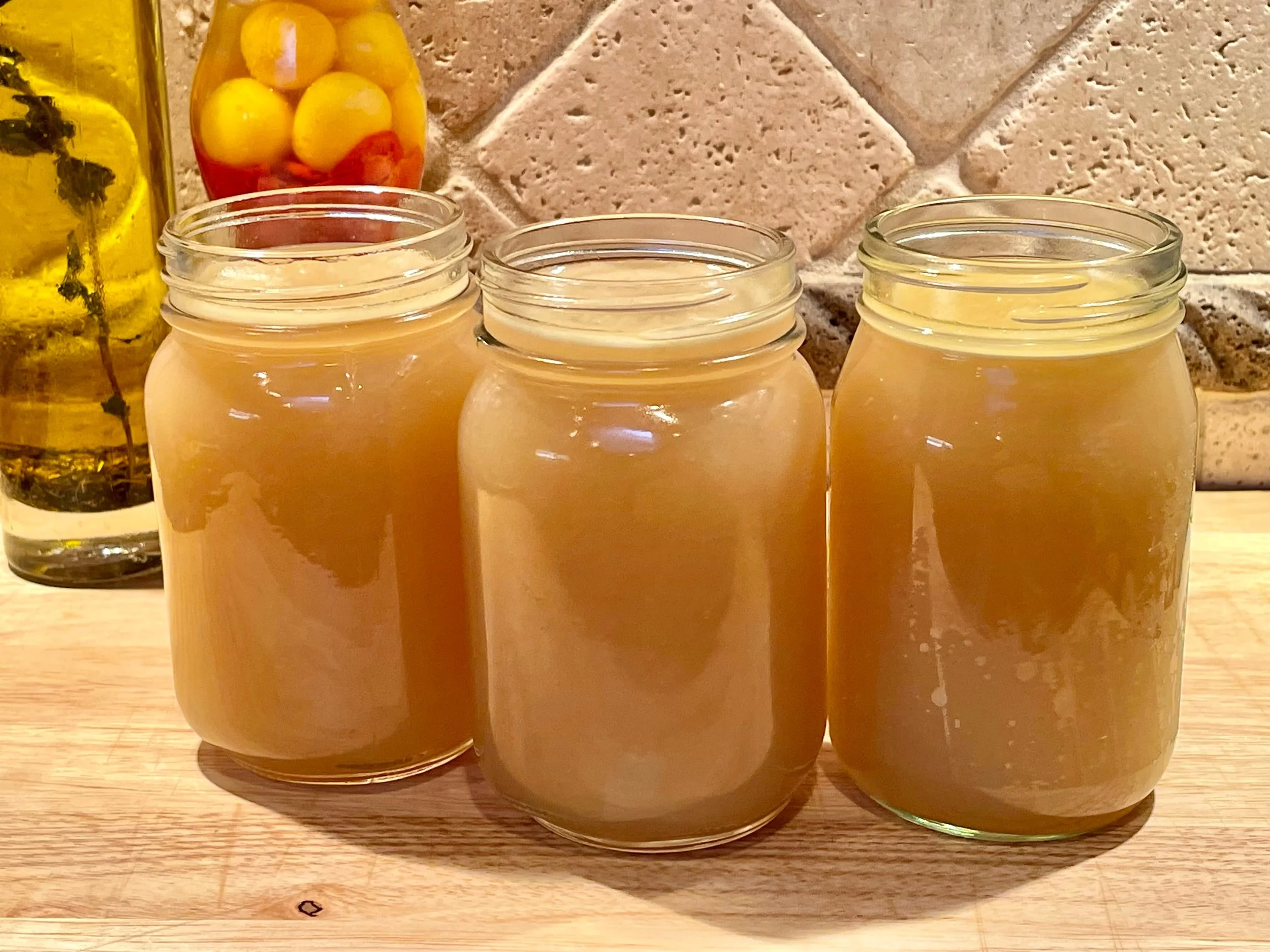
One of the best parts about making chicken stock from rotisserie chicken is that the bones are already roasted for you.
Eat the chicken as usual, or remove the meat from the bones for a future recipe. But use the bones, bits, and skin for stock.
Why bother? Rich, homemade stock is the easiest way to up your soup and sauce game! And making deeply flavorful stock this way also helps reduce food waste!
Ingredients (and Why They Matter)
While making Rotisserie Chicken Stock might sound like a chef-level technique, it’s actually incredibly simple. With just a handful of ingredients from the grocery store, a pot of water, and a little time, you can transform leftover bones into liquid gold for your kitchen.
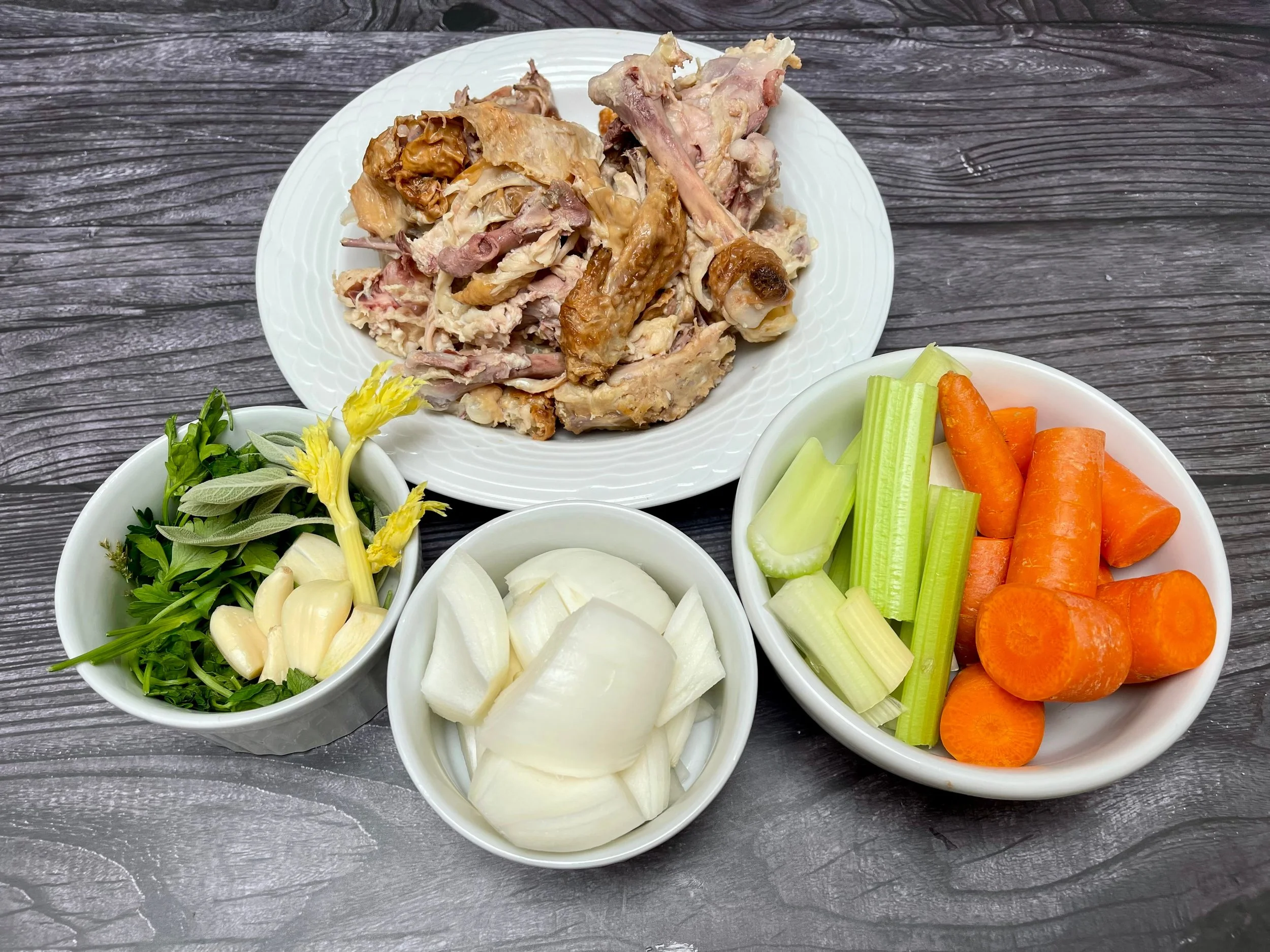
Rotisserie Chicken Bones
You can roast your own whole chicken, or use a store-bought rotisserie chicken. You don’t need to be a fanatic about cleaning off the bones. If some meat is stuck on the bones, just leave it. I also add the skin, which is full of flavor!
The leftover rotisserie chicken carcass is the foundation of the stock. As the bones simmer, they release collagen, minerals, and roasted chicken flavor, creating a rich and slightly silky texture.
If you’re wondering if you can make other types of stock with different types of animal bones, you can! The method is the same.
Water
Water acts as the extraction medium, pulling flavor from the bones and vegetables. Using about two quarts ensures the stock becomes flavorful without being too diluted.
Onion
Onion adds natural sweetness and depth. Even with the skin on, it contributes flavor and aroma to the finished stock.
Carrots
Carrots provide gentle sweetness and balance the savory flavor of the chicken bones. There’s no need to peel them or cut off the ends.
Celery
Celery adds subtle herbal notes and freshness, rounding out the flavor profile. Celery leaves are fine to add too. Don’t worry about any bruises or blemishes.
Garlic
I usually peel my garlic, but you don’t have to. Don’t mince it; it will be easier to remove whole garlic cloves when the time comes to do so.
Herbs
Fresh or dried herbs add aromatic complexity for a super flavorful stock. Classic choices include parsley, thyme, and bay leaf.
This homemade chicken stock recipe is very flexible. If you are making stock for a particular dish, you can adjust the flavor as you wish through your choice of herbs.
Rotisserie Chicken Stock Recipe
Makes 6 cups of chicken stock
Ingredients
1 rotisserie chicken carcass (bones and any leftover skin)
2 quarts water
1 yellow onion, cut in large chunks
2 carrots, cut in 3–4 pieces
2 celery stalks, cut in 3–4 pieces
6 garlic cloves
½ c of herbs (such as fresh parsley, thyme sprigs, and/or 1 bay leaf)
Step-by-Step Instructions
1. Prepare the chicken bones: Place the leftover rotisserie chicken bones and skin (optional) into a large pot. Break the carcass apart so that it fits better in the stock pot and releases more flavor during cooking.
2. Add the vegetables and herbs: Add the chopped onion, carrots, celery, garlic, and herbs to the pot with the chicken bones.
3. Pour in the water: Add about 2 quarts of water, making sure there’s enough water so the bones and vegetables are mostly submerged. Add a couple of additional cups of water if needed to mostly submerge all of your ingredients.
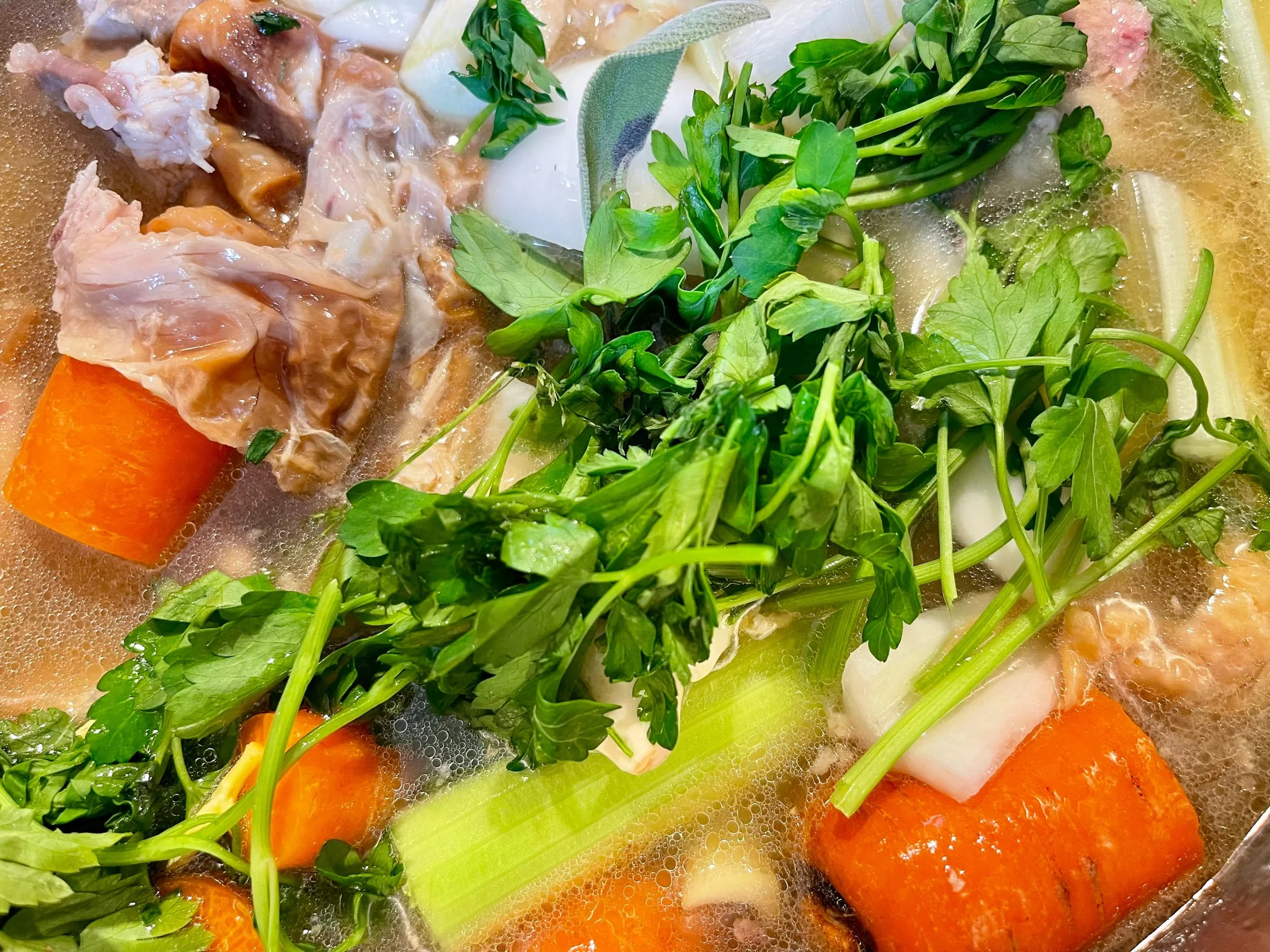
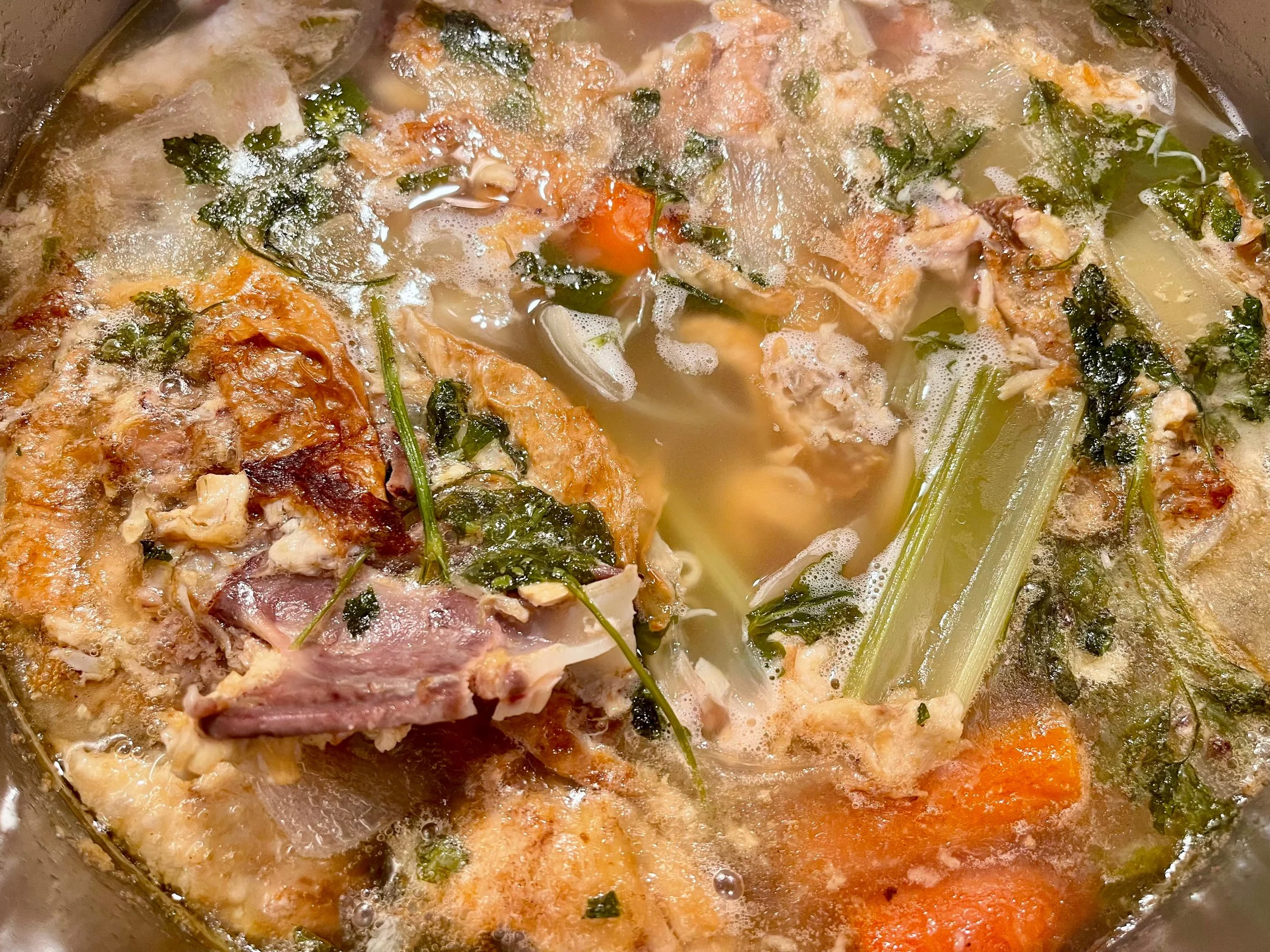
4. Bring to a gentle simmer: Place the pot over medium-high heat and bring it to a light boil. Avoid a prolonged rolling boil. Reduce the heat to low and let the stock simmer gently for about 2 to 4 hours. As it cooks, skim off any foam that rises to the surface.
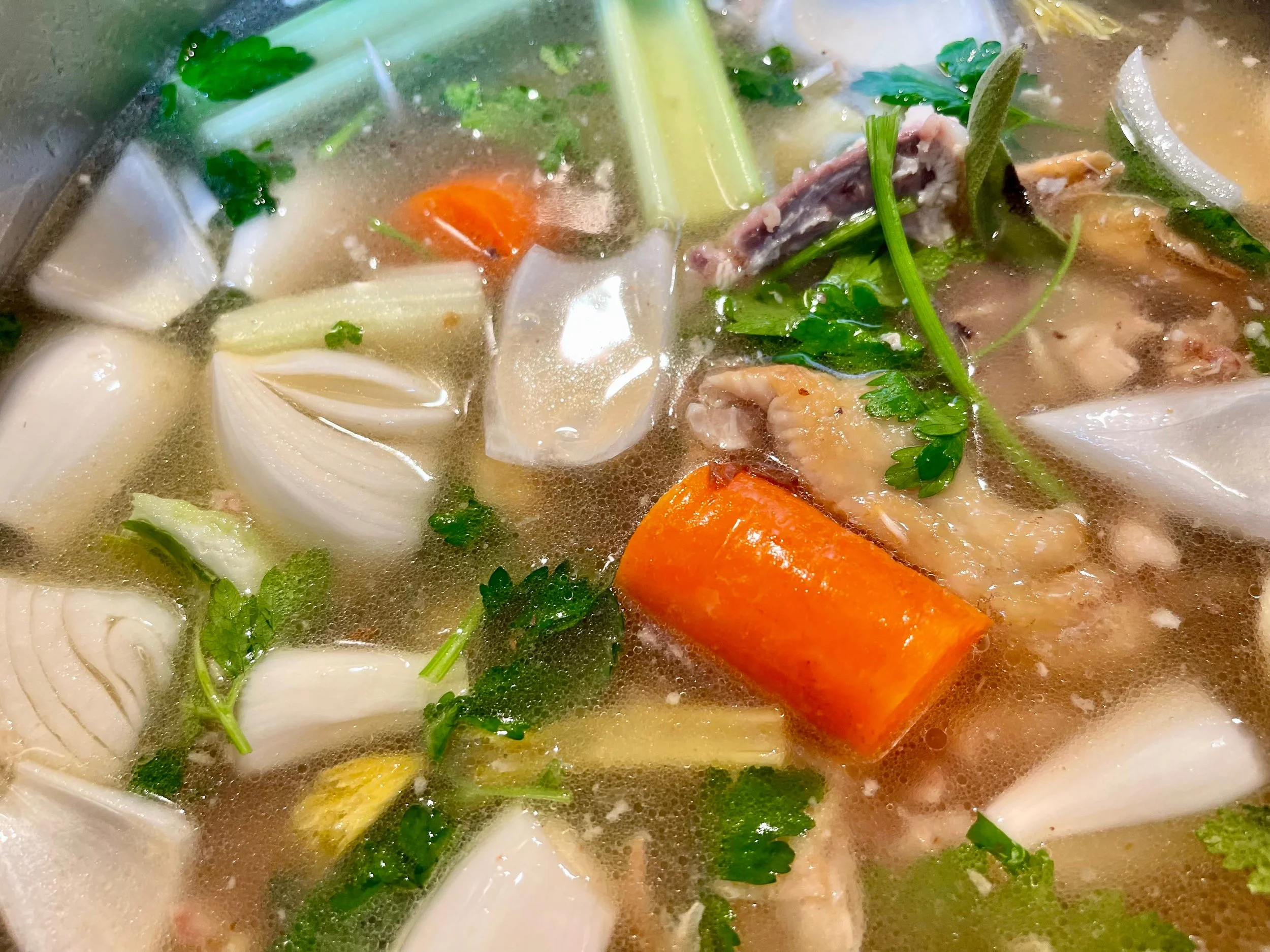
5. Reduce the stock: Once the stock is rich and aromatic and has reduced by approximately a third, remove it from heat.
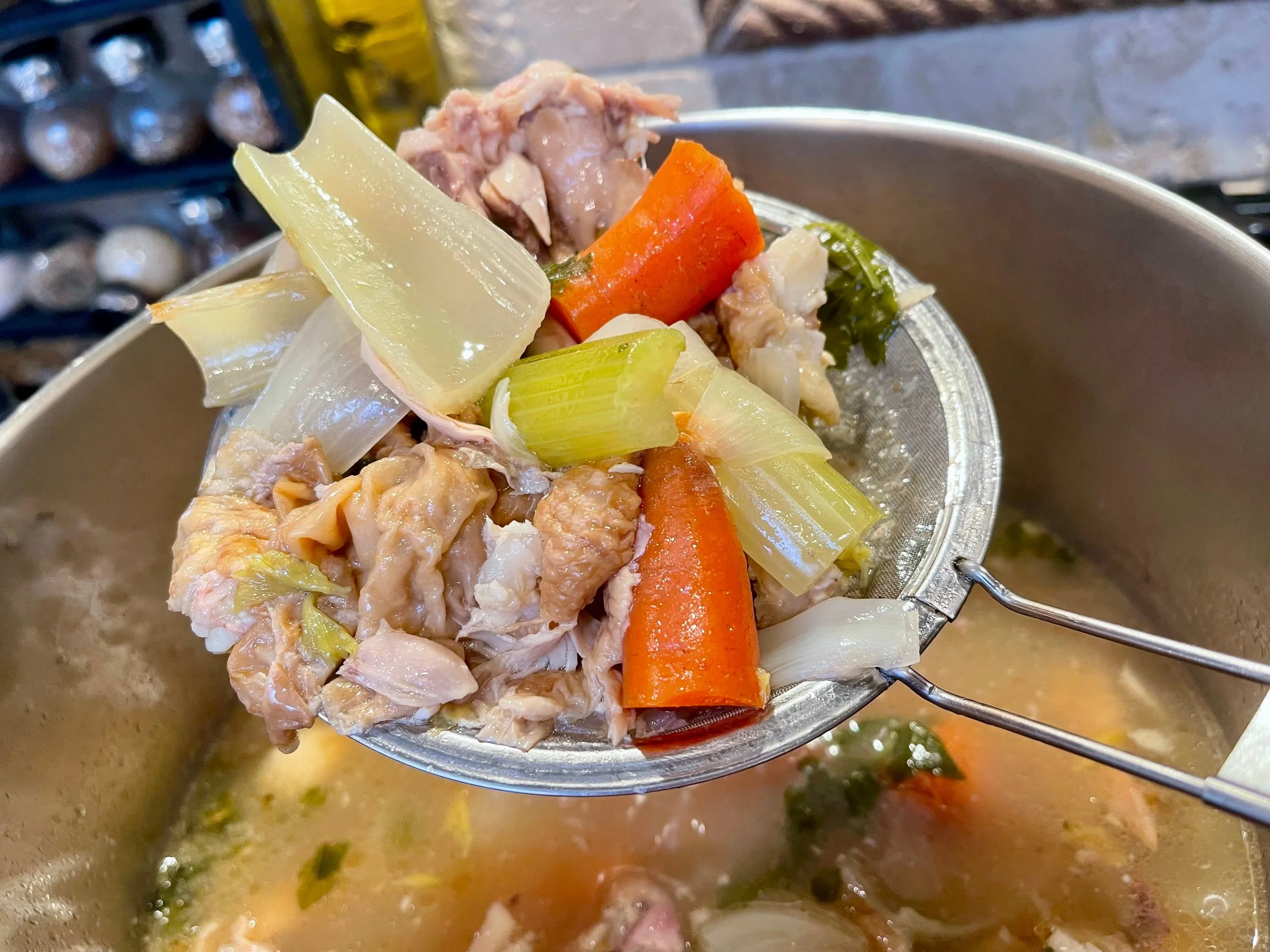
6. Strain the stock: Remove the large pieces with a slotted spoon or spider. Then pour the chicken stock through a fine mesh strainer into another pot, large bowl, or large pitcher, discarding the bones, herbs, and vegetables.
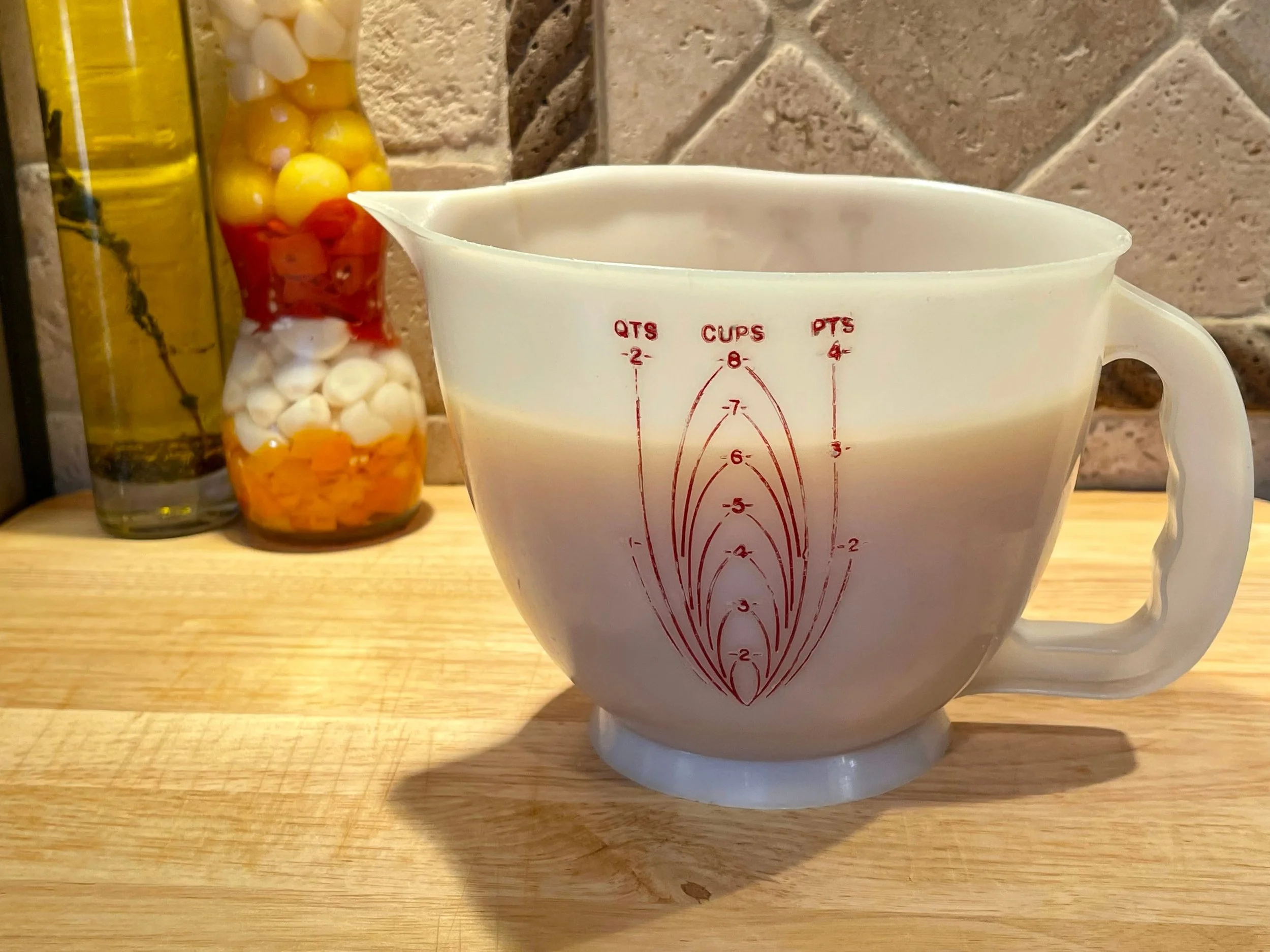
7. Cool the stock: Allow the stock to cool before storing. As it chills, you may notice a thin layer of fat rising to the top—this can be skimmed off if desired.
Uses for Rotisserie Chicken Stock
Homemade rotisserie chicken stock is one of the most versatile ingredients you can have in your kitchen.
Because it’s richer than most store-bought chicken broths and stocks, a little goes a long way in boosting flavor.
Use it in your favorite recipes that calls for chicken stock or chicken broth.
Here are some of the best ways to put your stock to good use:
Soups
This is the classic use for chicken stock, from chicken noodle soup to vegetable soup. Try your stock in one of these soup recipes:
White Pozole
Hanoi Healthy Ramen
Pumpkin Soup
Rice and Grains
Cook risotto, rice, quinoa, or farro in stock instead of water or broth for extra flavor. Here are some of my favorite grain recipes:
Bulgur Wheat Salad
Lebanese Tabbouleh
Lemon-Garlic Prawn Risotto
Sauces and Gravies
This homemade stock has so much flavor! It’s a great base for pan sauces, pasta sauces, or gravy. Try using your stock for these:
Braised Vegetables or Meats
Use chicken stock as the cooking liquid for slow braises. I love it in my Chicken Cacciatore recipe.
Once you start using homemade stock, you’ll notice how much more flavorful your everyday cooking becomes.
Storing Chicken Stock
Proper storage helps you always have homemade stock ready when you need it.
Refrigerator
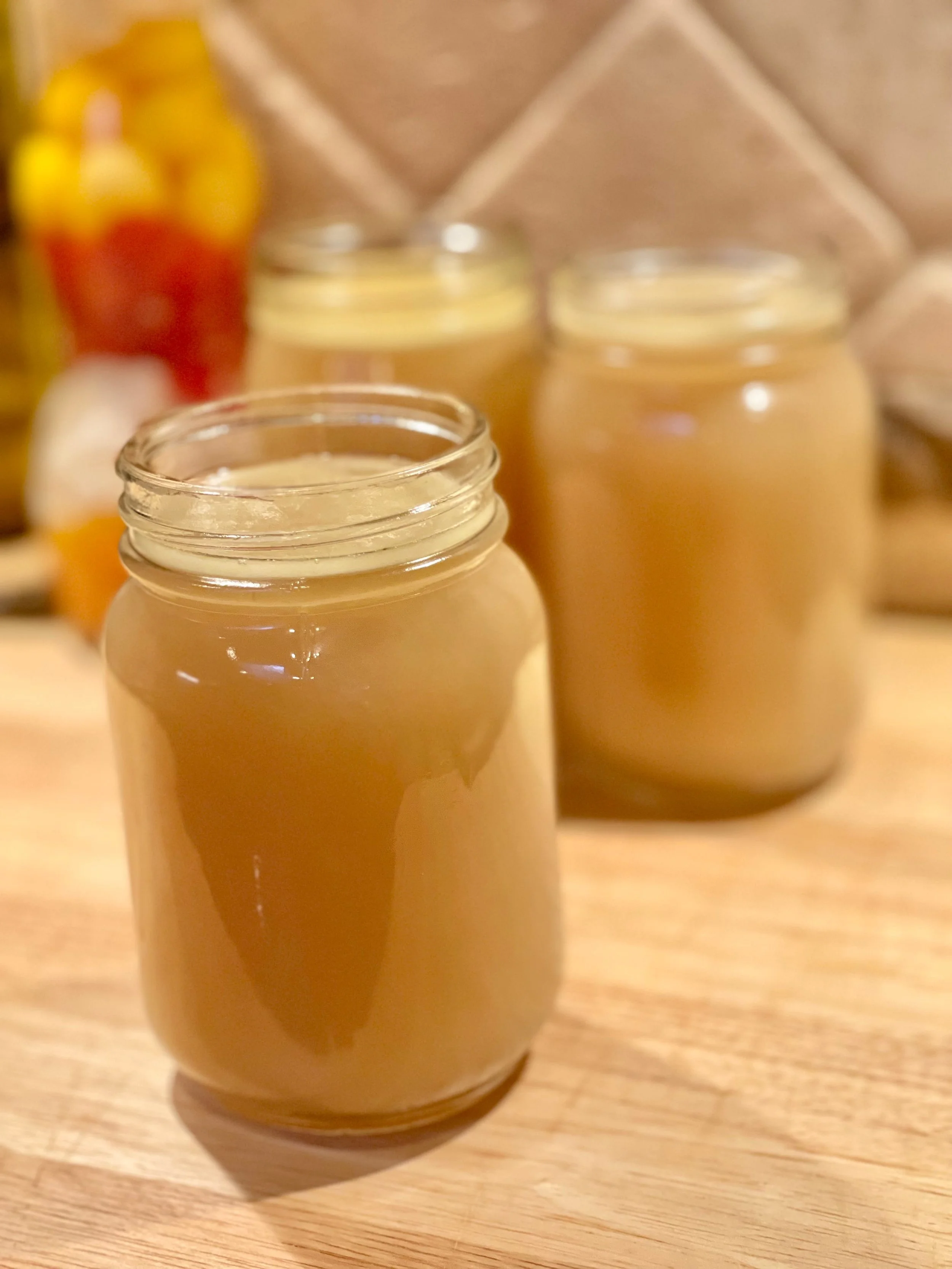
Store chicken stock in an airtight container in the refrigerator for up to 4 days. I find mason jars work well, but you can use any glass jar with a secure lid.
Freezer
Chicken stock freezes beautifully. Pour it into freezer-safe containers or ice cube trays and freeze for up to 3 months. Once frozen, transfer cubes to a freezer bag for easy portioning.
Pro Tip: Freeze stock in 1-cup portions so you can quickly grab exactly what you need for recipes.
FAQS
What can I make with the meat from the rotisserie chicken carcass?
Use the chicken meat for any recipe that calls for cooked chicken, like chicken salad, chicken pot pie, Chicken Mulitas, or Chicken Parm Panini.
What is the difference between chicken broth, bone broth, and chicken stock?
While the names are often used interchangeably by home cooks, the main differences are what part of the chicken is used, the level of seasoning used, and how long the mixture is cooked. Here’s a quick glance at what’s what if you’re deciding which to make.
Homemade chicken broth is the lightest of the three, meat-based, seasoned well, and quick to make (45 minutes to 2 hours).
Homemade chicken stock is bone-based with a richer body and flavor than broth without lots of seasoning. It takes longer to make (2–4 hrs.) than the clearer chicken broth.
Homemade bone broth is an extra-long-simmered stock; it can take 12 hours or longer. Usually, apple cider vinegar is used to extract the amino acids from the bones and create a very concentrated, gelatin-rich texture. The final product can end up looking and feeling more like Jello than traditional broth.
Can I make Rotisserie Chicken Stock in a crock pot?
Yes, if you prefer a crock pot, slow cooker, or instant pot, the recipe and method is the same. However, you may need to adjust the times depending on your pot.