
Classic Chicken Saltimbocca Made Easy With Leftovers
If you’ve ever eaten your way through Rome, you’ve probably met saltimbocca, and you’re probably still thinking about it.
This tasty Italian dish screams special occasions, yet I routinely make it on busy weeknights. It looks fancy—but my easy chicken saltimbocca takes less than 30 minutes to prepare!
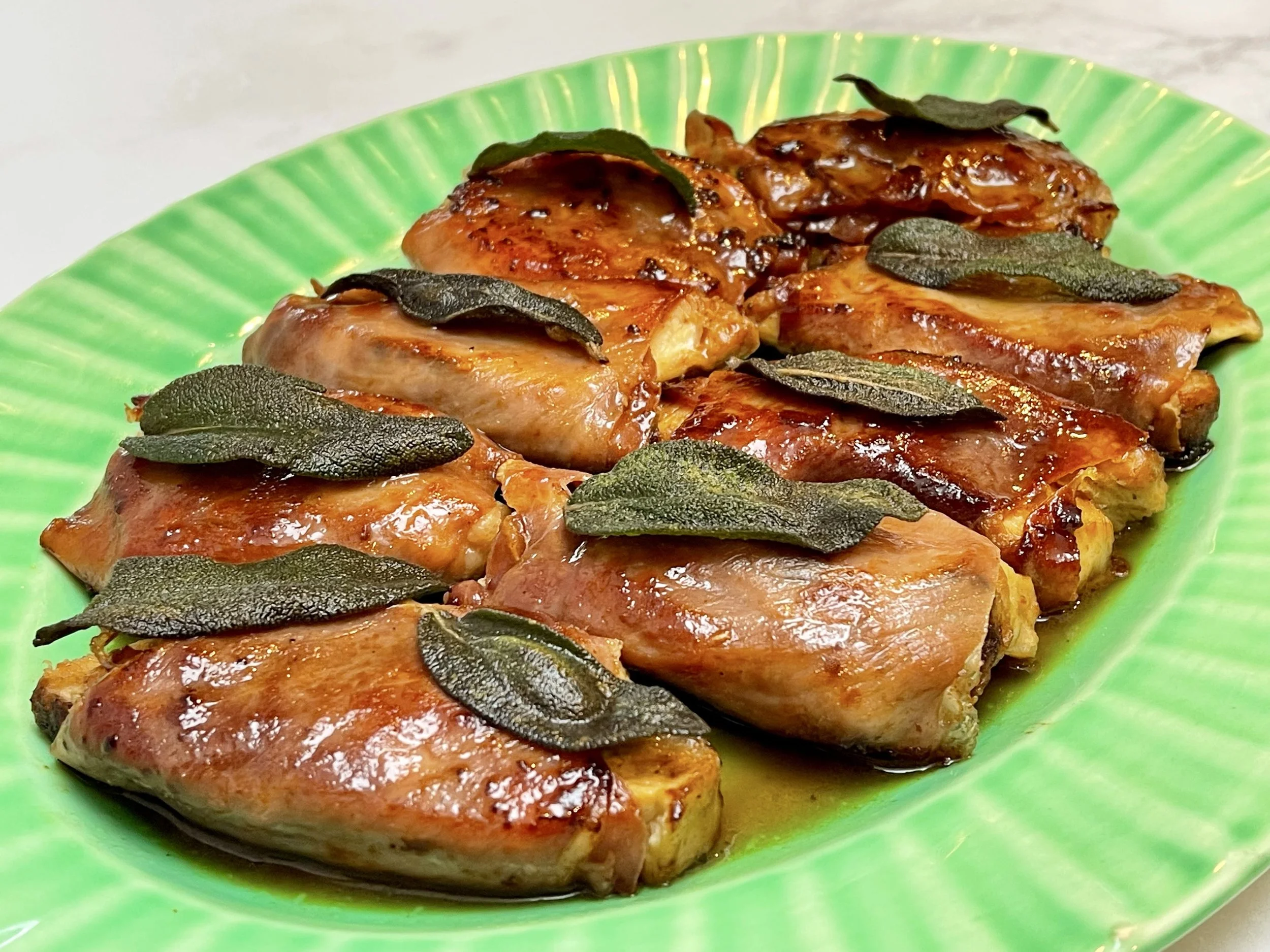
What Is Saltimbocca?
Saltimbocca alla Romana is a traditional Roman dish of thin veal cutlets topped with prosciutto and a fresh sage leaf, pan-fried, then finished with a buttery white wine sauce.
The name of this Italian classic literally means “jumps in the mouth,” because the flavors are so lively and immediate. Salty prosciutto, earthy sage, rich butter, and bright wine all hit at once. It’s simple, fast, and completely irresistible.
I’ve been to Rome many times, and on my last trip I stayed for a whole month. That gave me time to eat like a local, wandering from neighborhood trattorias to market stalls and back again.
Saltimbocca showed up on menus everywhere, right alongside the other classics I wrote about in my guide to famous Roman dishes. Every version I tried reminded me why Roman cooking is so beloved: a handful of great ingredients, treated with respect, and nothing fussy.
Why I Make Chicken Saltimbocca
I rarely have leftover veal cutlets (OK, more like never), so I adapted the traditional recipe for chicken. And instead of laying the prosciutto on top, I roll it around pieces of leftover chicken. Truth be told, I prefer this rolled method because you get prosciutto in every single bite.
This preparation is also a great way to turn last night’s roast chicken or rotisserie chicken into something that feels special. Since the chicken is already cooked, all you’re really doing is crisping the prosciutto and building a quick pan sauce.
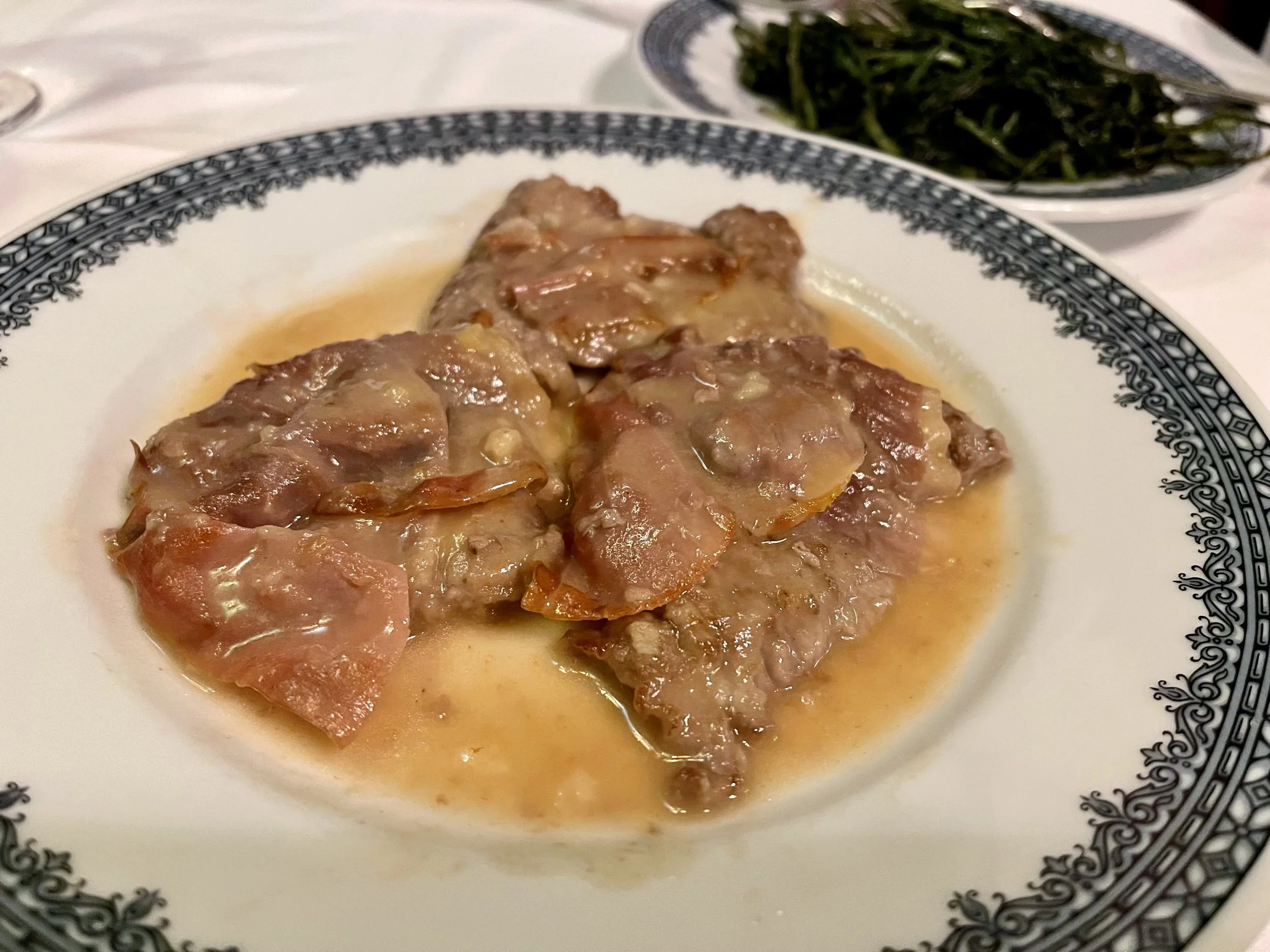
A traditional Saltimbocca alla Romana at Piperno in Rome.
Chicken Saltimbocca Ingredients
Like most Roman cooking, saltimbocca relies on just a few ingredients, so I’m particular about each one. Here’s why I use them, how to pick the best, and what to swap if you need to.
Chicken
The chicken is the canvas for all those big flavors, so you want pieces that are tender and evenly sized. Leftover roast chicken, rotisserie chicken, or grilled chicken breast all work beautifully.
If your chicken is on the bone or in large pieces, cut it into pieces about 1 inch by 2 inches and about ½-inch thick. If you have chicken tenders or finger-sized chicken strips (use 2 per roll), go with those. White meat gives the classic look, but thigh meat stays extra juicy if that’s what you have on hand.
Want to make saltimbocca with raw chicken? Pound boneless breasts to about ½-inch thick and see the FAQs below.
Prosciutto
Prosciutto is the star here. Its saltiness seasons the chicken and its fat crisps up in the pan, which is where the “jump in your mouth” magic comes from.
Look for prosciutto di Parma or prosciutto San Daniele, sliced paper thin. If you can, have it sliced fresh at the deli counter, and ask them to lay parchment between the slices so they don’t tear when you separate them. You’ll need about 1 slice for every ounce of chicken.
If prosciutto is unavailable, thinly sliced ham or speck can be substituted.
Fresh Sage
Sage is the classic herb in saltimbocca, and there’s nothing quite like the taste of crispy fried sage (I always make extra).
Choose large, bright green leaves with no dark spots or wilting. Not only are bigger leaves easier to fry and handle, but they’ll cover more of the chicken.
Always use fresh sage here; dried sage won’t crisp and tastes dusty. If you need an alternative, use chopped fresh rosemary and toast it in the dry pan without the butter.
Dry White Wine
Wine deglazes the pan and lifts all those browned prosciutto bits into the sauce, adding brightness to balance the richness of the butter.
Choose a dry, crisp Italian white like Pinot Grigio, Frascati (a Roman favorite), or Vermentino. A good rule: Only cook with a wine you’d happily drink. If you don’t have an Italian wine, sauvignon blanc or a light chardonnay will work.
For an alcohol-free version, use extra chicken broth with a squeeze of fresh lemon juice.
Chicken Broth
Soaking leftover chicken in broth will keep it moist so it doesn’t dry out when it hits the pan a second time.
The broth then becomes the base of your sauce. Use low-sodium broth, because the prosciutto already brings plenty of salt.
Homemade chicken stock is wonderful if you have it. Vegetable broth also works in a pinch.
Butter and Extra Virgin Olive Oil
Butter gives the sauce its silky, rich finish, while olive oil raises the smoke point so the butter doesn’t burn while the sage and prosciutto crisp.
This is one time I use unsalted butter so I can control the salt. I also recommend using a good-quality extra virgin olive oil. If you’re dairy-free, use all olive oil and finish the sauce with a little extra oil instead of butter.
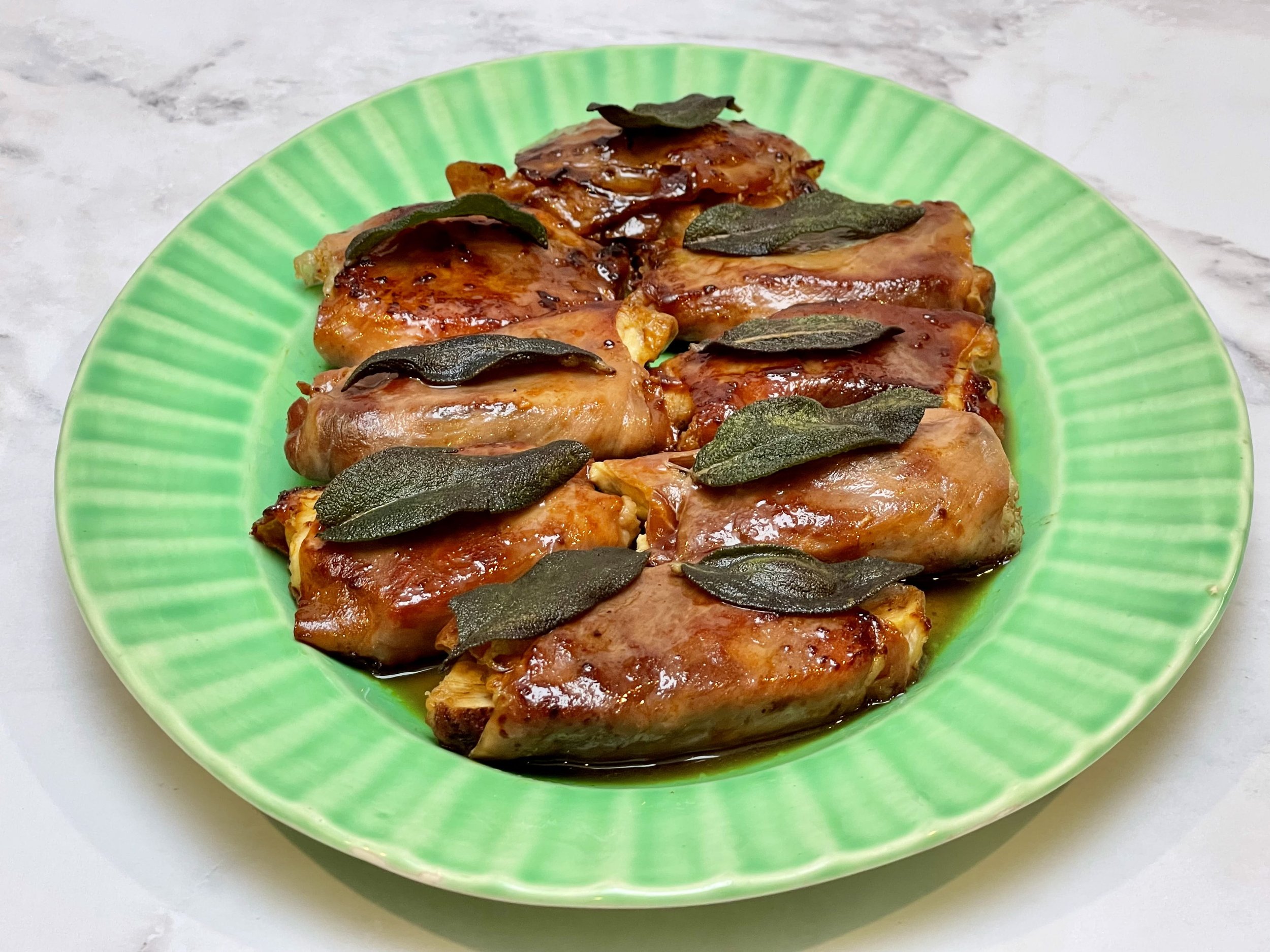
Chicken Saltimbocca Recipe
Serves 4
Prep time: 10 minutes
Cook time: 12 minutes
Total time: 22 minutes
Ingredients
8 oz. cooked chicken, cut into 1-inch by 2-inch pieces about ½-inch thick
1 cup low-sodium chicken broth
1 tablespoon unsalted butter, divided into 3 teaspoons
1 tablespoon extra virgin olive oil, divided in halves
8 to 10 large fresh sage leaves
8 thin prosciutto slices
½ cup dry white wine
Freshly ground black pepper, to taste (optional)
Instructions
1. Soak the chicken. In a medium bowl, add the chicken to the chicken broth and set it aside to soak for about 10 minutes while you fry the sage.
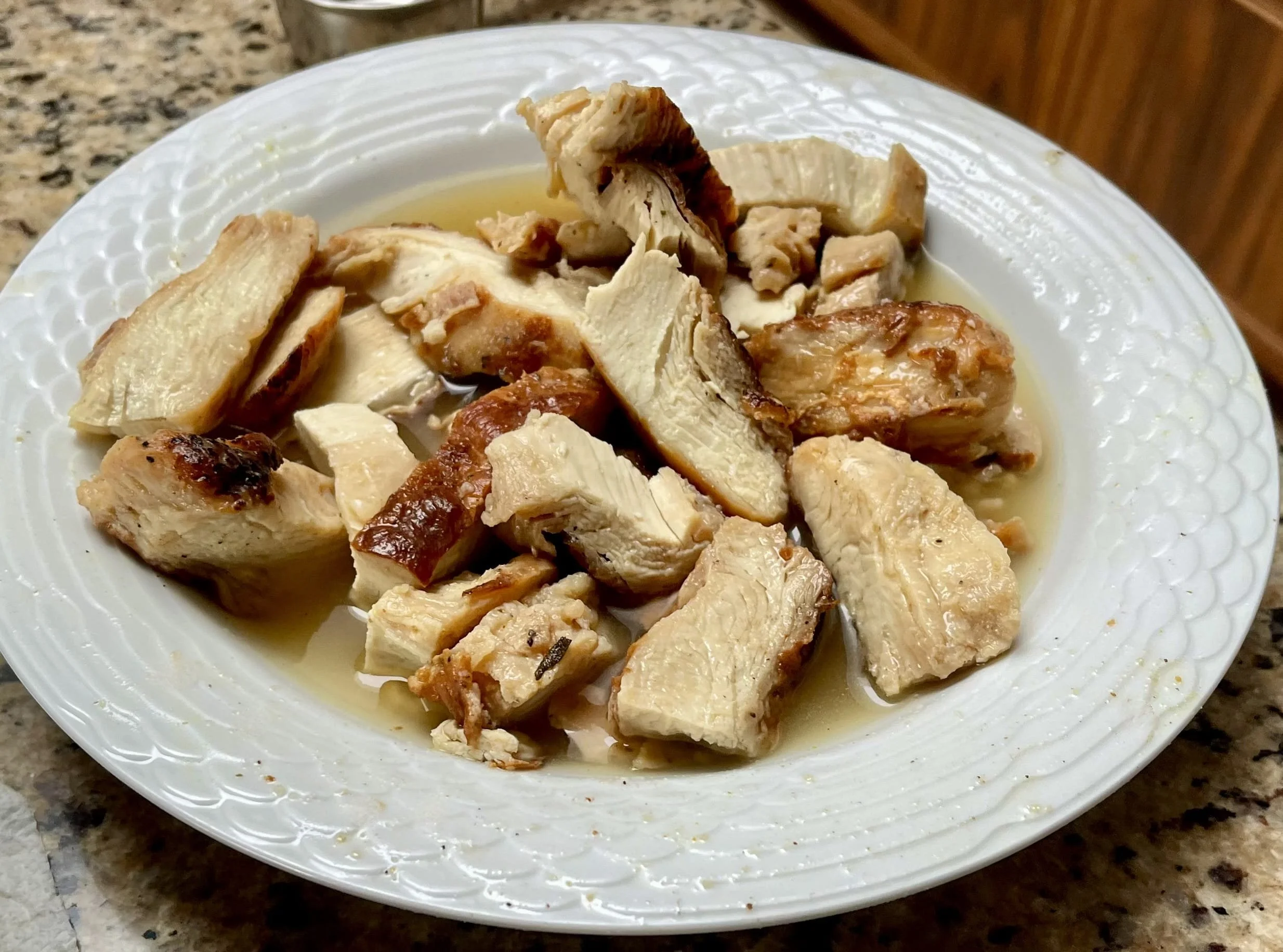
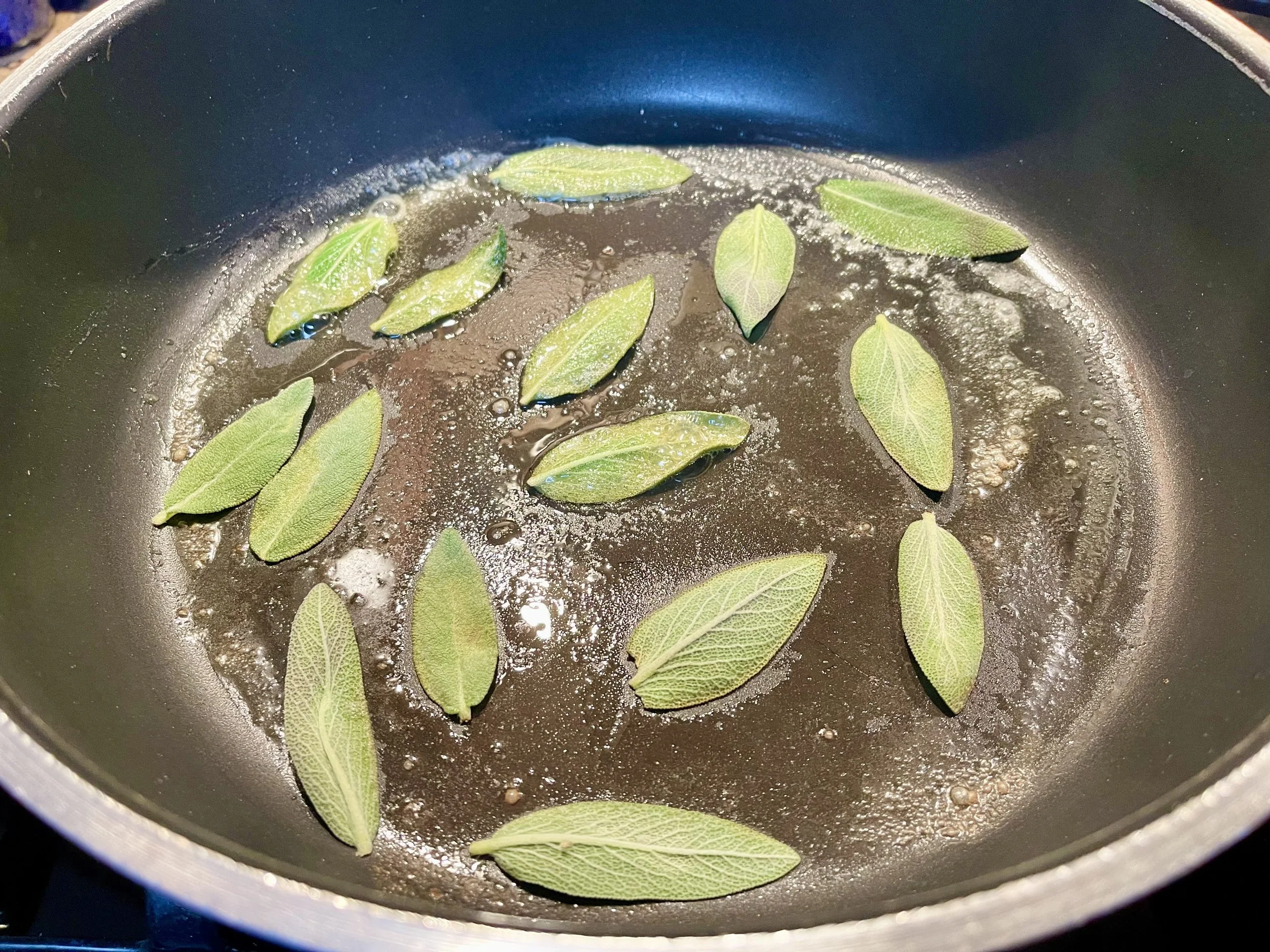
2. Fry the sage. In a large frying pan or large skillet, melt 1 teaspoon of butter in half of the olive oil over medium-high heat, and stir together.
Add the sage leaves and cook until crispy, about 1 minute on each side. Remove the leaves from the pan, gently place them on a plate covered with a paper towel, and set aside.
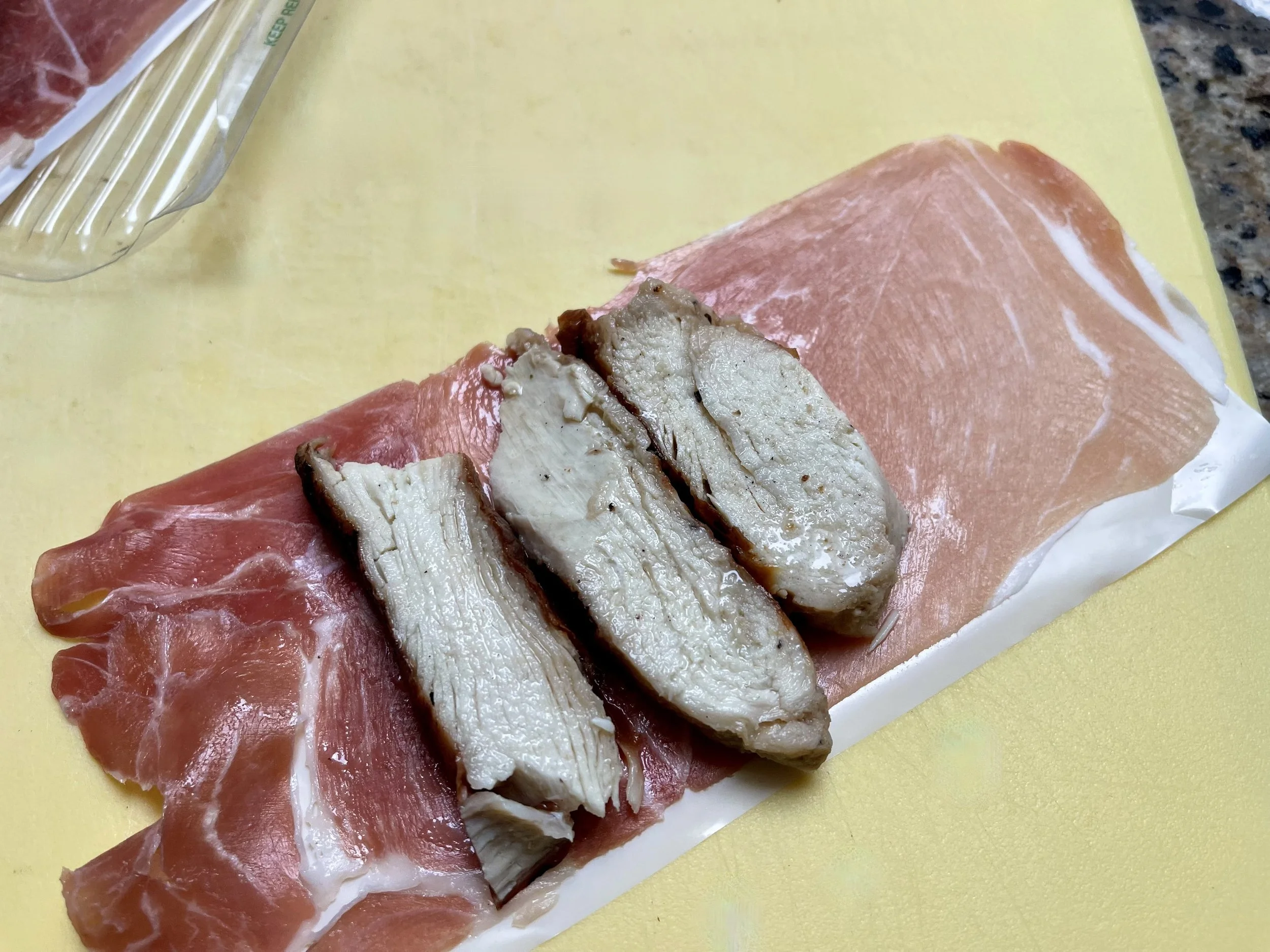
3. Roll the chicken. Strain the chicken, saving the broth. Lightly pat the chicken dry. Roll each portion of chicken in one slice of prosciutto, keeping the rolls as flat as possible so they cook evenly.
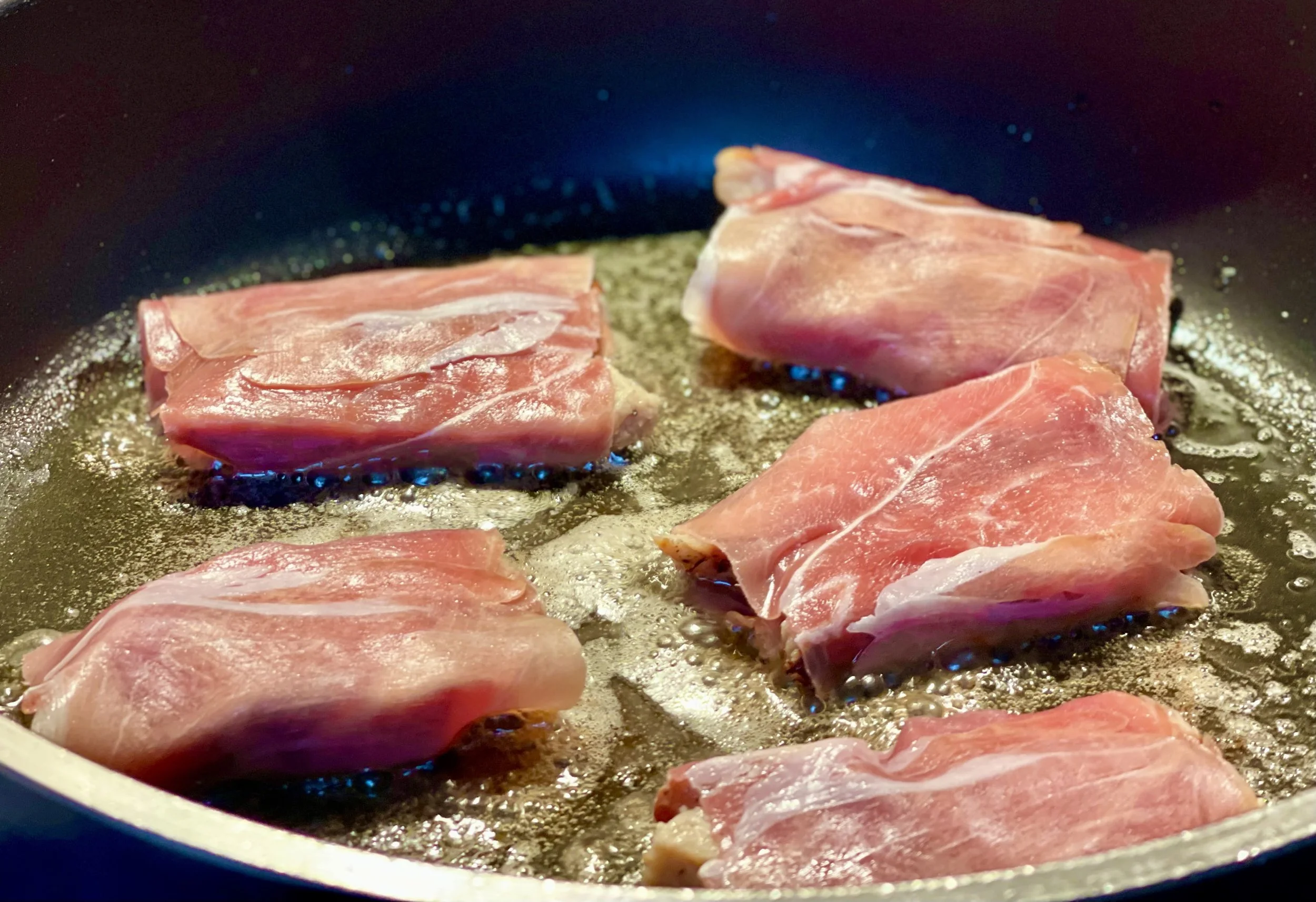
4. Crisp the prosciutto. Lower the temperature to medium heat. Melt another teaspoon of butter and add the rest of the olive oil, then stir together.
Gently place the rolls seam-side-down in the pan. Cover and cook for 2 to 3 minutes, until the prosciutto is browned. Carefully flip the rolls with a spatula, and cook for another 2 to 3 minutes.
Transfer the saltimbocca rolls to a serving platter and cover loosely with foil to keep warm.
5. Make the sauce. Deglaze the pan with the white wine. Add ½ cup of the reserved chicken broth and scrape the bottom of the pan, breaking up any browned bits with a spatula. Simmer for about 3 minutes, until the white wine butter sauce is slightly reduced.
Turn off the heat, add the last teaspoon of butter, and stir until glossy. Taste and add black pepper if you like (you likely won’t need salt).
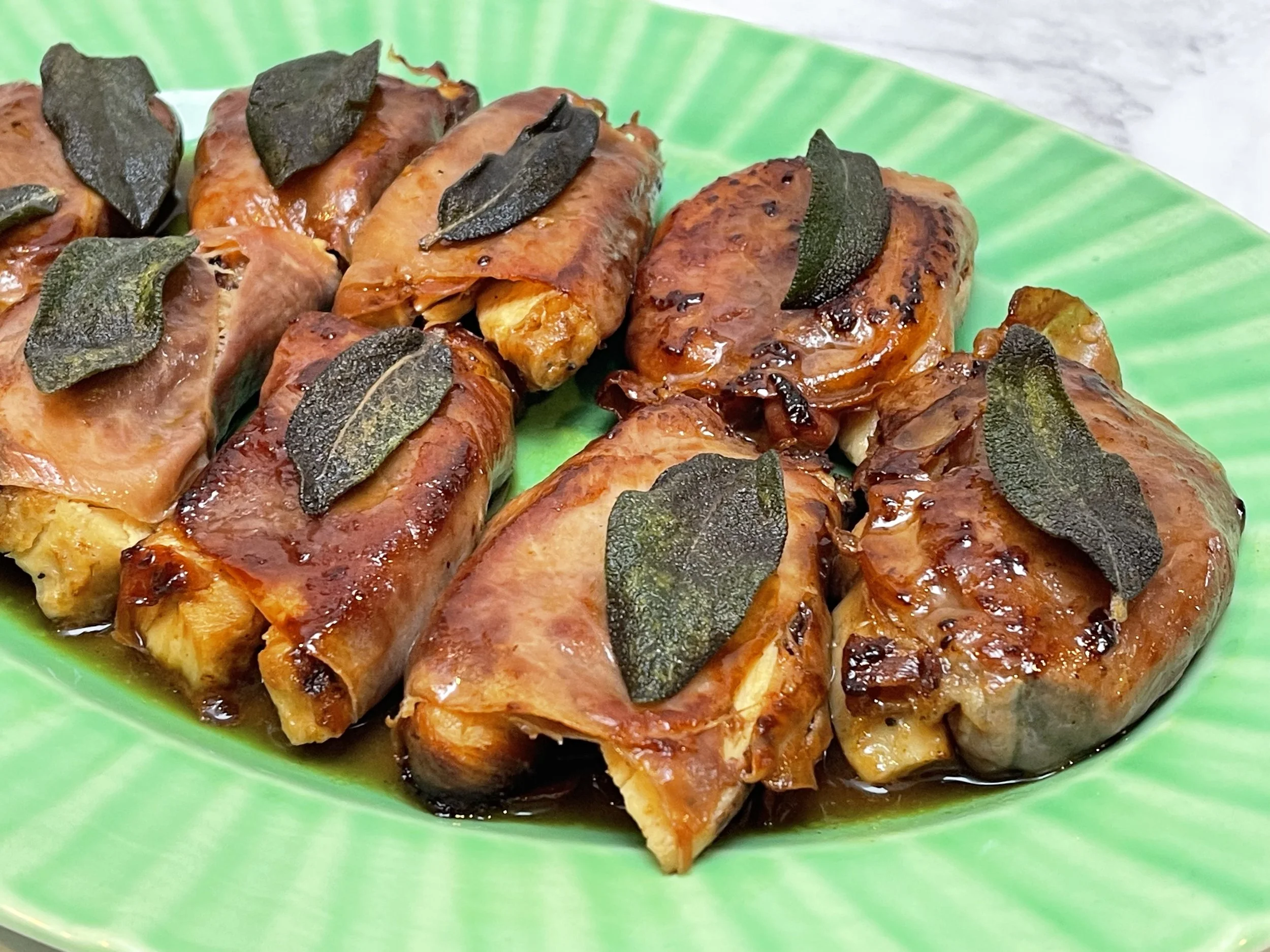
6. Serve. Uncover your saltimbocca chicken on the serving platter and spoon the sauce over the top. Place a piece of the crispy sage on top of the prosciutto, and serve right away.
How to Serve Chicken Saltimbocca
Saltimbocca is best served the moment it leaves the pan, while the prosciutto is still crisp and the sage still crackles.
For individual plating, serve in a shallow dish, spoon the pan sauce over the top, and add the fried sage leaf. A lemon wedge or slice on the side adds a nice bright finish.
What to Serve with Chicken Saltimbocca
Below are some great sides for this saltimbocca dish. Finish with a glass of the same crisp white wine you cooked with, and you’ve got a dinner that tastes like a night out in Trastevere.
Pasta
In Italian tradition, the meat course is called a secondo and follows a pasta dish, which is called a primo. So, to eat the Roman way, start with a small plate of pasta.
My bucatini cacio e pepe is another Roman classic and a perfect partner in this meal, since its creamy pecorino and black pepper sauce won’t compete with the saltimbocca.
Of course, if you’re not in Italy, serving a side of pasta with pesto sauce or marinara is always a good idea. In the summer months, try my caprese pasta salad.
Other Starches
If you want something to soak up every drop of that buttery wine sauce, serve the chicken rolls over my low-fat mashed potatoes. They’re creamy and comforting without being heavy.
Crusty bread is also a good soaker for the sauce.
Veggie Sides
For a pop of color, my vegetable skewers in the oven are easy to make while the chicken cooks, and roasted zucchini, peppers, and onions are lovely next to the salty prosciutto.
Brussels sprouts, green beans, and sautéed spinach will also pair nicely.
Salads
On warmer nights, a fresh salad is all you need. An authentic Caprese salad with ripe tomatoes and creamy mozzarella balances the richness of the dish. Or for something with more greens, you can’t go wrong with a burrata panzanella.
Chicken Saltimbocca FAQs
Can I make chicken saltimbocca ahead of time?
Yes. You can roll the chicken in prosciutto up to 24 hours ahead. Cover the rolls tightly and refrigerate them, then cook and make the sauce just before serving. The sage is best fried fresh, since it loses its crunch as it sits.
How do I store leftovers?
Let the saltimbocca cool, then store the rolls and sauce together in an airtight container in the refrigerator for up to 3 days. Keep the crispy sage separate in a small container at room temperature so it doesn’t get soggy.
Can I freeze chicken saltimbocca?
You can, though the prosciutto won’t be quite as crisp once thawed. Freeze the cooked rolls and sauce in a freezer-safe container for up to 2 months. Thaw overnight in the refrigerator before reheating. For the best texture, freeze the uncooked rolls on a tray, transfer them to a freezer bag, and cook them after thawing.
How do I reheat chicken saltimbocca?
Reheat the rolls and sauce in a covered skillet over medium-low heat for 4 to 5 minutes, adding a splash of broth if the sauce has thickened. You can also warm them in a 325°F oven for about 10 minutes. I avoid the microwave because it makes the prosciutto chewy.
Can I make saltimbocca with raw chicken?
Absolutely. Pound boneless, skinless chicken breasts to about ½-inch thickness and cut them into pieces, then skip the broth soak. Roll or top them with prosciutto and sage and cook for 3 to 4 minutes per side, until the chicken reaches 165°F inside. I sometimes lightly dust raw cutlets with flour first, which helps thicken the sauce.
What does saltimbocca mean?
Saltimbocca means “jumps in the mouth” in Italian. The name describes how the bold flavors of prosciutto, sage, butter, and wine seem to leap out with every bite.
What is the difference between saltimbocca alla Romana and chicken saltimbocca?
Saltimbocca alla Romana is the original version from Rome, made with thin veal cutlets that are topped with prosciutto and sage, fastened with a toothpick, and pan-fried. Chicken saltimbocca uses chicken instead of veal. In my version, the prosciutto is rolled around the chicken, so there’s no toothpick needed.
Can I make chicken saltimbocca without wine?
Yes. Replace the white wine with an equal amount of chicken broth and add 1 to 2 teaspoons of fresh lemon juice for brightness.
Is chicken saltimbocca gluten-free?
This recipe is naturally gluten-free because it doesn’t use flour. Just double-check that your chicken broth and prosciutto are labeled gluten-free.
Where can I eat saltimbocca in Rome?
You’ll find saltimbocca at classic trattorias all over the city, especially in neighborhoods like Testaccio, Trastevere, and around Campo de’ Fiori. Many family-run spots serve it at very reasonable prices. For my favorite affordable places, see my guide to the Best Cheap Eats in Rome.
If you love Roman food as much as I do, check out my tips for foodies in Rome to plan your own eating adventure.