
Authentic Caprese Salad Recipe: Perfect for Summer
You don’t need to travel to Italy to enjoy an authentic Caprese salad. (Although, sure: Never turn down a chance to go to Italy.) You can make a Caprese salad right in your own kitchen, in just a few minutes.
As a chef, I love the simplicity of this salad. It’s a perfect example of how a handful of ingredients can combine to make something really swoon-worthy.
It’s truly one of my favorite summer salads. And a great way to use your garden-fresh tomatoes!
Caprese salad (insalata caprese) hails from the beautiful island of Capri, off the coast of Naples in the Campania region. This is the area where my nonna’s family is from, so I grew up with many of the foods of this area. Recently, I spent a month in Campania learning even more about the traditional local dishes.
In Italian cuisine, many recipes vary from family to family, but not this one. There are five ingredients, and that’s it—always. They may be presented differently and vary in quality, but the authentic Caprese salad recipe is one of the most consistent Italian recipes out there.
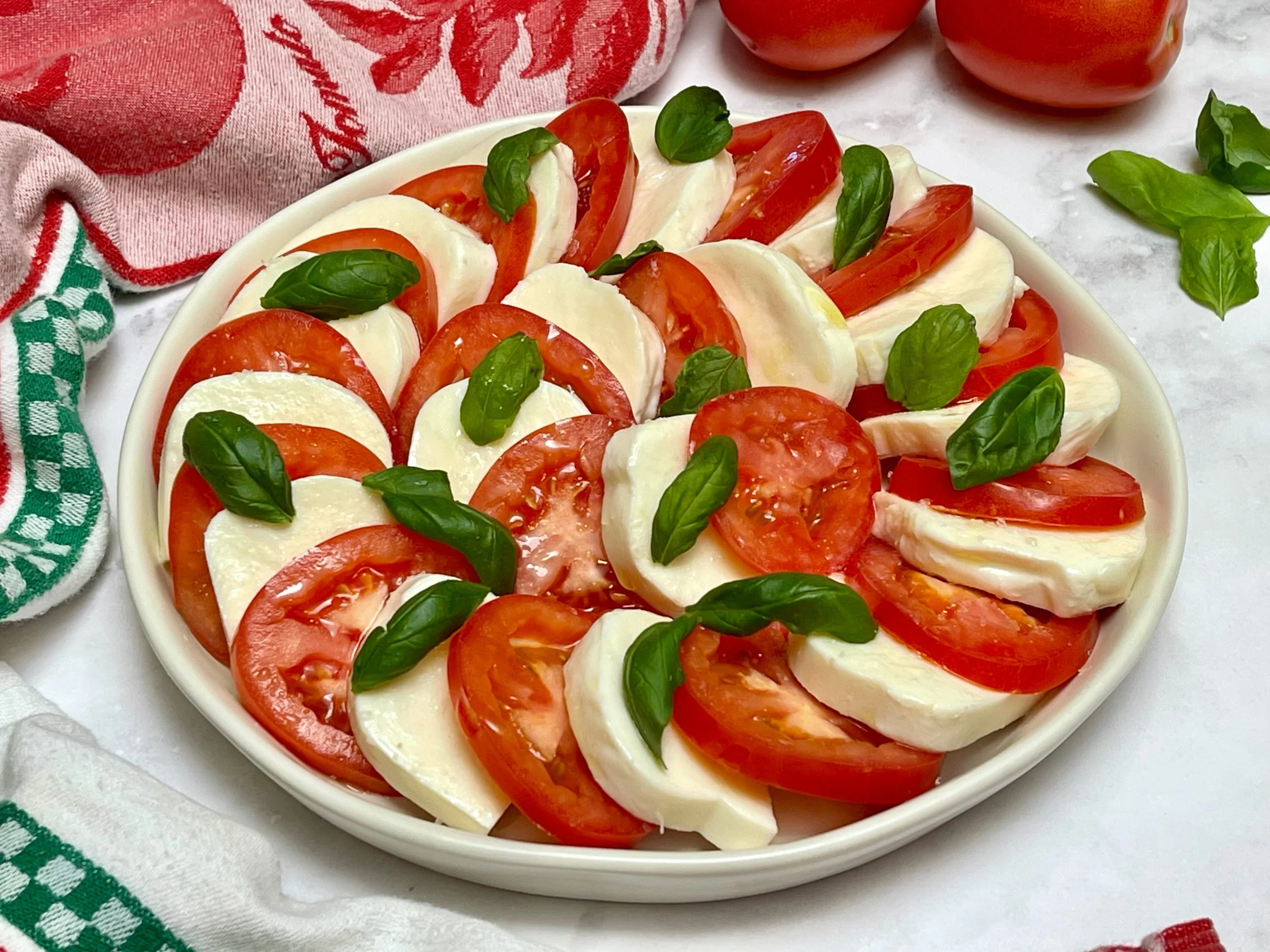
Let’s talk about how to pick the best ingredients; then we’ll get into the recipe itself.
Main Ingredients
Because a classic Caprese salad recipe has so few components, the quality of each one matters enormously. This isn’t the place to reach for whatever’s cheapest at the store. A little bit of extra care in your ingredient selection is what separates a forgettable version of this dish from one that transports you straight to the Amalfi Coast.
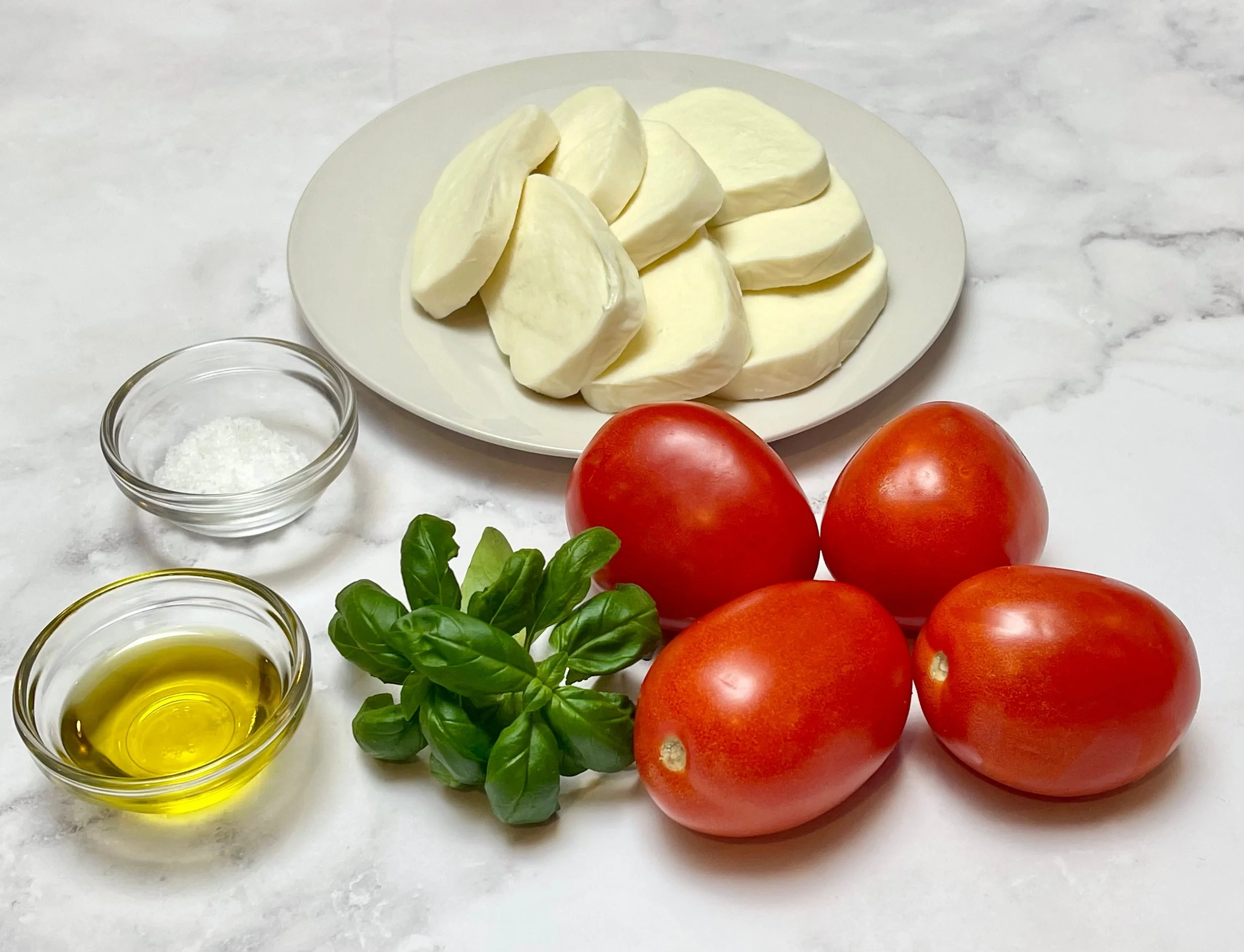
Fresh Mozzarella Cheese
Fresh mozzarella is non-negotiable. It is worlds apart from the shredded, low-moisture mozzarella you’d put on a pizza.
You want creamy mozzarella packed in liquid or brine, often labeled fior di latte (made from cow’s milk) or mozzarella di bufala (made from water buffalo milk, and thus richer and more tangy).
In Campania, Italy (the region where Capri is), buffalo mozzarella is the traditional choice, but in the States, fior di latte is easier to find and still delicious (I actually think even more so).
When shopping, look for a ball of mozzarella that feels soft and slightly springy, not rubbery, hard, or dry. Check that it’s been stored in its liquid right up until you buy it.
If you can find a local Italian market or cheese shop that makes their mozzarella fresh daily, that would be a lovely bonus.
In a pinch, burrata makes an extra-creamy substitute, but the creaminess comes with some messiness. If you go with burrata, try putting each slice directly on top of each tomato so the cheese’s soft center doesn’t make a puddle. (You’ll see what I mean when you get to Step 4.)
Learn more about other popular Italian cheeses.
Roma Tomatoes
Roma tomatoes (also called plum tomatoes) are ideal for Caprese because they have less water content and fewer seeds than other varieties. This means you get concentrated tomato flavor without the salad turning watery. They are also the perfect size.
Look for ripe tomatoes that are firm but give slightly when pressed, with deep red color and no soft spots or blemishes. Smell them too: A ripe tomato should have a sweet, earthy aroma right at the stem.
If Roma tomatoes aren’t available, heirloom tomatoes, vine-ripened Campari tomatoes, or beefsteak tomatoes are excellent replacements, especially in peak summer months when farmers markets are overflowing with them.
Chef’s note: Stick to red tomatoes for this classic recipe, as the salad showcases the colors of the Italian flag.
Extra Virgin Olive Oil
A high-quality extra virgin olive oil ties the whole dish together, adding richness and a peppery, fruity finish that plain oil simply can’t provide.
Since there’s no cooking involved here, the oil’s flavor really shines, so this is the moment to use the good stuff.
Look for oils labeled “extra virgin,” ideally with a harvest date rather than just an expiration date. Be sure that your oil comes in a dark glass bottle that protects the oil from light. Cold-pressed, single-origin Italian or Greek oils tend to have the most character.
If you want a substitute with a slightly different but still delicious flavor profile, a good-quality avocado oil can work in a pinch, though it won’t have that distinct olive fruitiness.
Fresh Basil Leaves
Fresh basil brings the herby, slightly sweet aromatic note that makes Caprese instantly recognizable. Choose fragrant basil with vibrant green leaves that are free of dark spots or wilting.
Give it a sniff: Fresh basil should smell fragrant and slightly sweet, almost like licorice and pepper combined.
Consider buying a live potted basil plant instead of pre-cut leaves in plastic. This type of basil stays fresher longer and you can pinch off fresh leaves as you need them. You can often find these at the grocery store or farmers market.
If fresh basil truly isn’t available, fresh mint or arugula can offer a different but still bright, herbaceous element. Either of these herbs will, however, change the character of the dish. So, if authenticity is important, wait for fresh basil to be available where you live.
Sea Salt
A coarse or flaky sea salt draws out the natural juices of the tomatoes and enhances every other ingredient without overpowering them. Look for a sea salt like Maldon, fleur de sel, or a coarse Sicilian sea salt, all of which dissolve slowly and add little bursts of seasoning rather than an even, salty coating.
Avoid table salt if you can, since its fine grain and added anti-caking agents can make the dish taste flat or overly salty in a single bite. If sea salt isn’t on hand, kosher salt is a reasonable substitute; just use a slightly lighter hand since the flakes are smaller and more concentrated.
Authentic Caprese Salad Recipe
Ingredients
1 pound fresh mozzarella
4 Roma tomatoes
2 tablespoons extra virgin olive oil
3–4 sprigs fresh basil leaves
½ teaspoon sea salt
Instructions
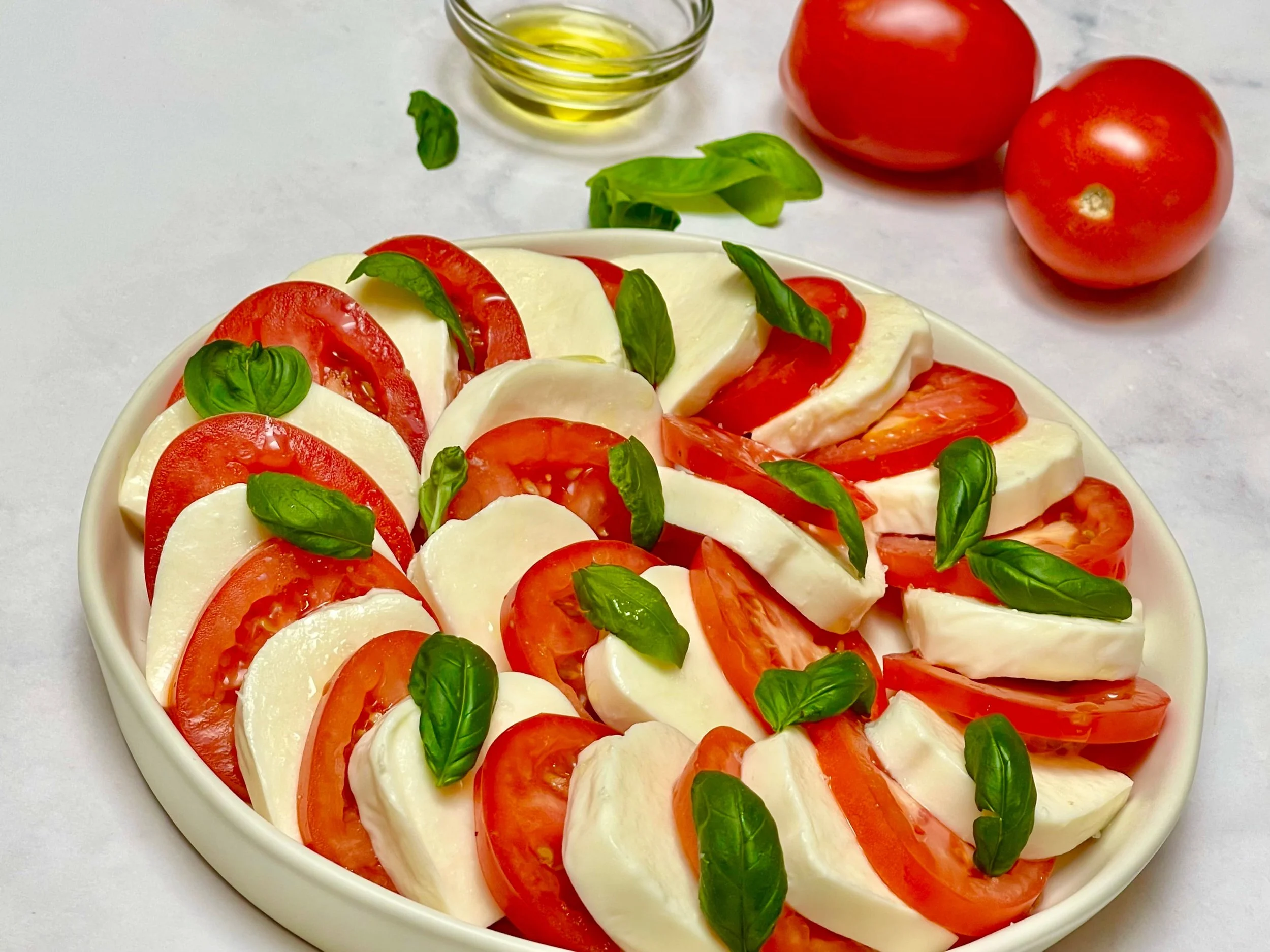
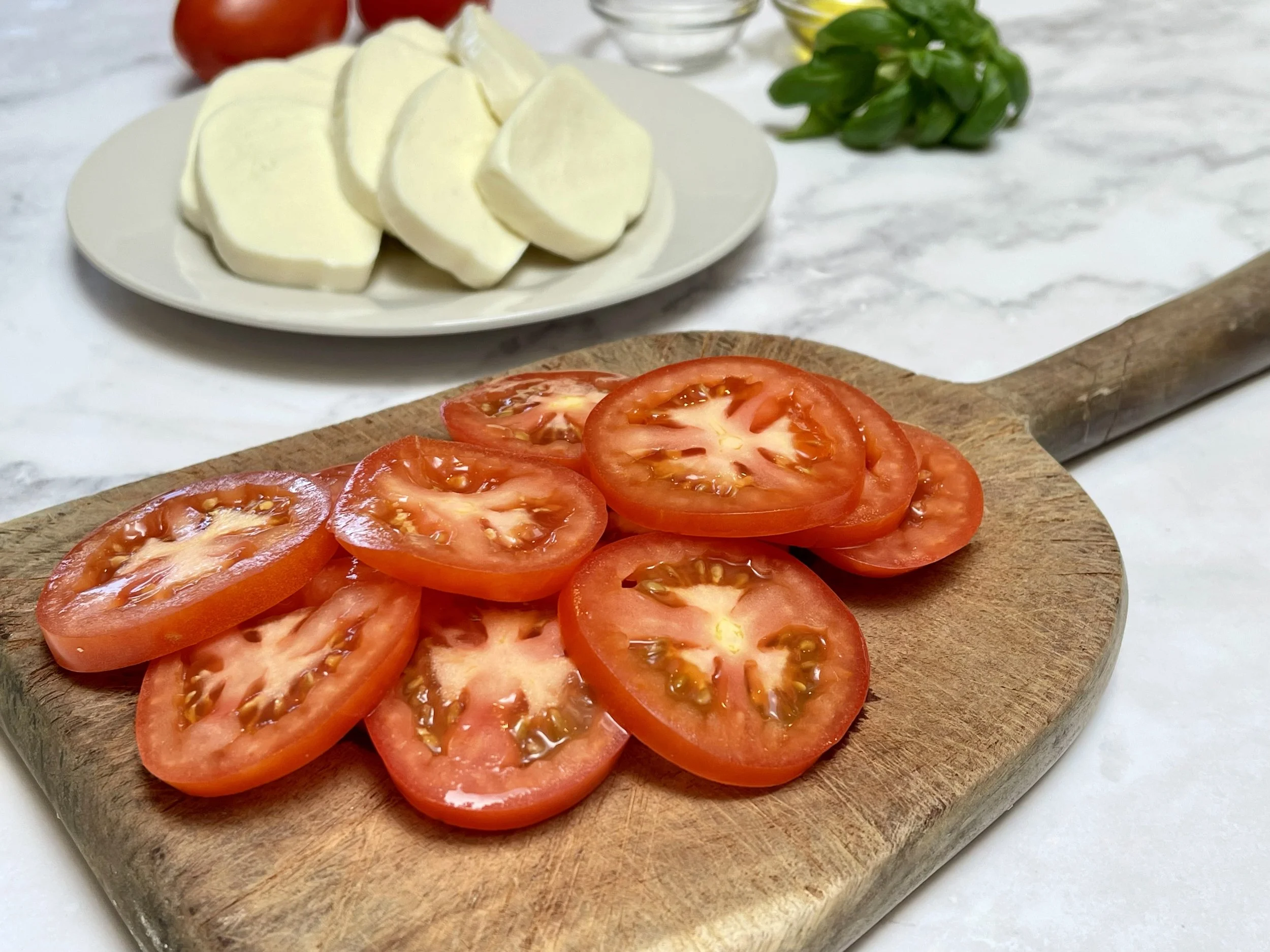
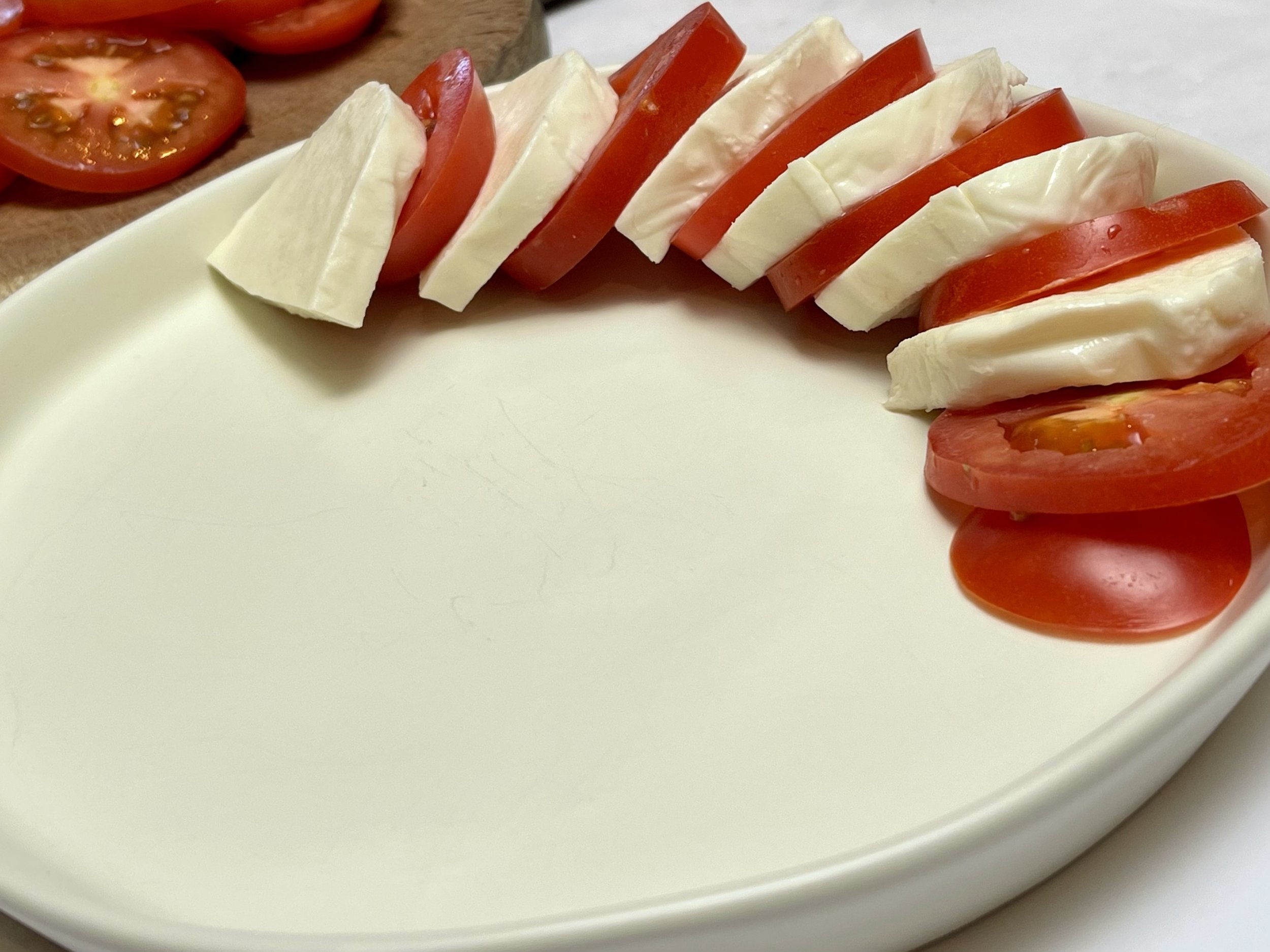
1. Remove the mozzarella from its liquid and pat it dry gently with a paper towel. Slice it into rounds about ¼-inch thick. Depending on the shape of the mozzarella, you may need to cut your rounds in half. If you end up with a flat side, put that side closest to the surface of the plate when arranging (see the photo after Step 4).
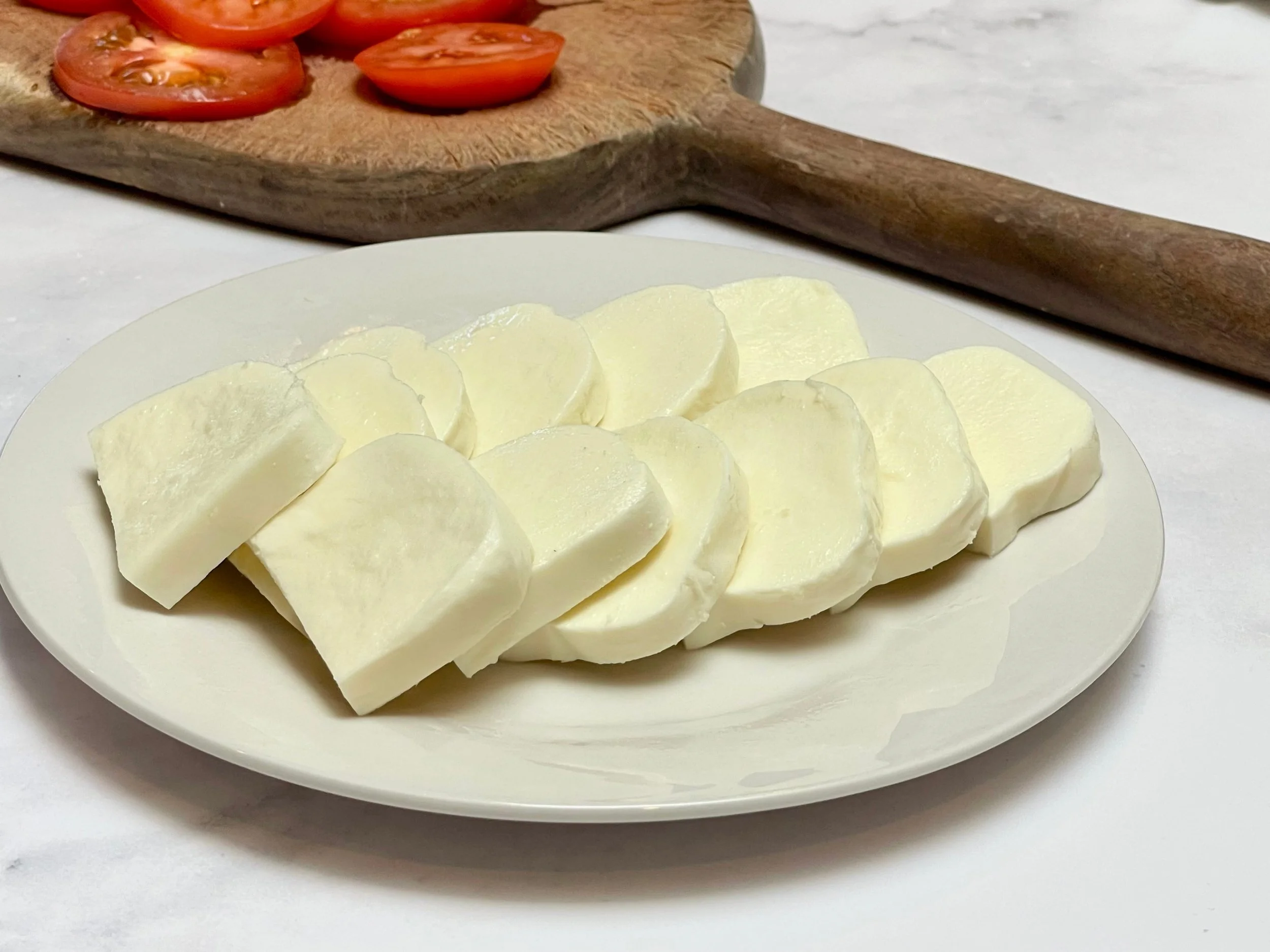
2. Wash and dry the Roma tomatoes, then slice them into rounds of a thickness similar to that of the mozzarella.
3. Pick the basil leaves off the sprigs, keeping them whole, and rinse gently if needed. Pat dry with a paper towel.
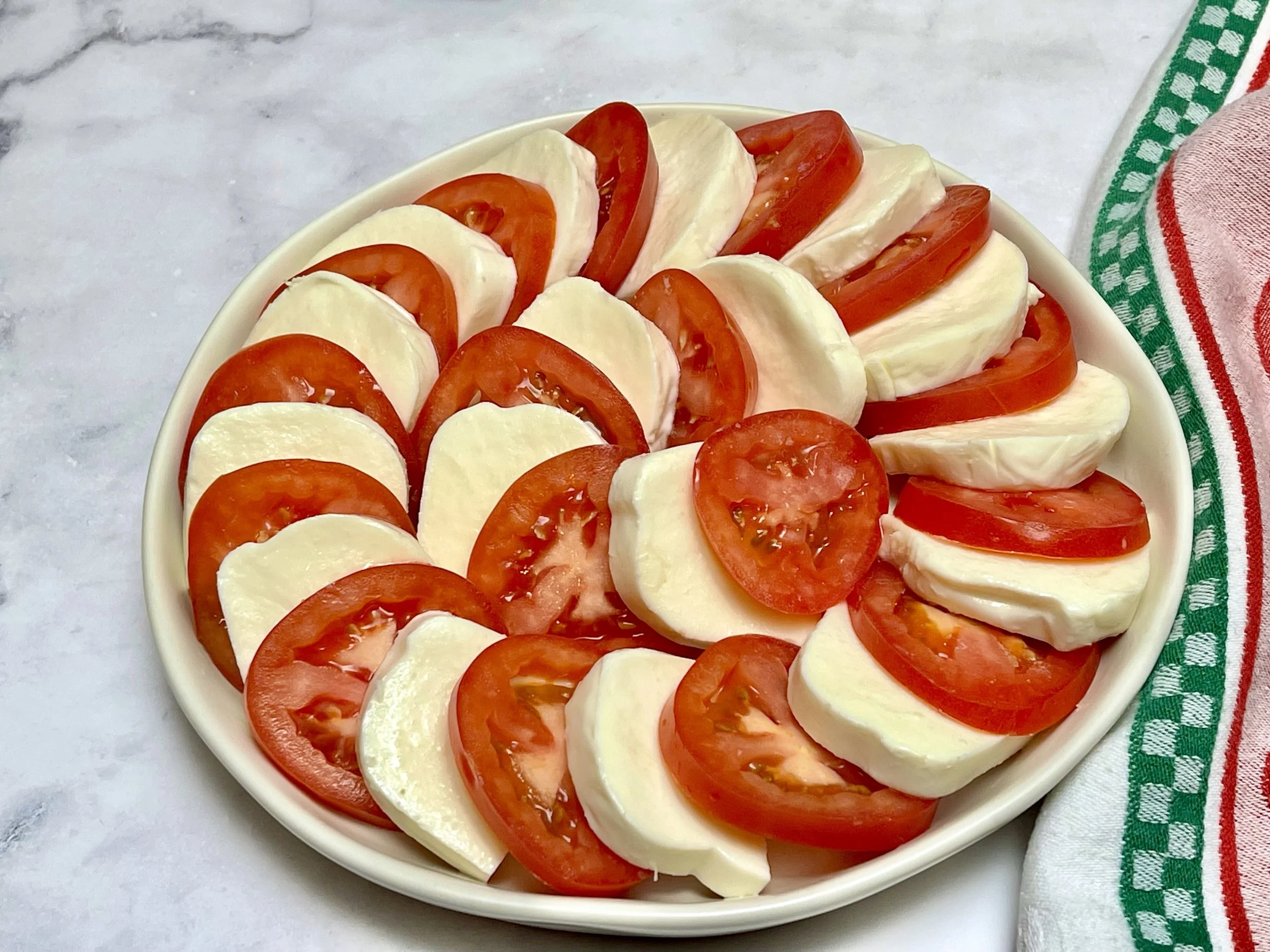
4. On a large round serving plate, begin arranging the ingredients in a circle around the outer edge, alternating a slice of tomato with a slice of mozzarella slightly overlapping each piece as you go.
Continue layering inward in concentric circles, alternating until the entire plate is filled and all of the tomato and mozzarella slices are used.
5. Drizzle the extra virgin olive oil and sprinkle the sea salt evenly over the entire salad.
6. Add the basil leaves on top. I like to shoot for a basil leaf for every cheese and tomato pair. Alternatively, you can alternate the basil with the cheese and tomatoes, but I like the presentation where they look scattered on top.
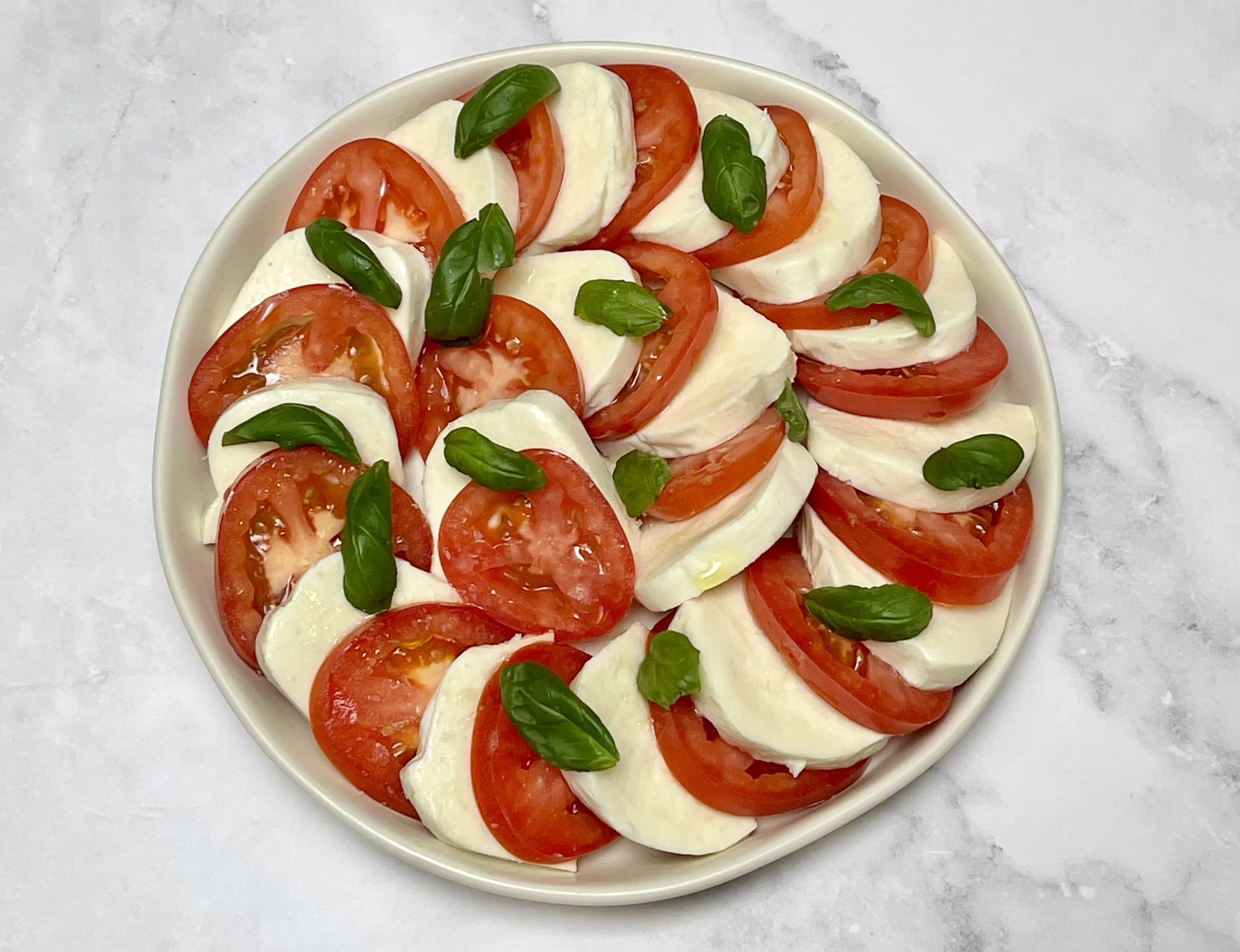
7. Serve immediately, or let the salad sit at room temperature for up to 30 minutes before serving.
How to Serve Caprese Salad
Whether you’re making it as a light lunch, an antipasto before a big meal, or a refreshing side dish on a summer night, this authentic Caprese salad recipe is going to become one of those Italian dishes you’ll make on repeat all summer long.
I guarantee the fresh flavor of this salad will be a hit at any brunch, cookout, potluck, party, or any other gathering where tasty food is welcome. Here are a few ideas on serving it.
Solo
An easy Caprese salad makes a wonderful light lunch or afternoon snack all on its own, especially in warmer months when you want something refreshing but still satisfying.
This salad is also fantastic tucked into a crusty baguette or ciabatta roll with a little extra olive oil or homemade pesto for an especially yummy sandwich.
As an Appetizer or Antipasto
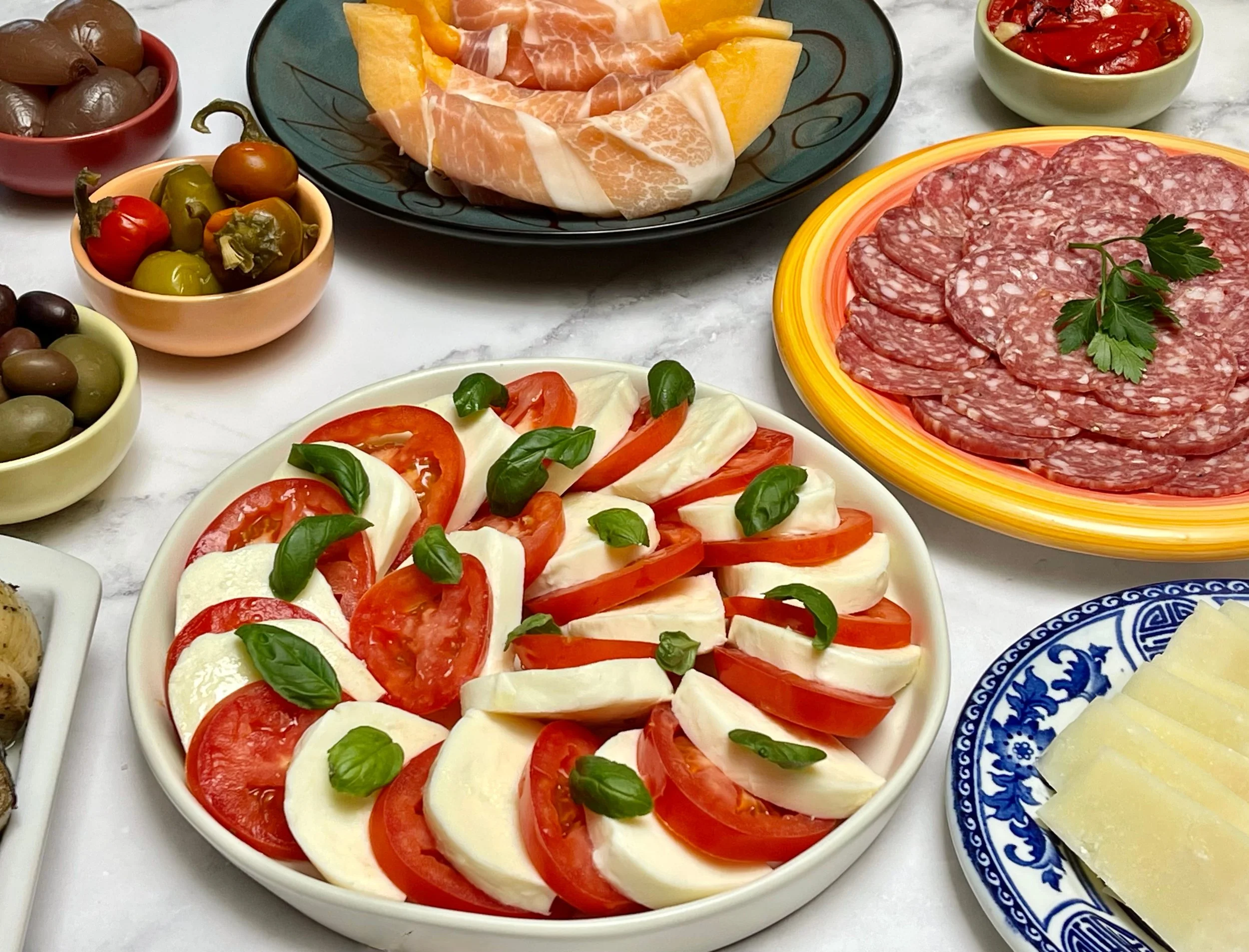
I serve this Caprese salad alongside other classic antipasti. Some of my favorites include prosciutto e melone, caponata, tapenade, zucchini flower fritters, and crusty bread.
Caprese shines as part of a larger Mediterranean spread with a bulgur wheat salad, garlic hummus, and tzatziki sauce.
Sometimes, my starter course gets so large, I turn it into the meal. Try some of these easy appetizer recipes and Greek appetizer recipes, and you’ll have enough tasty dishes for a meal too.
As a Side Dish
The bright, acidic freshness of Caprese salad pairs nicely with rich Italian dishes like Cacio e Pepe, Salmon Pesto Pasta, Frittata di Pasta, Frittata di Zucchini, Pizza Stromboli, Pizza Rustica, Sausage and Peppers, and Venetian Risotto.
It’s also quite at home alongside French, Greek, and Mediterranean dishes such as Fish Francaise, Mediterranean Lamb Chops, Greek Meat Pie, Urfa Kebabs, or Quiche Lorraine.
Caprese salad also works wonderfully next to simple dishes like grilled chicken, crab cakes, and your basic hamburger or steak.
Additions & Variations
Additions
If you are making a traditional Caprese salad, stick to the above ingredients. If you want to get creative, you can add a little black pepper, balsamic reduction, or white balsamic vinegar.
Meat lovers, try a layer of salami, prosciutto, or capicola. Or keep things vegetarian and serve your Caprese salad on a bed of arugula.
Caprese Skewers
For a quick appetizer, I stick cherry tomatoes and pearl mozzarella on toothpicks to make Caprese skewers. They make a great addition to charcuterie boards!
Caprese Pasta Salad
If you are loaded up with cherry tomatoes, Caprese Pasta Salad is a great option. It’s such an easy potluck choice and perfect for anytime you need a make-ahead dish.
Caprese Strata
Caprese Strata has all of the flavors of a Caprese salad in a breakfast bake.
Frequently Asked Questions
Can I make Caprese salad ahead of time?
You can prep the individual components ahead of time. In other words, slice the tomatoes and mozzarella and store them separately in the refrigerator for up to a day.
However, it’s best to assemble, drizzle with oil, and salt the salad just before serving, since the salt will pull moisture out of the tomatoes and the dish can become watery and mushy if it sits too long after assembly.
How do I store leftover Caprese salad?
Leftover Caprese salad should be stored in an airtight container in the refrigerator and eaten within 1 to 2 days. Keep in mind the tomatoes will continue to release liquid as they sit, so drain off any excess before serving again.
You can turn your leftover Caprese salad into a sandwich or grilled cheese, or chop it up and toss it with some leftover pasta for a take on Caprese Pasta Salad.
Can I freeze Caprese salad?
Freezing is not recommended. Fresh mozzarella and tomatoes both have a high water content, and freezing breaks down their structure, leaving you with a mushy, watery texture once thawed. This dish is best enjoyed fresh.
Can I reuse the leftover tomato and mozzarella liquid?
The liquid from the tomatoes that collects after slicing can be saved and whisked into a vinaigrette or drizzled over bread instead of being discarded, since it’s packed with flavor.
The mozzarella’s brine can also be saved for a day or two to keep any remaining mozzarella fresh and moist. It can also be used to add richness to a batch of pizza dough.
What’s the best way to slice the mozzarella and tomatoes evenly?
Use a sharp, non-serrated knife and slice slowly with a gentle sawing motion. Cold mozzarella will slice easier. Chilling it for 10 to 15 minutes before slicing (while keeping the tomatoes at room temperature) can also help both ingredients hold their shape better.
Why did my Caprese salad turn watery?
This usually happens when the salad is salted and dressed too far in advance, or when the tomatoes weren’t fully dried after washing. Salt draws moisture out of tomatoes almost immediately, so always add your salt close to serving time.
Is Caprese salad served cold or at room temperature?
Traditionally, Caprese salad is served at room temperature rather than cold. This allows the mozzarella to stay soft and the olive oil to remain fluid, letting all the flavors come through fully rather than being dulled by refrigeration.