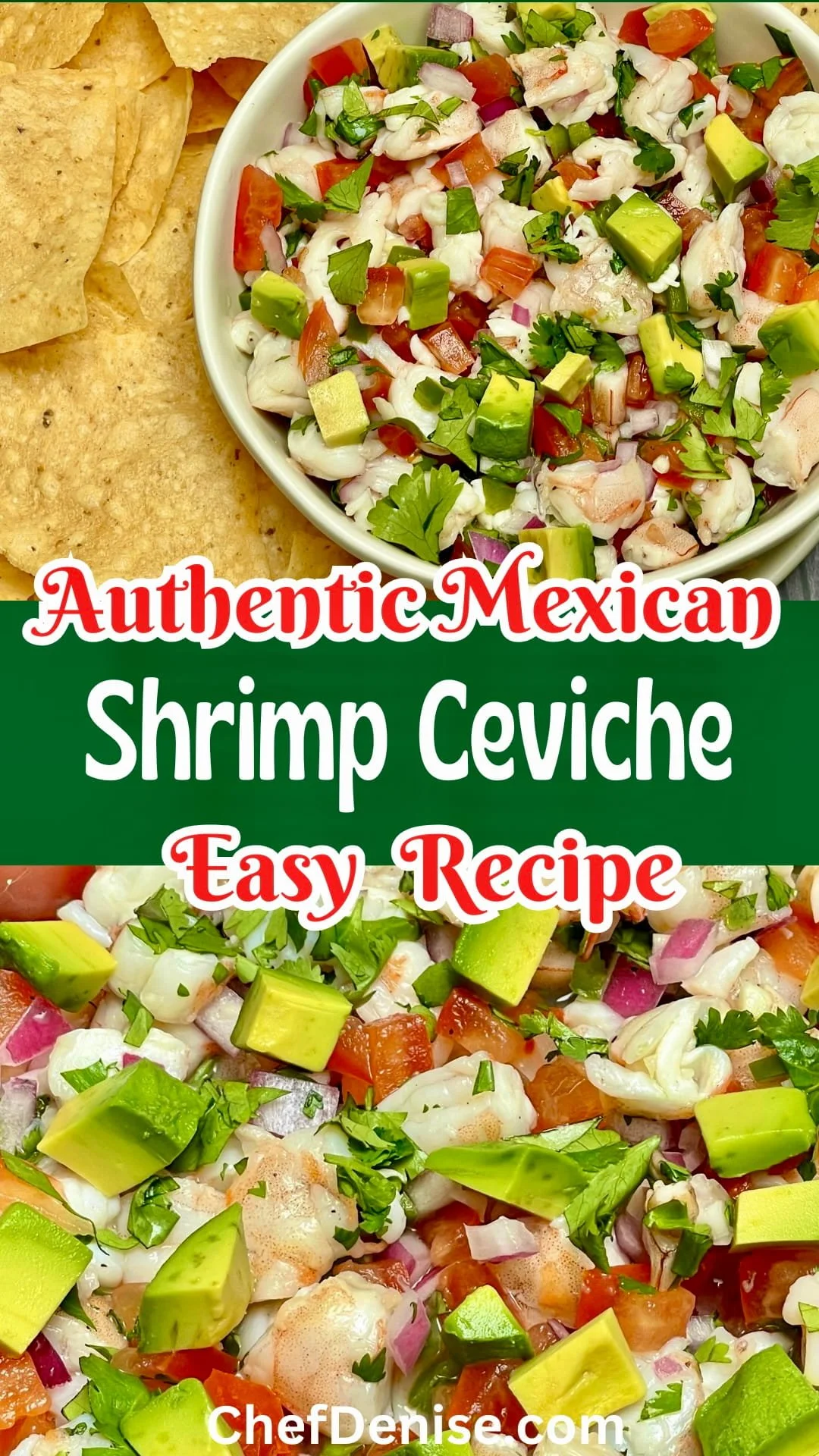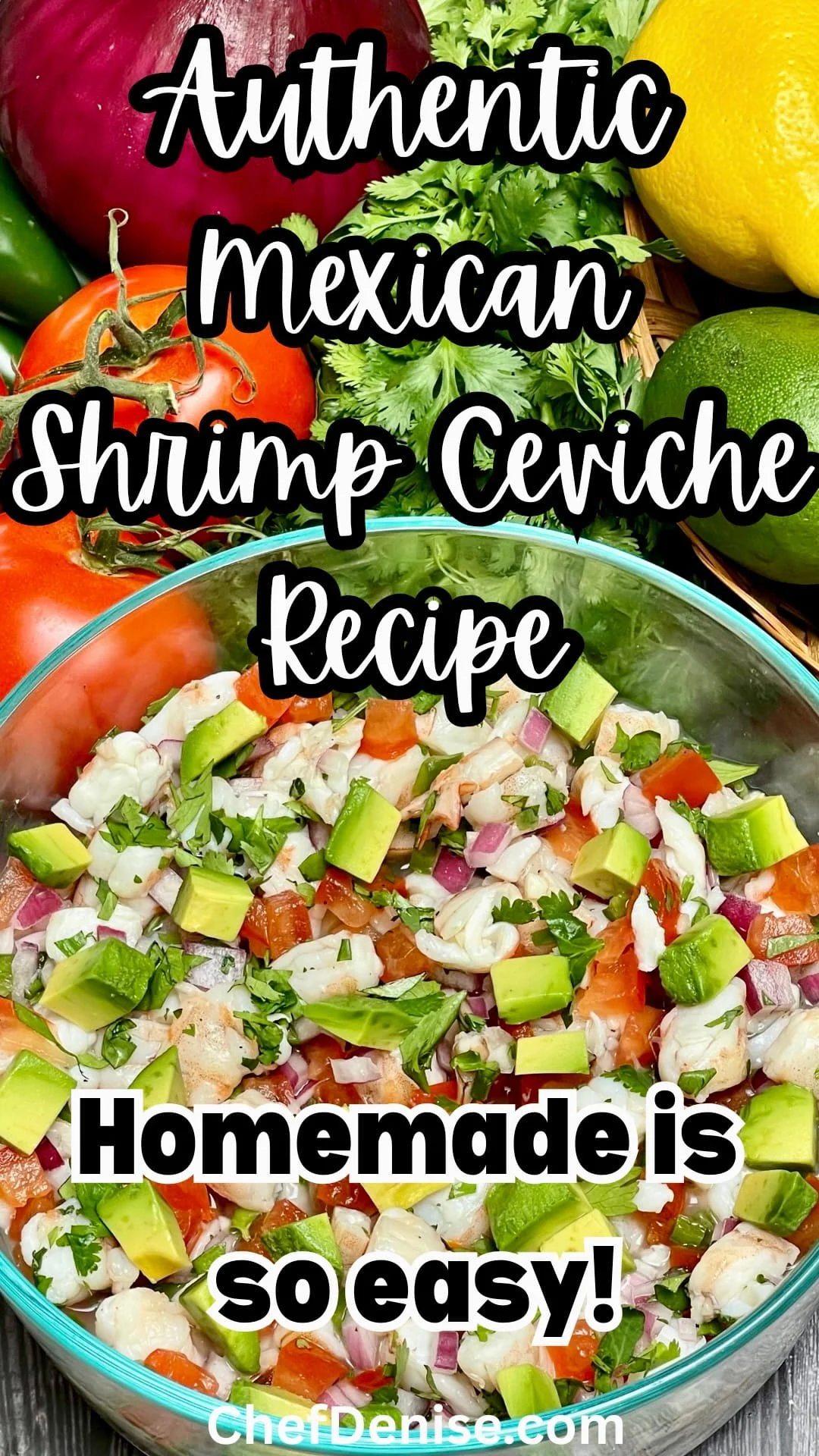
Mexican Shrimp Ceviche Recipe: Authentic & Easy
The first time I ate shrimp ceviche, I was in Cancun. It was long before I became a chef, but I still knew my bowl of citrusy shrimp was something special. Sure, the fresh flavors were amazing, but the fact that my shrimp were raw but appeared cooked blew me away.
Ceviche is a dish of raw seafood that is “cooked” through a process called denaturation, where the proteins in the seafood are transformed by the acid in citrus juice (usually lime) rather than by heat. The result is seafood that is firm, opaque, and tender, with a bright, zesty flavor that is nothing short of extraordinary.
Ceviche has deep roots throughout Latin America, and the exact origin is a passionately debated topic. However, Peru is widely credited as the birthplace of ceviche, where it has been made for thousands of years and is considered a national treasure.
But ceviche traveled and evolved, and different countries—Ecuador, Colombia, Mexico—developed their own distinct versions over time.
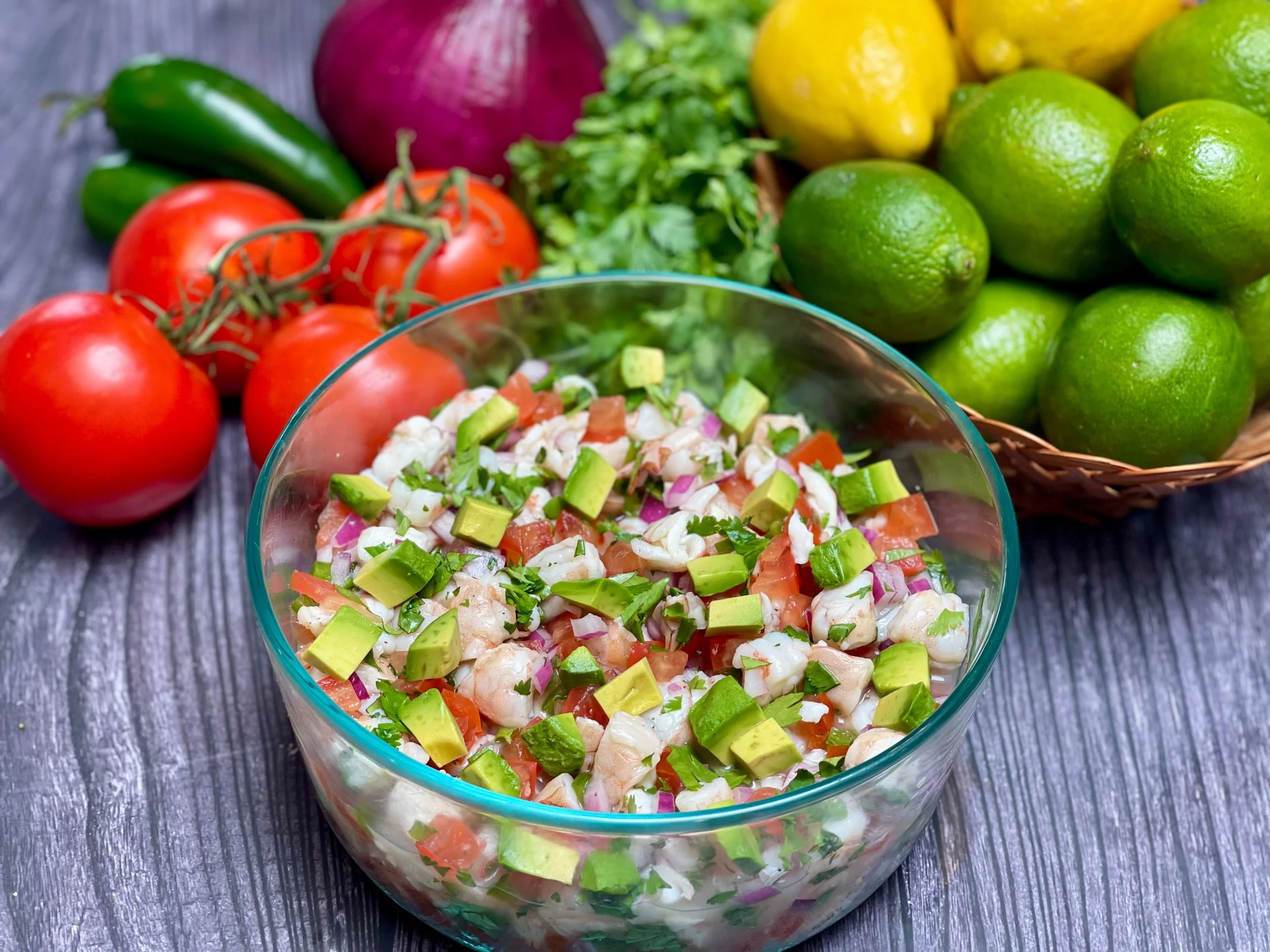
This recipe is a Mexican-style shrimp ceviche, similar to what you would find in the Yucatan. Whereas Peruvian ceviche tends to be saucier, spicier, and traditionally made with raw fish, Mexican ceviche is typically chunkier, loaded with fresh vegetables, and often made with shrimp.
The ceviche of Mexico leans into the flavors of jalapeño, cilantro, tomato, red onion, and avocado—ingredients that will be very familiar to you if you love Mexican food. This seafood treat is fresh, vibrant, and so satisfying that it’s hard to stop eating.
Chef’s Note: Some recipes call for parboiling the shrimp, and thus suggest a very short marinating time. Parboiling, however, is not a traditional method for ceviche.
The best shrimp ceviche does take a few hours to sit and soak up the acidic marinade. But it is incredibly easy to make! No stovetop, no oven—just great ingredients, a little time, and a bit of patience.
Main Ingredients and Why They Matter
Great ceviche is all about the quality of its ingredients. Because there’s no heat involved in the cooking process, every component has to show up and do its job. Here’s what goes into this Mexican shrimp ceviche and why each ingredient earns its place in the lineup.
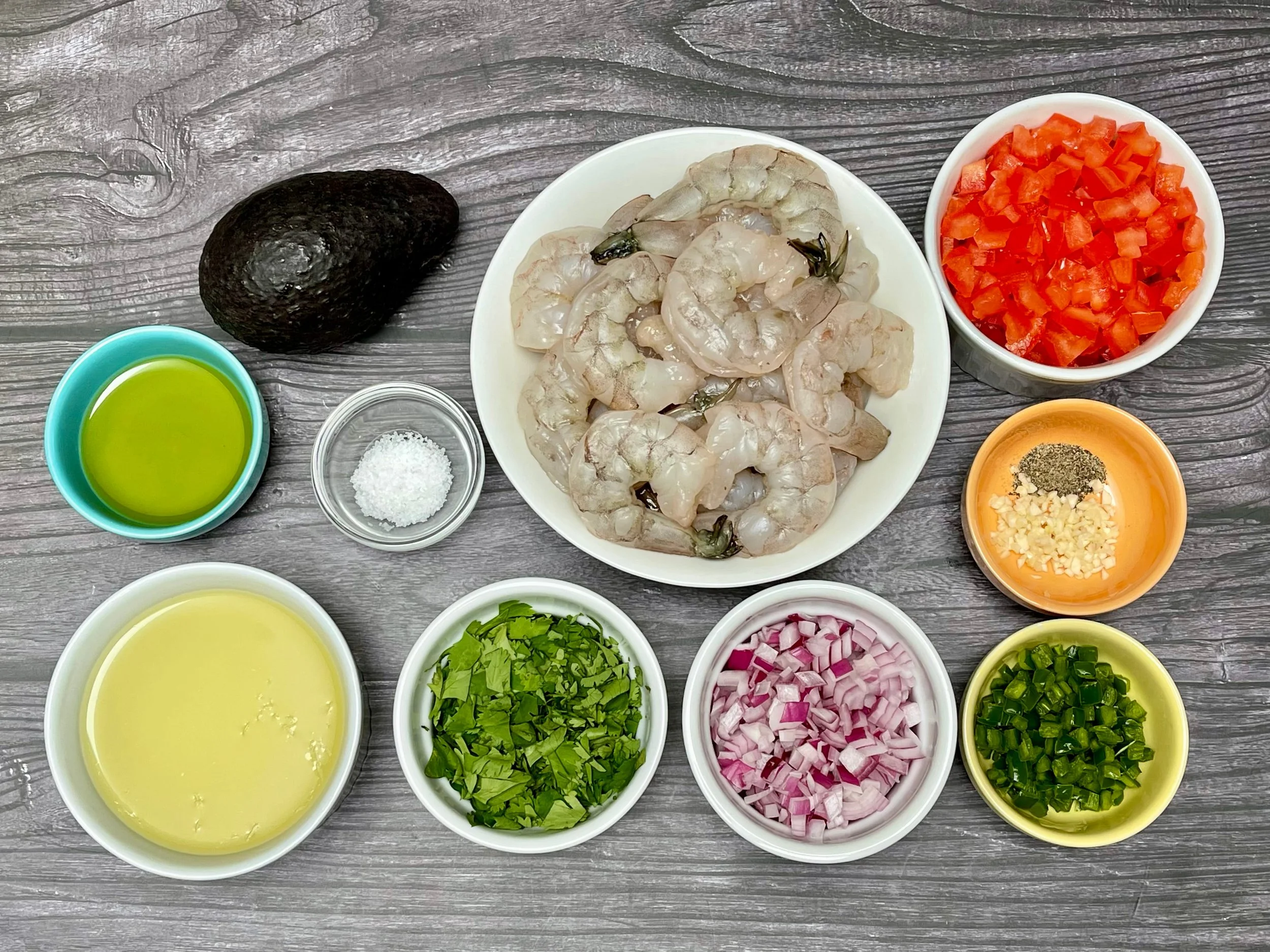
Raw Medium Shrimp
The shrimp is the star here, and using raw shrimp—not pre-cooked—is essential. The raw shrimp “cooks” in the lime and lemon juice over time, absorbing the citrus flavors while firming up and turning opaque.
Pre-cooked shrimp won’t take on that fresh, bright flavor in the same way, and the texture tends to become rubbery once pre-cooked shrimp sits in the acid.
For this recipe, medium shrimp work beautifully because they are not too thick and the smaller pieces will be easily and fully transformed during the denaturation process. If you use large shrimp or do not chop them, you may need to add to the soaking time.
When shopping, look for shrimp that smell clean and ocean-fresh—never fishy or ammonia-like. Fresh shrimp from the seafood counter are ideal, but high-quality frozen shrimp (thawed overnight in the refrigerator before you get started) work perfectly well. Make sure your shrimp are peeled and deveined before you start.
Fresh Lime Juice and Fresh Lemon Juice
The combination of fresh lime and lemon juice is what transforms the shrimp in this recipe, and fresh is non-negotiable. Bottled citrus juice is pasteurized and lacks the brightness and acidity needed to properly denature the shrimp. You simply cannot make authentic ceviche without fresh citrus juice.
You’ll need about 6 to 8 fresh limes and 2 to 3 lemons for this recipe. Roll them on the counter while applying pressure before juicing to get every last drop.
The lime does the heavy lifting here, bringing that unmistakably Mexican citrus punch, while the lemon adds a slightly softer, rounder acidity. Together they create a citrus bath that is bright without being one-dimensional. If you prefer a little sweetness, you can add a bit of orange juice to the mix too.
Jalapeño Pepper
Jalapeño brings a mild heat to this ceviche, but it also brings flavor—a grassy, slightly vegetal note that pairs beautifully with the citrus and shrimp. Seeding the jalapeño (as this recipe calls for) keeps the heat at a pleasant, approachable level, allowing the flavor to shine without blowing anyone’s head off.
When selecting jalapeños, look for firm, smooth peppers with no soft spots or wrinkling. If you love heat, leave a few of the seeds in, or substitute a serrano pepper for a more intense kick. If you prefer a milder ceviche, a small poblano or even a few drops of your favorite hot sauce stirred in at the end can work as a substitute.
Minced Garlic
A teaspoon of garlic adds a savory depth to the ceviche that rounds out the bright, acidic notes of the citrus. Fresh minced garlic is always preferred here—garlic powder simply doesn’t pack the same punch. Look for firm, tight garlic heads with no sprouting or soft spots. One to two cloves will give you approximately one teaspoon of minced garlic.
Red Onion
Red onion brings color, crunch, and a slightly sweet, sharp bite that plays off the citrus perfectly. The onion’s vivid purple hue also makes the ceviche look absolutely stunning in the bowl. That’s perfect, because you eat this dish with your eyes first.
For the best results, dice the red onion finely so it distributes evenly throughout the ceviche without overwhelming any single bite.
If red onion feels too strong for your taste, you can soak the diced onion in cold water for 10 to 15 minutes before adding it—this mellows the sharpness considerably. White onion is a suitable substitute and is traditional in many Mexican recipes, though it will be slightly more pungent.
Roma Tomatoes
Ripe Roma tomatoes are the best choice for Mexican shrimp ceviche because they are meaty, low in water content, and have a balanced, slightly sweet flavor that doesn’t turn the ceviche soupy. Watery tomatoes like beefsteak can dilute the citrus marinade and make the whole dish feel less vibrant.
Choose Roma tomatoes that are ripe but still firm—they should give just slightly when pressed. Avoid tomatoes that are too soft or mushy, as they will fall apart in the ceviche. If Roma tomatoes aren’t available, vine-ripened tomatoes or cherry tomatoes (halved) are good substitutes.
Cilantro
Cilantro is right at home in Mexican cooking, and in this ceviche it provides an herby, citrusy lift that ties all the other flavors together. Fresh cilantro should look bright and vibrant green—if it’s wilting or yellowing, leave it at the store.
Roughly chop the leaves (tender stems are fine too) rather than mincing them so you get pops of herbal flavor throughout your ceviche.
If you’re among those who find cilantro tastes soapy—a totally real genetic trait—fresh flat-leaf parsley is the best substitute. The flavor will be milder and more neutral, but parsley still adds a fresh herbal quality to the dish.
Avocado
Avocado is stirred in at the end, adding creamy richness that balances the brightness of the citrus and the heat of the jalapeño. It transforms this ceviche from a light, acidic dish into something more substantial and satisfying.
For this recipe, you want an avocado that is ripe but not overripe. It should yield slightly to gentle pressure without feeling mushy. A perfectly ripe avocado will hold its shape when diced and won’t turn to mush when stirred into the ceviche.
Dice it just before serving to keep it fresh and green—the citrus in the ceviche helps slow browning, but avocado is always best added at the last moment.
Sea Salt and Black Pepper
Sea salt enhances every other flavor in this dish and is essential—don’t skip it. Fine sea salt dissolves easily and blends evenly throughout the ceviche. If you don’t have sea salt on hand, kosher salt is the next best choice.
Freshly cracked black pepper adds a gentle, subtle warmth.
Mexican Shrimp Ceviche Recipe
Servings: 4
Prep Time: 20 minutes
Marinating Time: 3 hours
Total Time: 3½ hours
Ingredients
1 lb raw medium shrimp, peeled, deveined
1 cup fresh lime juice
¼ cup fresh lemon juice
1 teaspoon minced garlic
1 jalapeño, seeded and minced
¼ teaspoon black pepper
½ cup red onion, finely diced
1 cup Roma tomatoes, chopped
½ cup cilantro leaves, roughly chopped
½ teaspoon sea salt
1 avocado
Instructions
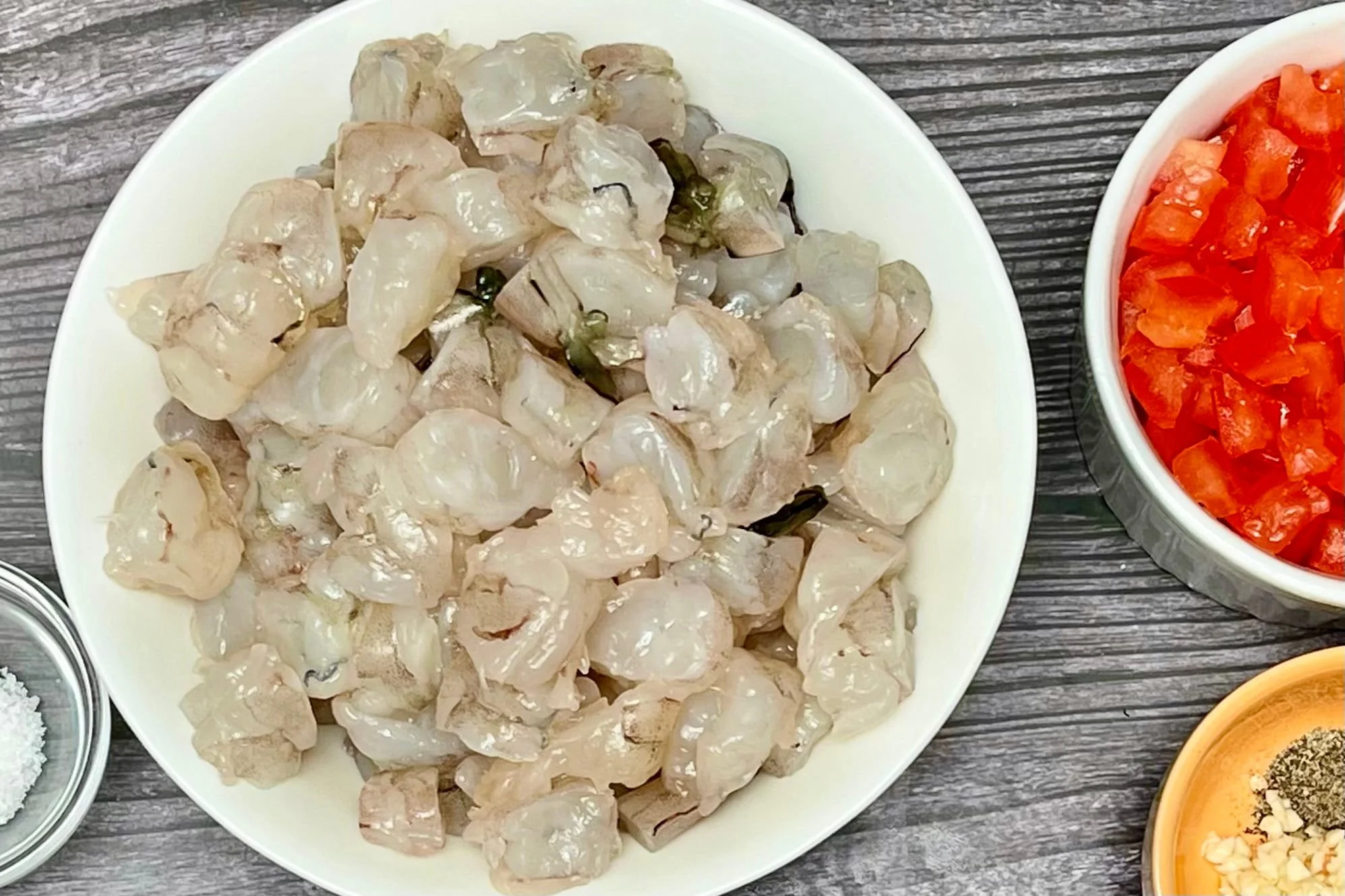
1. Chop the shrimp. With a sharp knife, cut the shrimp into bite-sized pieces, roughly ¼ to ½ inch long. If your shrimp are large or thick, cut them lengthwise first to facilitate marinating.
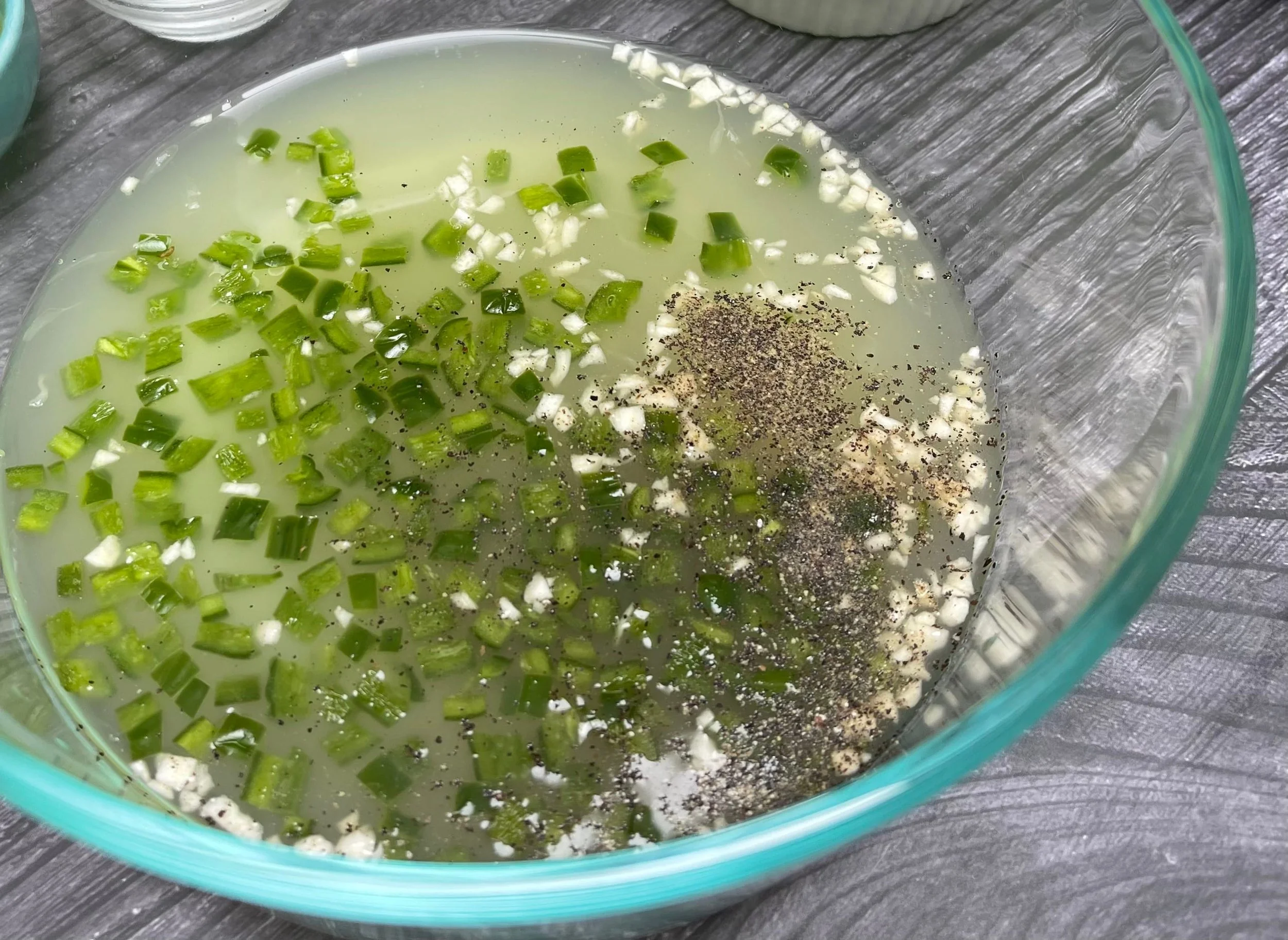
2. Prep the marinade. In a large non-reactive bowl (glass or stainless steel), add the fresh lime juice, lemon juice, minced garlic, minced jalapeño, and black pepper, then stir to combine.
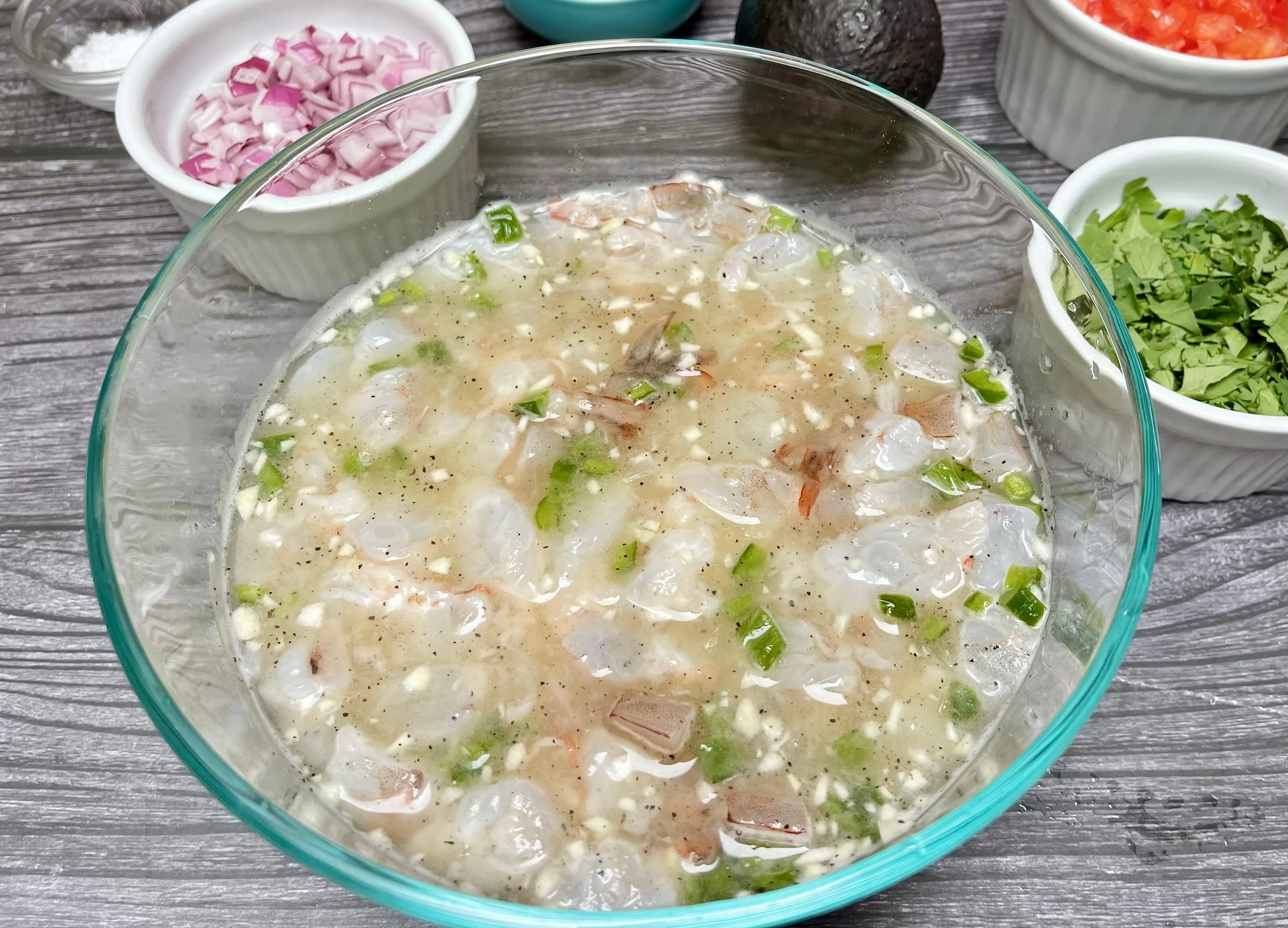
3. Marinate the shrimp. Add the shrimp to the marinade bowl. The shrimp should be completely submerged in the citrus juice. If you need to add more citrus so that all your shrimp are thoroughly soaking, do so. Cover the bowl and refrigerate. The shrimp are ready when they have turned pink and opaque all the way through—that means they are now sufficiently denatured by the acid in the citrus juice.
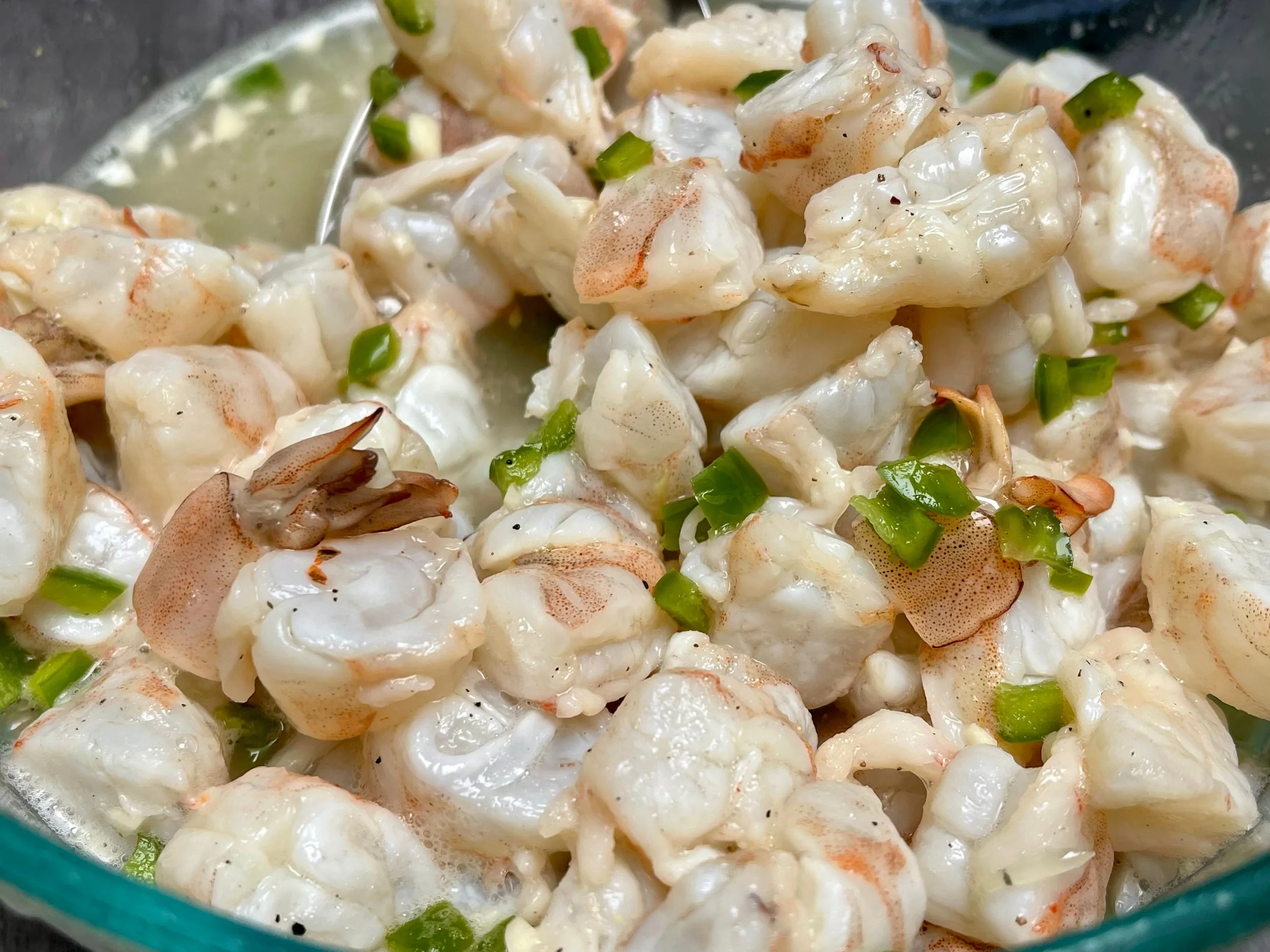
4. Check the shrimp. After 1 hour, remove the bowl from the refrigerator and check that the shrimp are still fully submerged. They should be turning opaque and pink. Give them a stir, and return the bowl to the refrigerator for another 2 hours, checking and stirring twice more during that time. If you prefer to marinate the shrimp overnight, that is fine too. Shrimp are done when they are pink and no longer translucent.
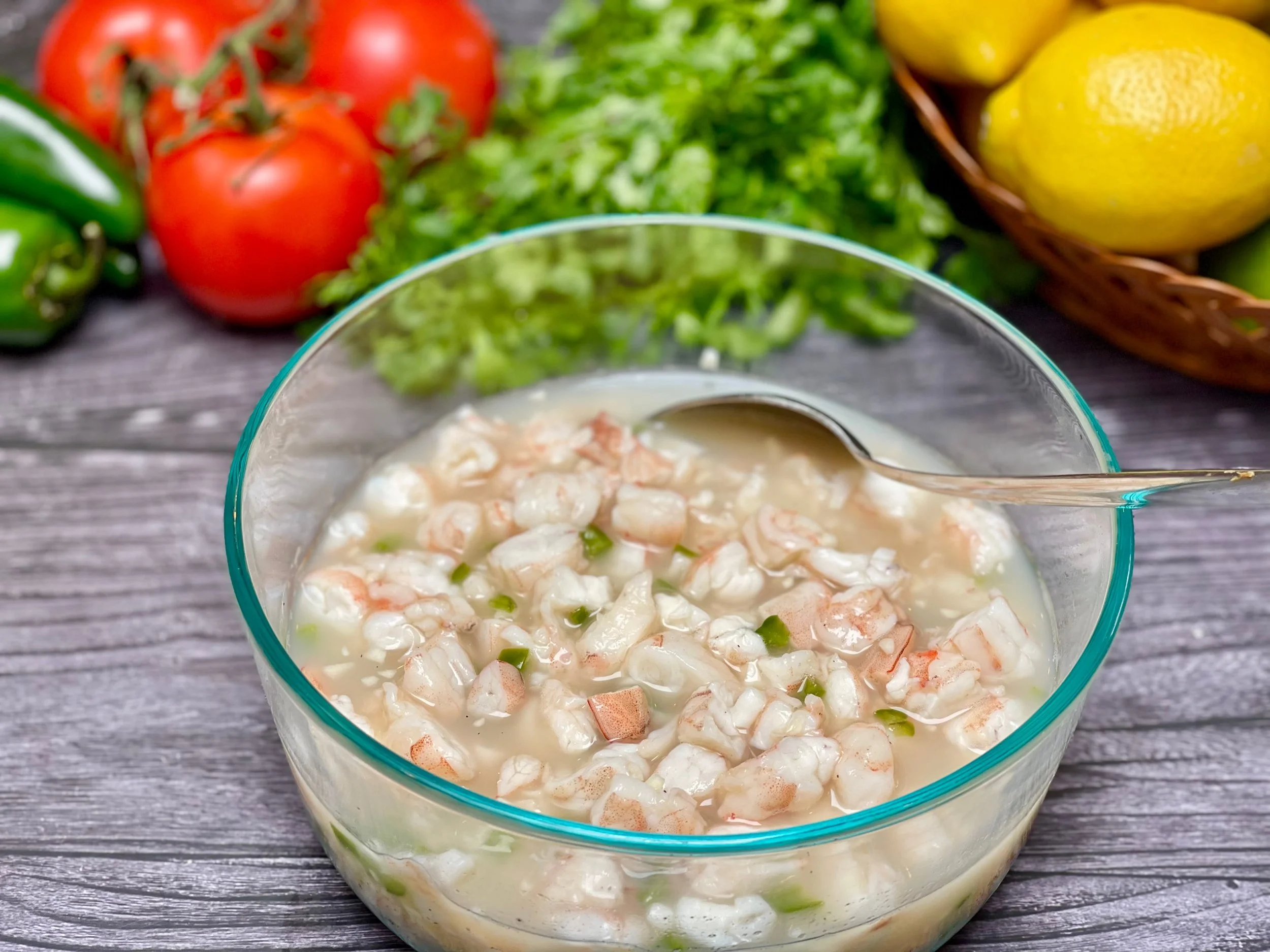
5. Add the fresh vegetables. Add the red onion, Roma tomatoes, and cilantro to the bowl with the shrimp. Stir everything together gently. Season with sea salt, taste, and adjust as needed.
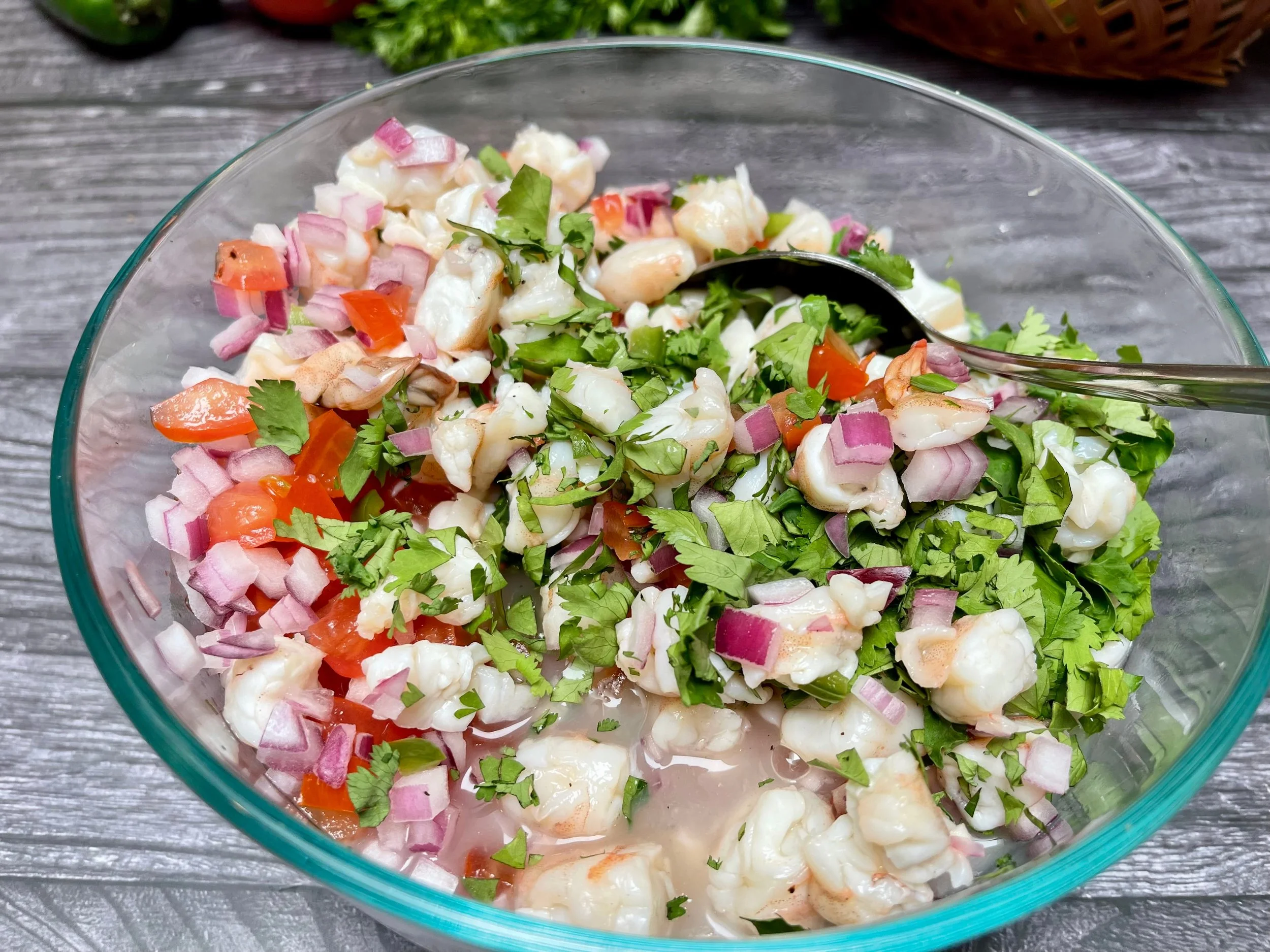
6. Drain most of the citrus juice. By tilting the bowl, drain off at least half of the citrus marinade. However, you want to keep enough liquid in the bowl to keep the ceviche moist and flavorful. Do not drain it completely dry.
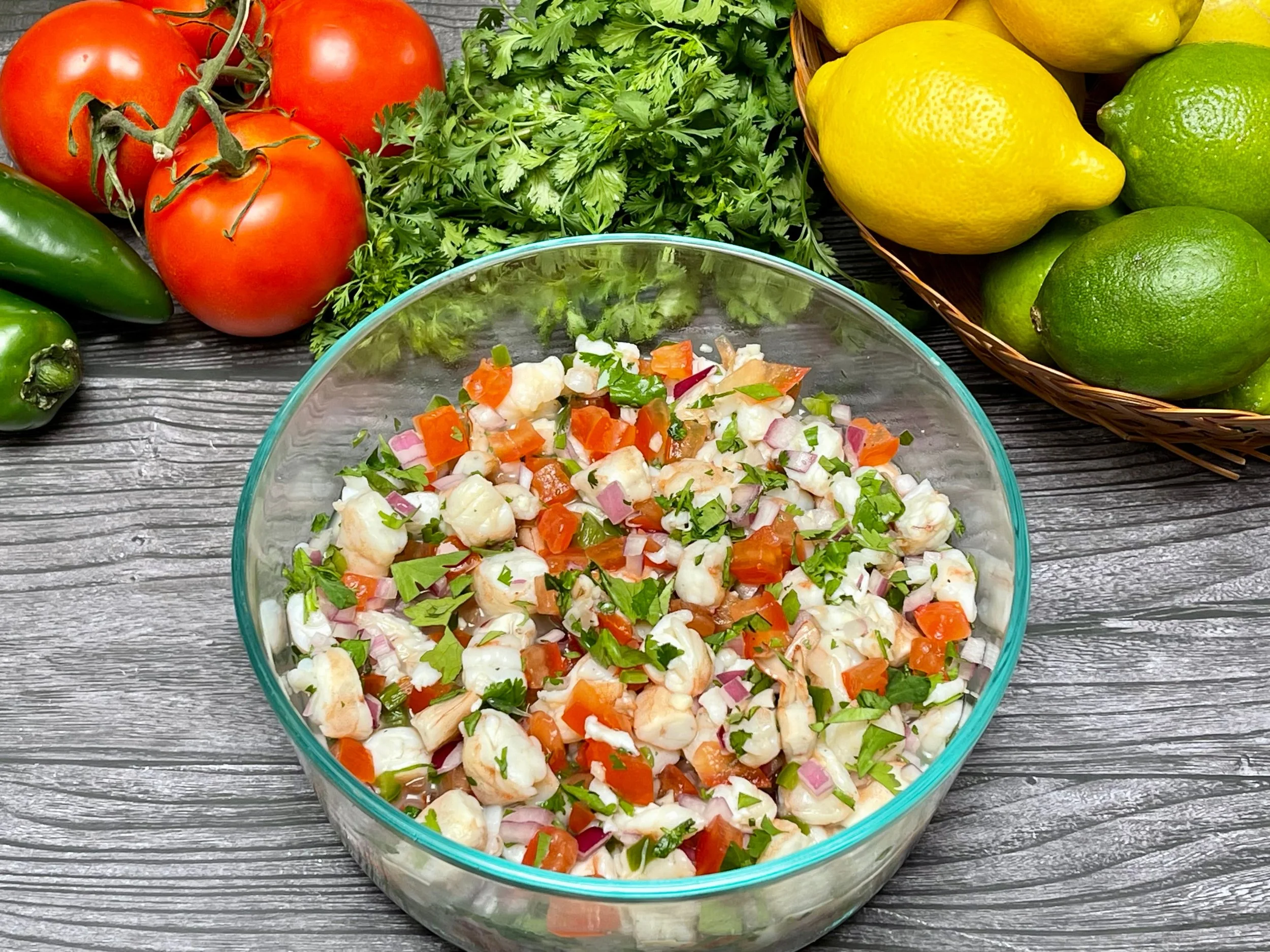
7. Add the diced avocado and serve. Just before serving, dice the avocado and gently fold it in. Serve immediately.
When you can’t resist posting a photo of your creation, try one of these Mexican food captions!
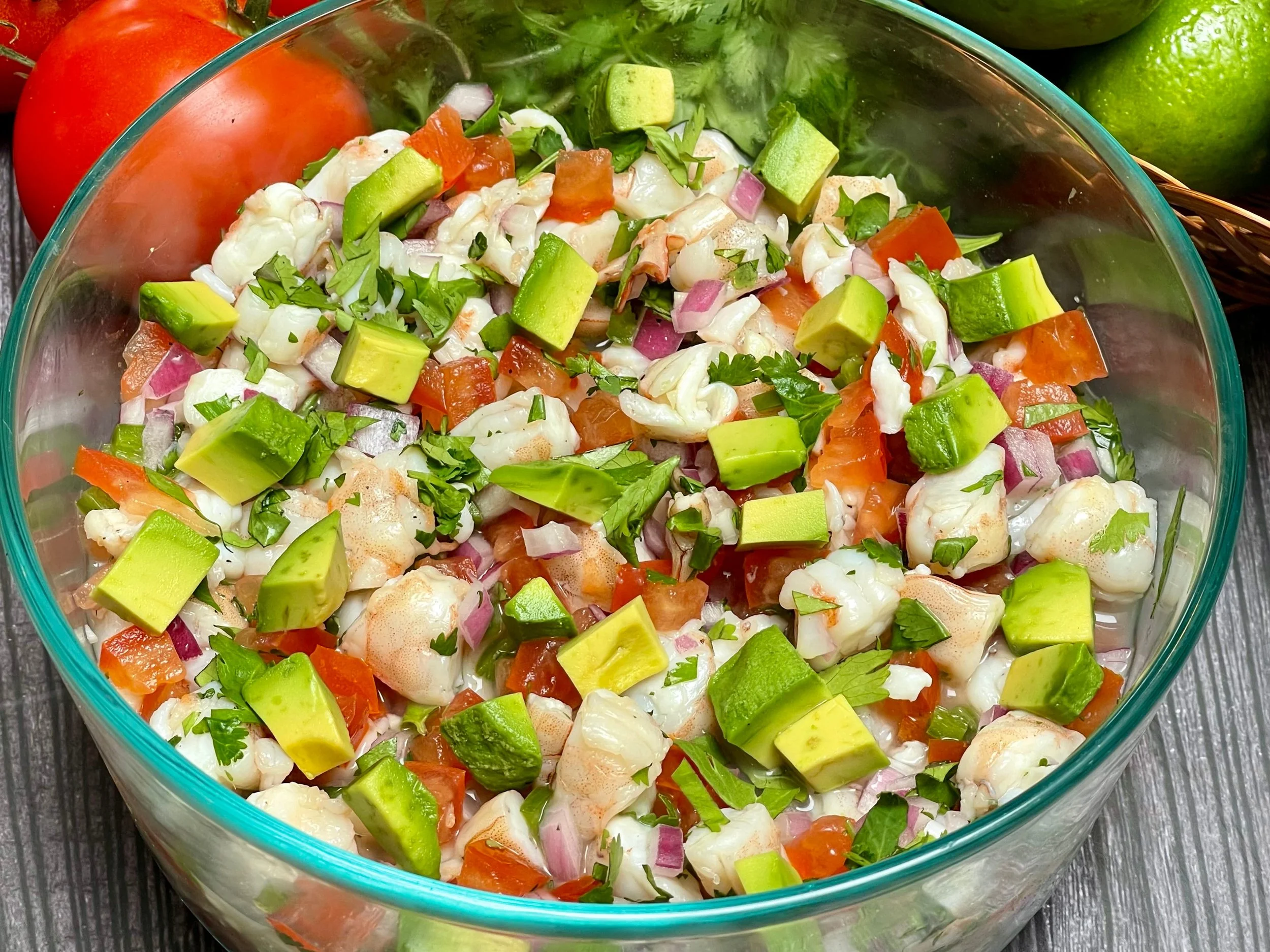
How to Serve Shrimp Ceviche
Mexican shrimp ceviche is refreshing on warm days, making it a great idea for cookouts. It travels well, so it’s also an ideal potluck dish. In addition, it’s a great prepare-ahead dish that makes parties or weeknight dinners super easy.
Ceviche is wonderfully versatile when it comes to serving, and honestly, all the following options are delicious.
Chef’s Tip: Use a slotted spoon when serving so that portions aren’t overly wet with citrus juices.
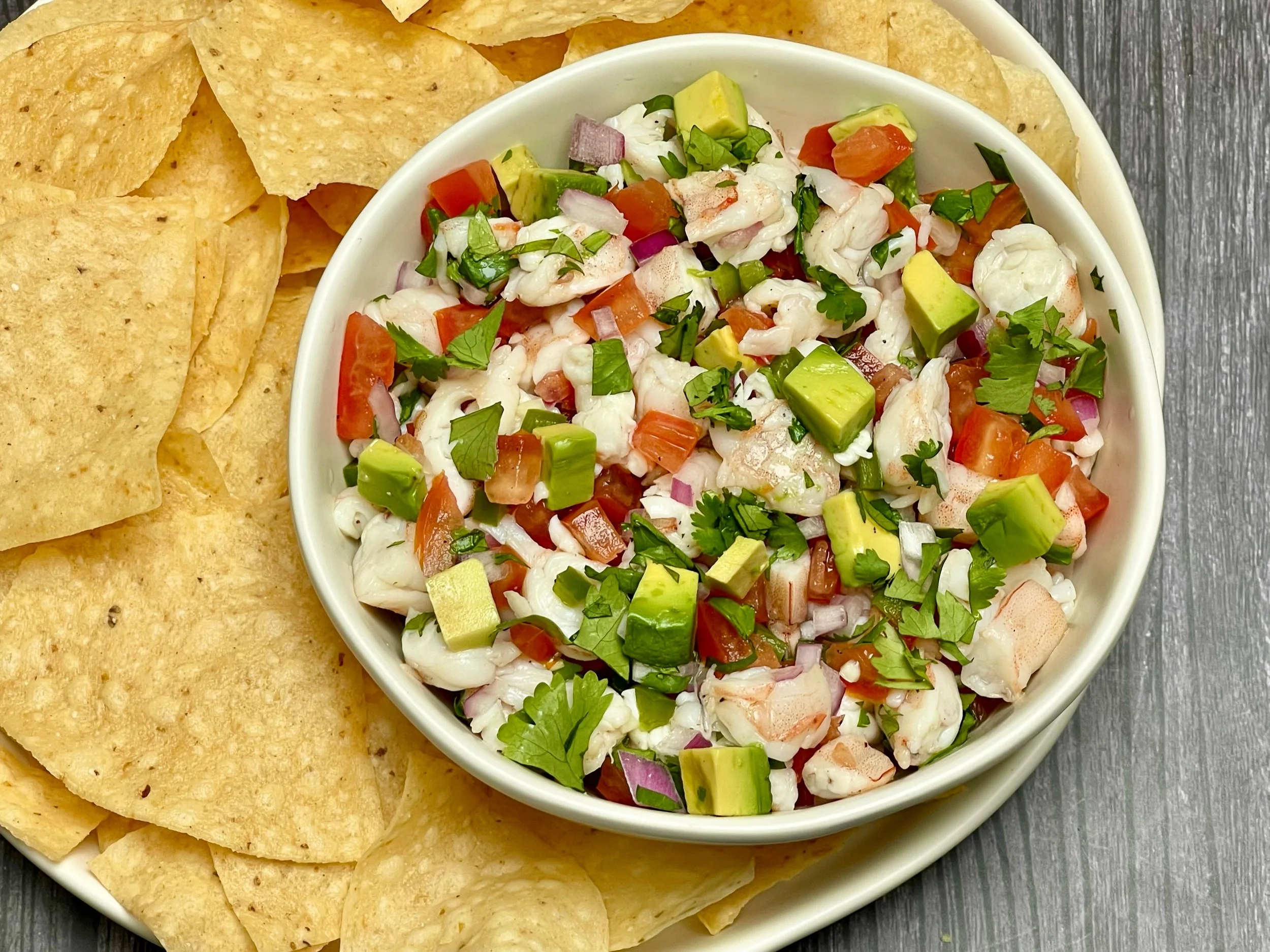
Appetizer
A big bowl of tortilla chips is shrimp ceviche’s best friend. Serving them together is the most casual, crowd-pleasing way to enjoy this easy Mexican dish. Pile the ceviche into a big bowl, set out a basket of thick, sturdy tortilla chips, and let everyone scoop away.
Enhance your party snacks by adding a bowl of guacamole, Mexican Street Corn Dip, and/or pico de gallo.
You can also try any of these Quick and Easy Appetizer Recipes!
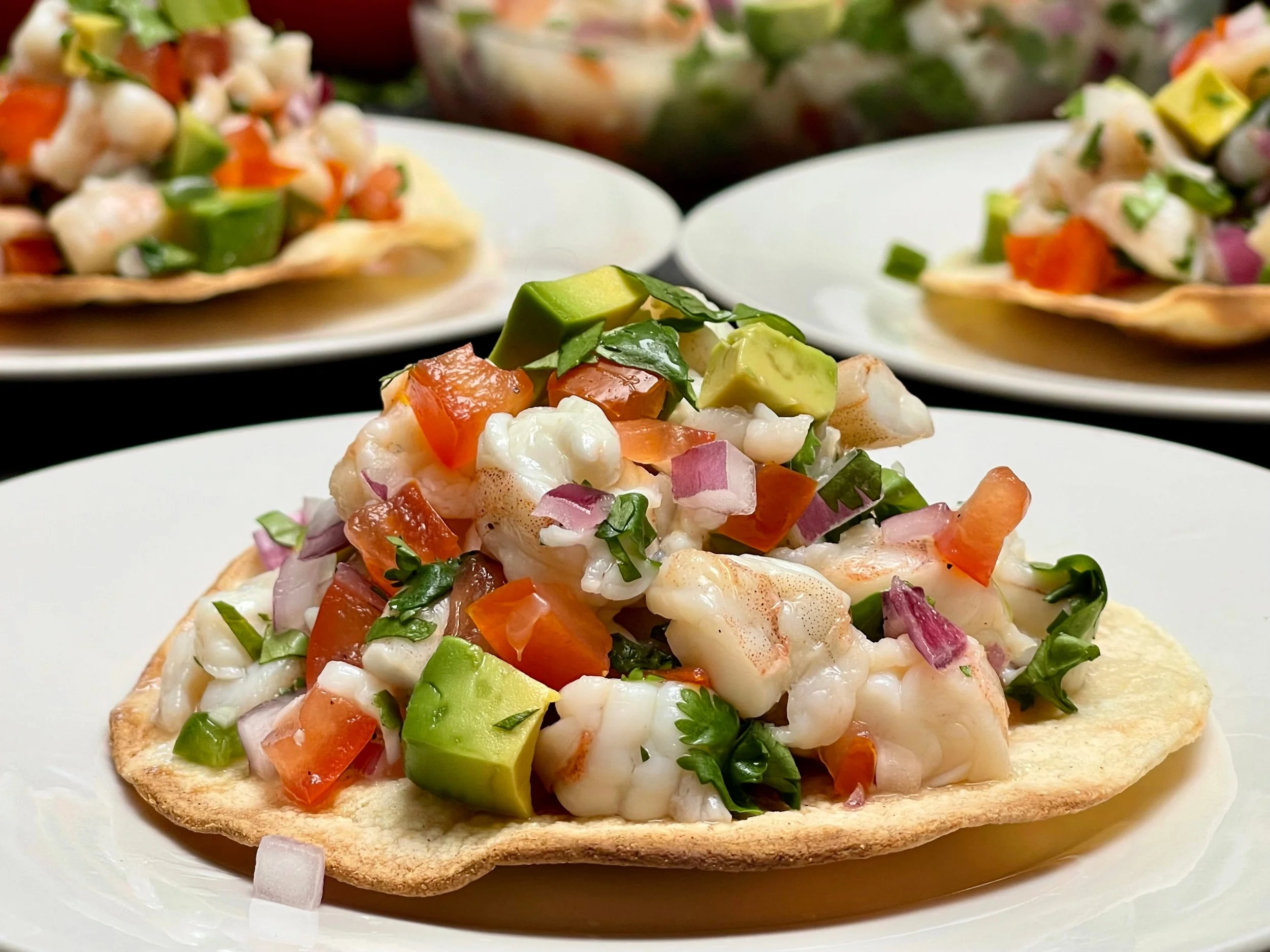
Shrimp Ceviche Tostada
On a tostada shell is how you can turn this ceviche into a proper meal. Use the ceviche solo, or spread a thin layer of refried beans or a scoop of guacamole on crispy tostada shells, then spoon a generous mound of shrimp ceviche on top.
Add a squeeze of lime and a few dashes of hot sauce if you like, and you have something truly special. It’s no wonder that tostada-style ceviche is a staple at seafood restaurants all along the Mexican coast!
Serve with . . .
I love this easy shrimp ceviche recipe on top of Mexican rice, or with a simple green salad.
It’s also wonderful alongside other light Mexican dishes like Mexican Street Corn (Elote), Mexican Street Corn Pasta Salad, cheese quesadillas, or even a little carne asada.
Try more Easy Mexican Recipes!
Drink with . . .
For drinks, nothing beats an ice-cold agua fresca, a classic margarita on the rocks, or an ice-cold Mexican beer with a squeeze of lime.
Frequently Asked Questions
Can I make shrimp ceviche ahead of time?
Yes—with a small caveat. You can marinate the shrimp (Steps 1 through 4) up to 24 hours in advance and keep them covered in the refrigerator. Wait to add the tomatoes, cilantro, and avocado until about 30 minutes before serving so they stay fresh and vibrant. The avocado in particular should always be added at the very last moment.
How long does shrimp ceviche last in the refrigerator?
I find shrimp ceviche is best eaten within about 8 hours after it’s made, but it will keep in an airtight container in the refrigerator for up to 2 days. After that, the vegetables begin to soften and the flavors become muddled.
If you’re storing leftovers, press a piece of plastic wrap directly onto the surface of the ceviche before sealing the container to help prevent the avocado from browning.
Can you freeze shrimp ceviche?
Freezing is not recommended for this recipe. Ceviche relies on the fresh, bright flavors and firm textures of its ingredients—freezing will cause the shrimp to become rubbery, the tomatoes to turn mushy, and the avocado to discolor and break down completely.
Make only as much ceviche as you plan to eat within a day or two. If you have leftover ceviche, use it to make shrimp tacos or burritos the next day.
Can I reuse the citrus marinade (the “leche de tigre”)?
The citrus liquid left over from marinating the shrimp is called leche de tigre (“tiger’s milk”) in Latin American ceviche tradition, and it is absolutely delicious. You can sip it as a shot—it’s briny, tangy, and packed with flavor—or use it as a base for a ceviche cocktail.
However, because it has been in contact with raw shrimp, you should not reuse it as a marinade for other foods, and it should be consumed the same day it’s prepared.
Is the shrimp actually cooked in ceviche?
This is one of the most common ceviche questions, and the short answer is: It depends on how you define “cooked.” The acid in the lime and lemon juice denatures the proteins in the shrimp, causing them to firm up and turn opaque in the same way that heat does.
However, acid marination does not kill bacteria the way heat cooking does. For this reason, it’s important to use the freshest, highest-quality shrimp possible, and people who are pregnant, immunocompromised, or otherwise medically vulnerable may want to use shrimp that has been briefly poached or blanched.
Can I use pre-cooked shrimp?
You can, but the result will be quite different. Pre-cooked shrimp don’t absorb the citrus marinade in the same way and won’t develop the same bright, fresh flavor as raw shrimp that have been acid-marinated.
If you do use pre-cooked shrimp, marinate them in the citrus juice for no more than 30 minutes—any longer and the texture will become tough and rubbery.
Can I use a different type of seafood?
Absolutely. This Mexican-style ceviche recipe works wonderfully with fresh white fish (tilapia, sea bass, and halibut are all excellent choices), bay scallops, or a mix of shrimp and fish.
Adjust the marinating time based on the thickness of the seafood you’re using: Diced fish typically need 45 minutes to an hour to denature completely.
How spicy is this ceviche?
With the jalapeño seeded, this ceviche has a mild to moderate heat level that most people will find very approachable. If you want more heat, leave some of the seeds in or add a second jalapeño. If you prefer no heat at all, omit the jalapeño and add a few extra tablespoons of fresh lime juice for brightness.