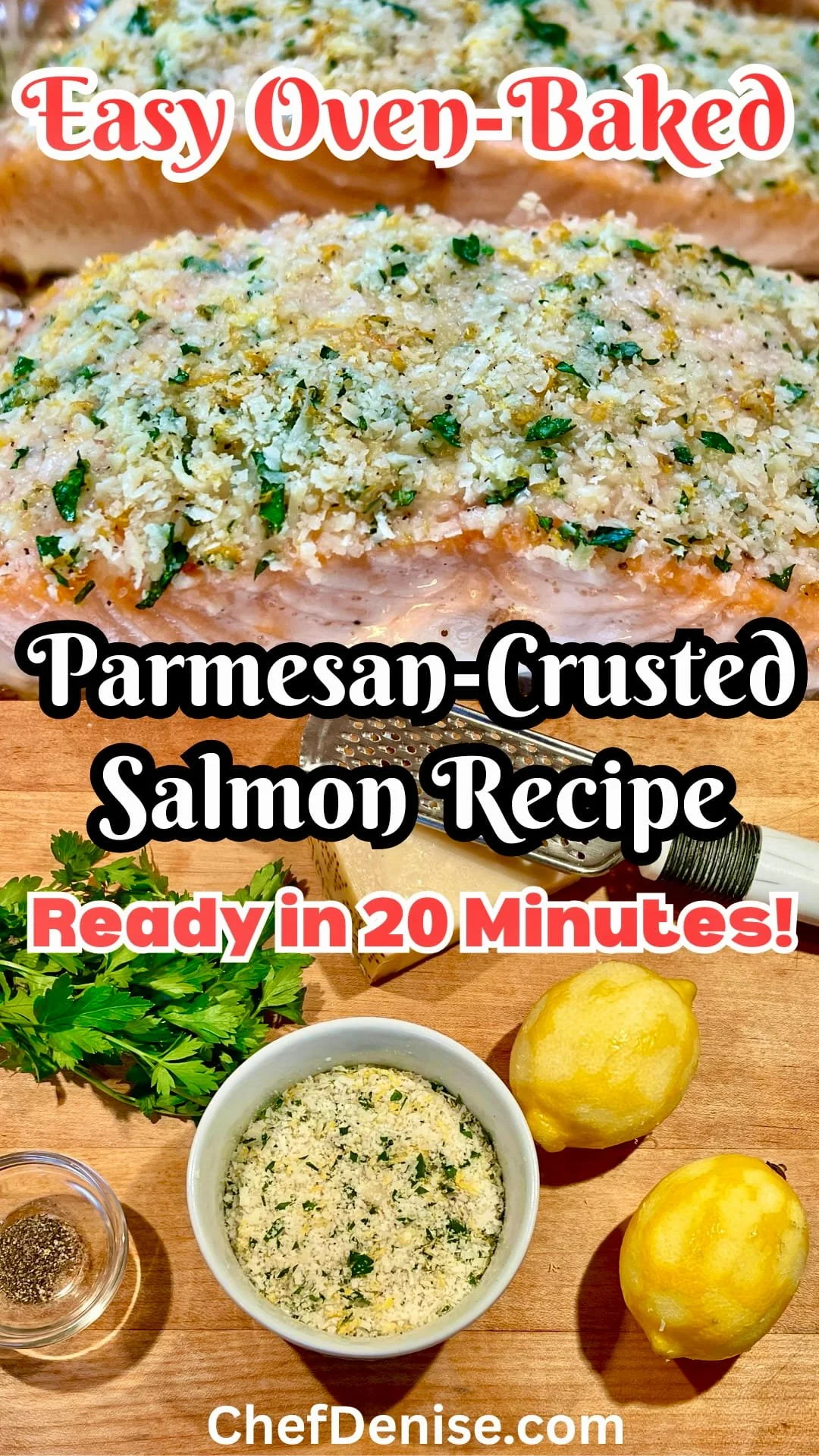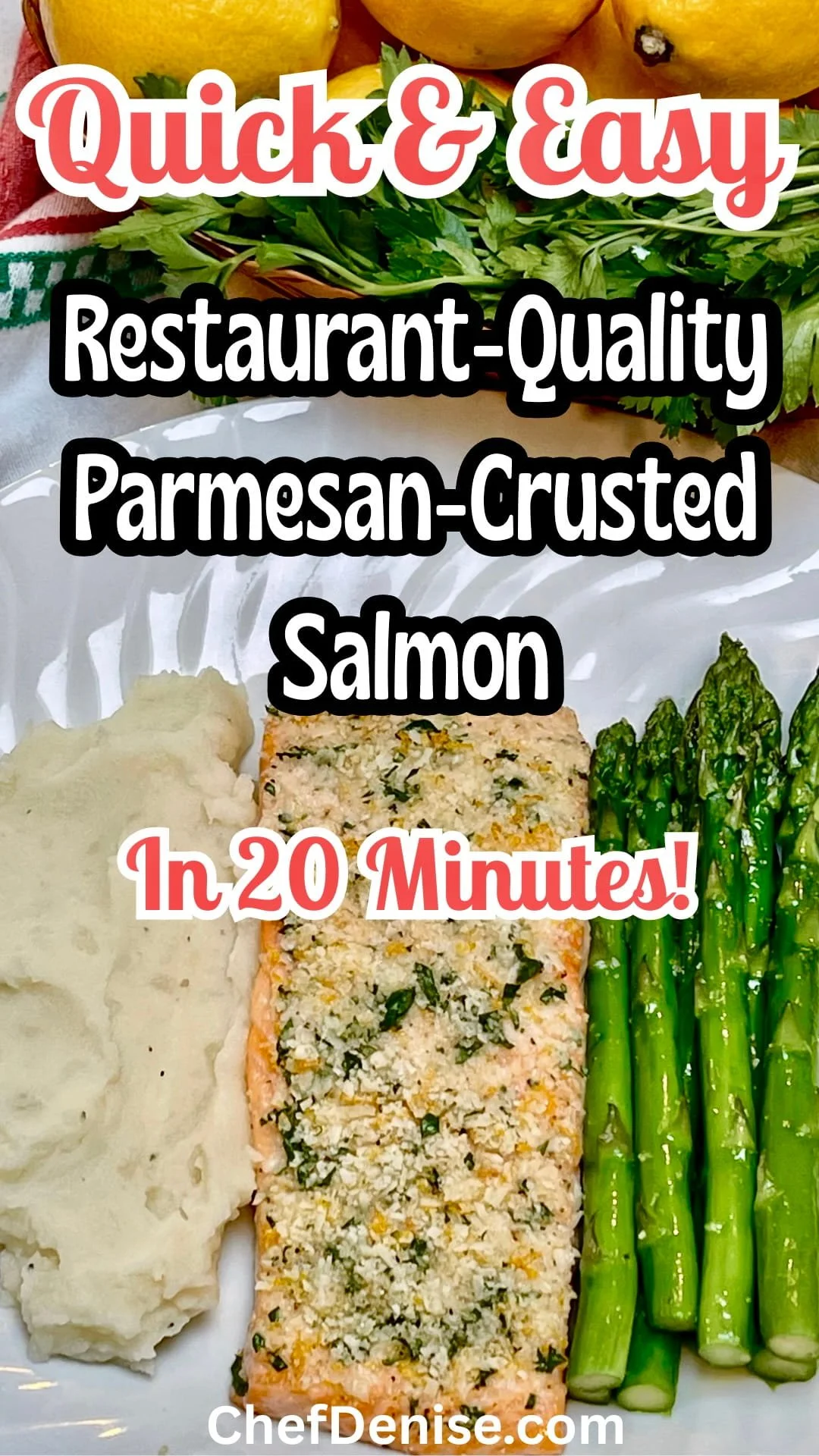
Parmesan-Crusted Salmon: 20-Minute Gourmet Recipe
Let me tell you something about salmon: Most people either overcook it into a sad, dry, hockey puck, or they overthink it with ten ingredients it doesn’t need.
This recipe does neither.
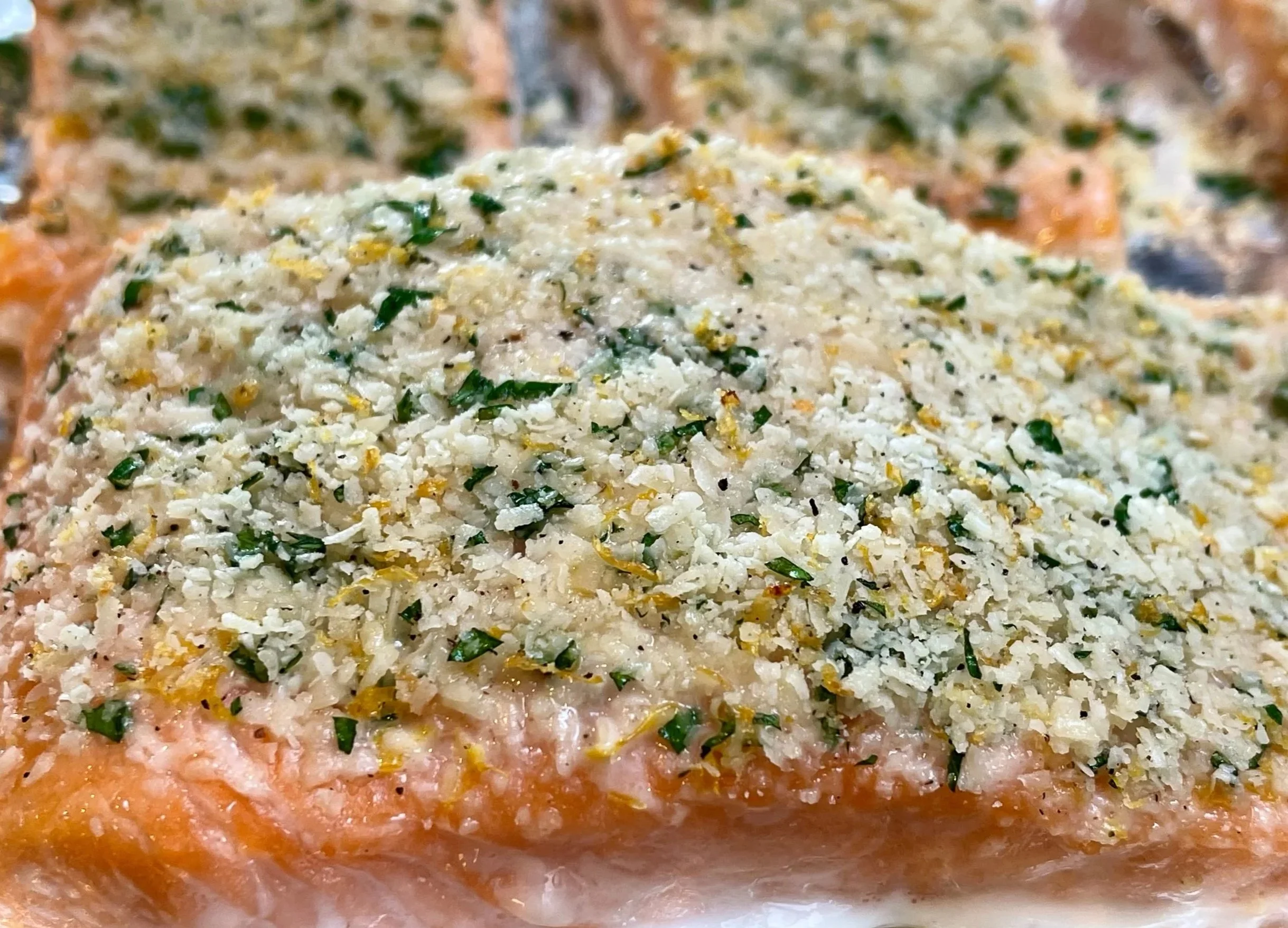
Parmesan-Crusted Salmon is exactly what it sounds like: flaky, buttery salmon topped with a golden, savory crust of Parmigiano Reggiano, fresh lemon zest, cracked pepper, and parsley. Then it’s baked until the cheesy topping turns crisp while the salmon stays perfectly tender.
It’s the kind of dish that looks like it came from a really nice restaurant. But you only need five ingredients, and it just takes about 10 minutes of actual work to prepare.
I’ve been cooking professionally for more years than I want to admit to. And when I had my personal chef business, this easy salmon recipe was the most requested fish dish from my clients.
I love that it’s impressive without the fuss, providing maximum flavor for minimum effort. It’s what I make for my own family when I want a delicious, nutritious dinner on the table fast.
Here’s why you’re going to love it
It’s fast. It requires only a few minutes of prep and 15 minutes in the oven. From start to finish: 20 minutes.
It’s foolproof. There is no searing, no flipping, no babysitting a pan.
It’s impressive. The golden, crispy, flavorful Parmesan crust makes this salmon dish special enough to serve to guests.
It’s simple. This dish requires only 5 ingredients, most of which you probably already have.
Whether you’re feeding your family on a busy weeknight or plating something a little fancier for a dinner party, this Parmesan-Crusted Salmon delivers every single time.
Main Ingredients for Parmesan-Crusted Salmon
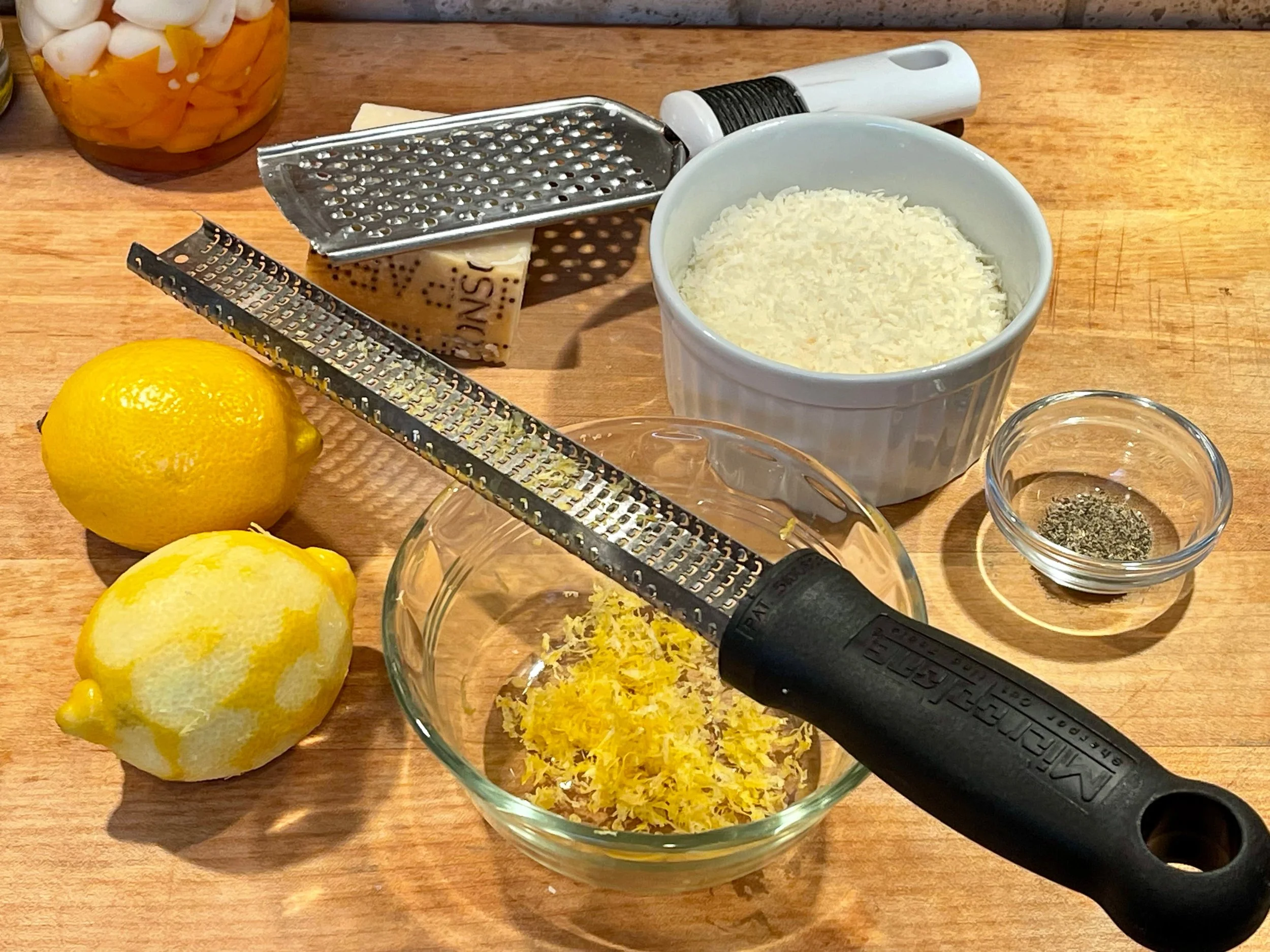
With only 5 simple ingredients, each one has to earn its place in the recipe. Here’s why these ingredients work, how to pick the best versions, and what you can swap in if needed.
Salmon
Salmon is the star here, so it deserves a little attention at the store. I recommend center-cut salmon fillets. These cook more evenly than thin tail pieces because they have a consistent thickness from end to end.
Skin-on or skin-off both work fine for this recipe. Skin-on actually makes cleanup easier since you can leave the skin behind on the foil after baking.
Look for fillets that are firm, moist, and vibrant in color, without any dull, brown, or gray patches.
If you can, buy wild-caught salmon for a firmer texture and deeper flavor. However, good-quality farmed salmon will still give you great results.
Frozen salmon works well too. Just thaw it fully in the fridge and pat it very dry before you start, since excess moisture will keep that Parmesan crust from getting crisp and golden in the oven.
Parmesan Cheese
This is what turns simple baked salmon into something worth writing home about. I always recommend real Parmigiano Reggiano, not the shelf-stable canister stuff.
Parmigiano Reggiano is the king of Italian cheeses! It has a nutty, savory depth and it melts into a beautifully crisp, golden crust in the oven.
Pre-shredded or powdered “parmesan” just doesn’t behave the same way and tends to turn greasy instead of crispy. For the best texture, buy a block of Parmigiano Reggiano and grate it yourself right before using.
If you want a substitute, Grana Padano is the closest match and works beautifully. Pecorino Romano is another option, though it’s saltier and sharper, so you may want to go a little lighter on the black pepper if you use this cheese.
Lemon
Lemon does double duty in this recipe. The lemon juice gets squeezed directly over the salmon before baking, which brightens the fish and helps season it from the inside out.
The zest gets mixed right into the Parmesan crust, adding a punch of citrus that balances the richness of the cheese.
Choose a lemon that feels heavy for its size and has smooth, slightly glossy skin: These traits are usually a reliable sign that the lemon is juicy.
Always zest your lemon before you juice it. The reason is simple: It’s nearly impossible to zest a lemon after it’s been squeezed flat.
In a pinch, you can substitute lime for a slightly different but still delicious citrus note.
You can also serve your salmon with additional lemon wedges on the side if desired.
Fresh Italian Parsley
Fresh parsley adds a pop of color and a subtle, herby freshness that keeps this dish from tasting too heavy or one-note. Flat-leaf (Italian) parsley is my go-to since it has a more robust flavor than curly parsley and chops more easily.
Look for bunches that are bright green and perky, not wilted or yellowing. If you don’t have parsley on hand, fresh dill, basil, or chives make good substitutes, though the flavor profile will shift slightly.
I don’t recommend dried parsley here; it doesn’t have nearly the same fresh, bright flavor that fresh parsley provides and this dish needs.
Black Pepper
A small amount of black pepper adds warmth and a gentle bite that keeps the Parmesan crust from tasting flat. Freshly cracked pepper makes a real difference in a recipe this simple, so if you have a pepper mill, use it.
Pre-ground pepper will work in a pinch, but it loses its aromatic oils quickly and won’t give you quite the same punch of flavor.
Parmesan-Crusted Salmon Recipe
Prep time: 5–10 minutes
Cook time: 12–15 minutes
Total time: About 20–25 minutes
Serves: 4
Ingredients
1½ lbs. salmon
1 lemon
1 cup grated Parmesan cheese
¼ teaspoon black pepper
1½ tablespoons chopped Italian parsley
Instructions
1. Preheat your oven to 375°F. Line a rimmed baking sheet with aluminum foil. If your salmon has skin, there is no need to use non-stick spray or olive oil on the foil. If you’re using skinless salmon, go ahead and use a little spray or oil. Also, you can use parchment paper instead of aluminum foil for skinless salmon.
2. Cut the salmon into 4 even portions. If your salmon has skin, pat it very dry with paper towels. (This helps the fish cook evenly and makes the skin easy to remove after baking.) Then arrange the portions skin-side down directly on the foil.
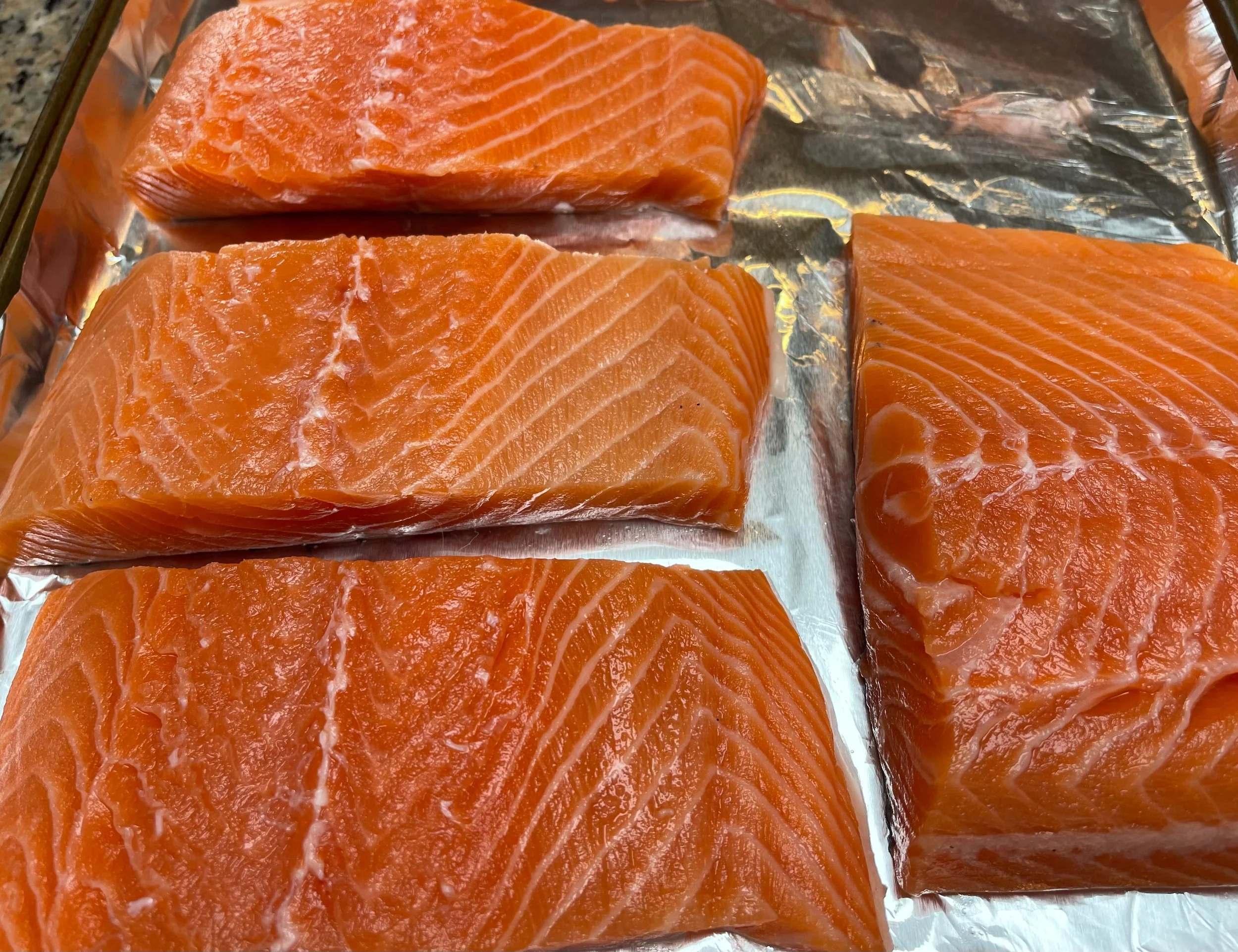
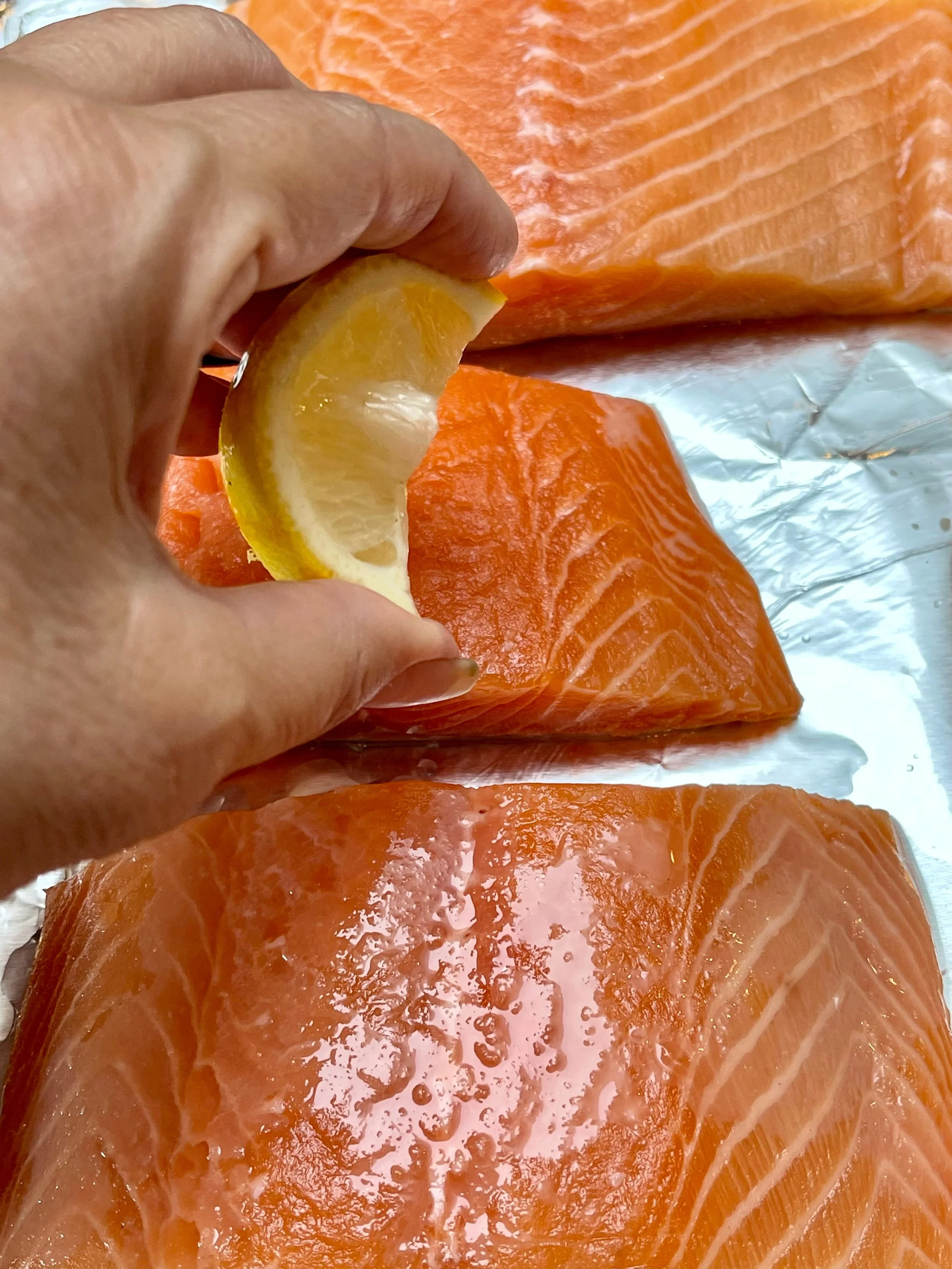
3. Zest the lemons and set the zest aside. Cut one lemon in half or quarters, and squeeze the juice evenly over the top of the salmon portions.
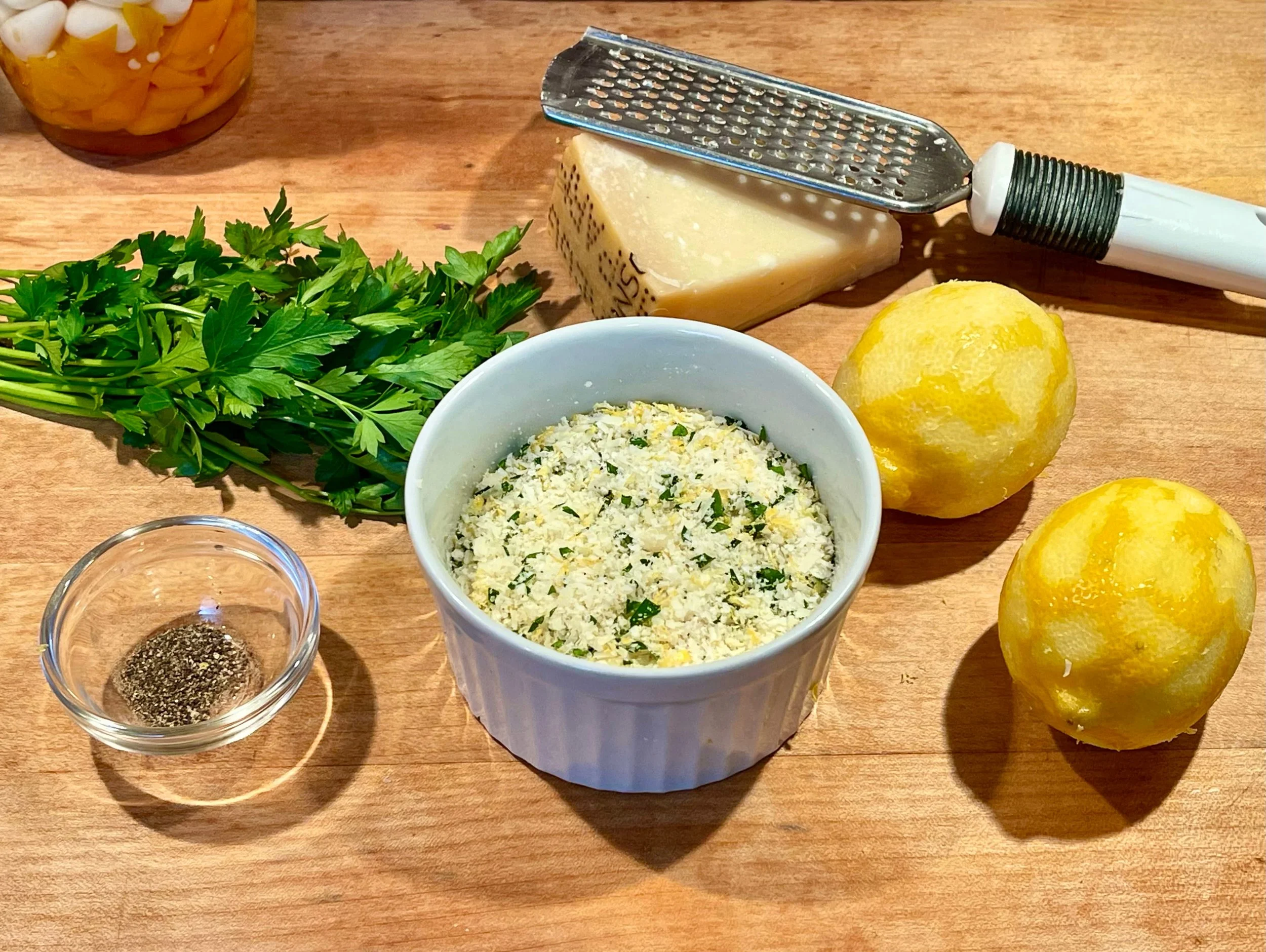
4. In a small mixing bowl, make the crust by mixing together the Parmesan cheese, black pepper, chopped parsley, and reserved lemon zest until everything is well combined.
5. Divide the Parmesan mixture evenly among the 4 salmon portions.
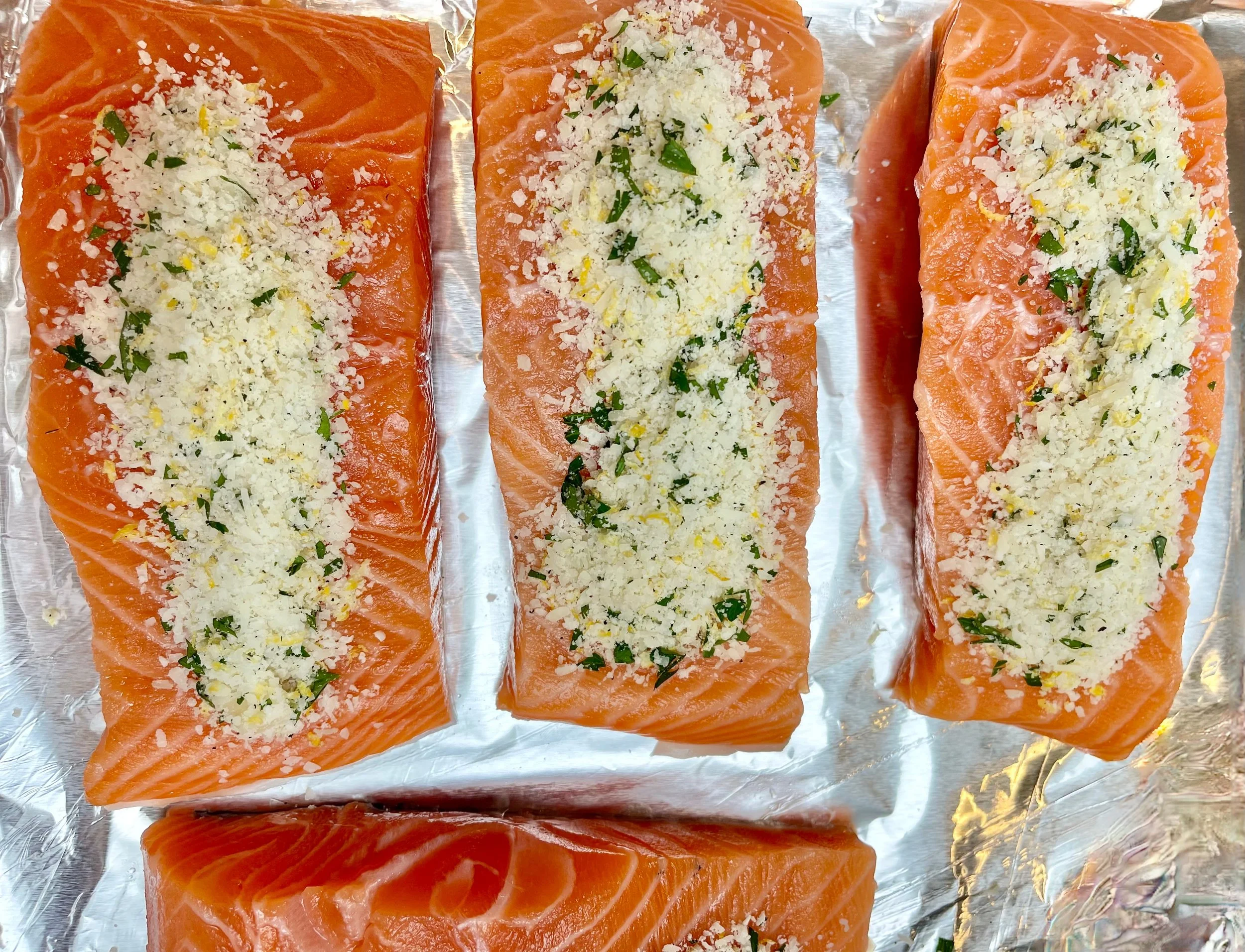
6. Press and spread the crust evenly over the top of each piece of salmon, covering the surface completely.
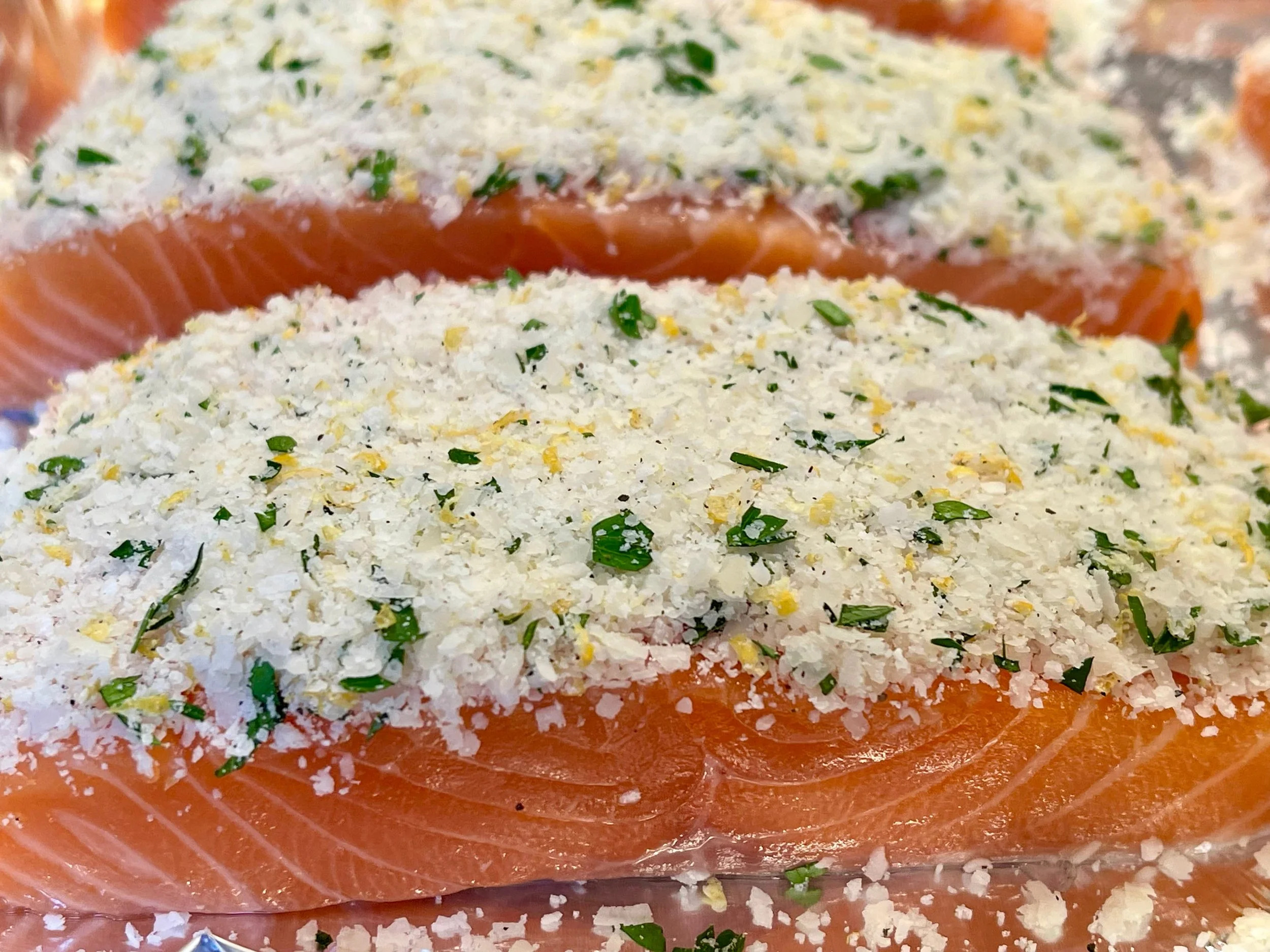
7. Bake for 12–15 minutes, or until the salmon flakes easily with a fork and the crust is golden brown. For an extra-crispy topping, broil for the last 1–2 minutes, watching closely so the crust doesn’t burn.
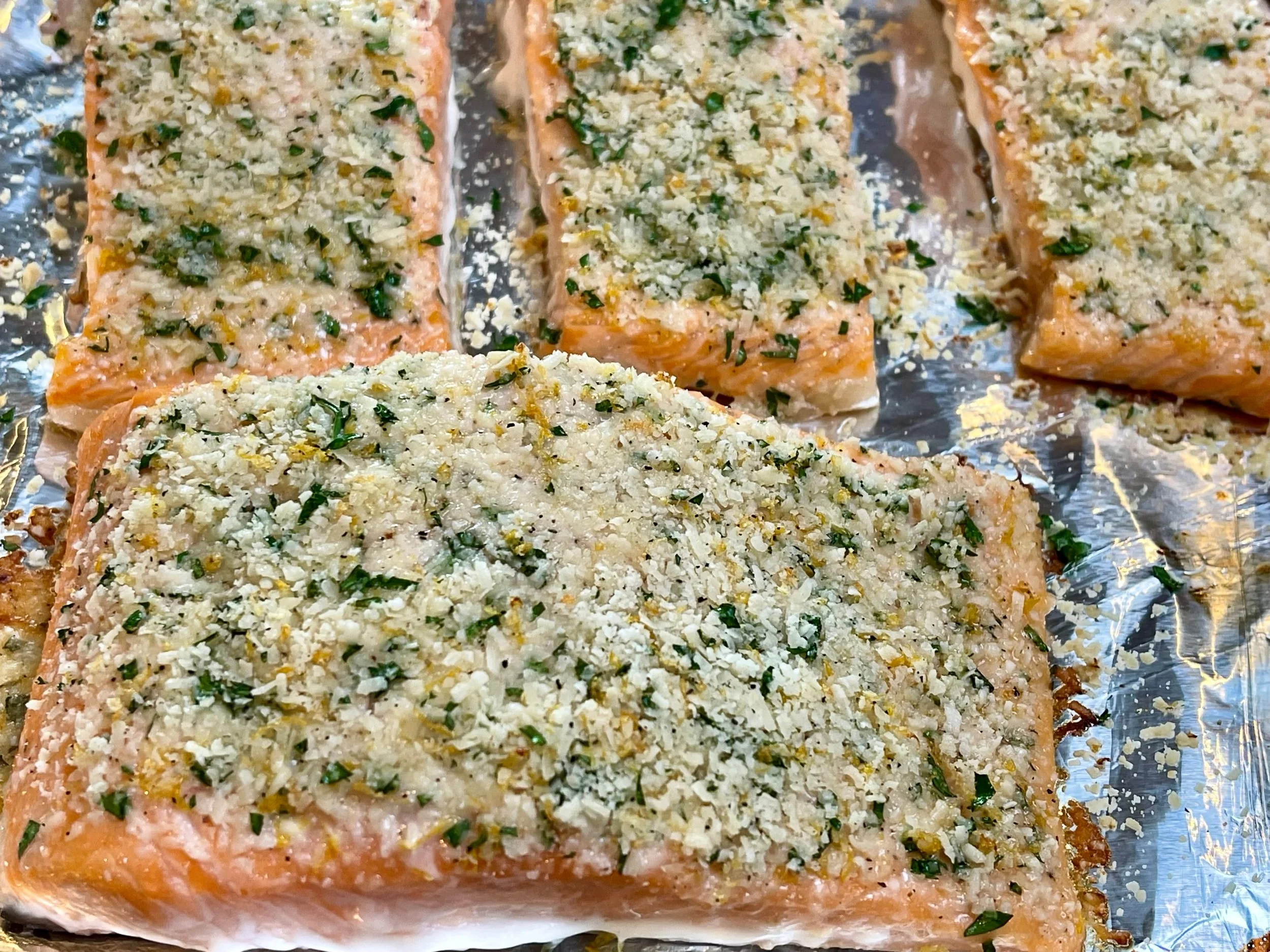
8. Remove salmon from the oven and serve immediately, with an extra lemon wedge on the side if you like. If you need to remove the skin, use a thin fish spatula and get between the fish and the skin; the skin should come right off.
How to Serve Parmesan-Crusted Salmon
This recipe is one of those rare dishes that works just as well for dinner on busy weeknights as it does for dinner parties or special occasions. Here’s how I like to round out the plate depending on the occasion.
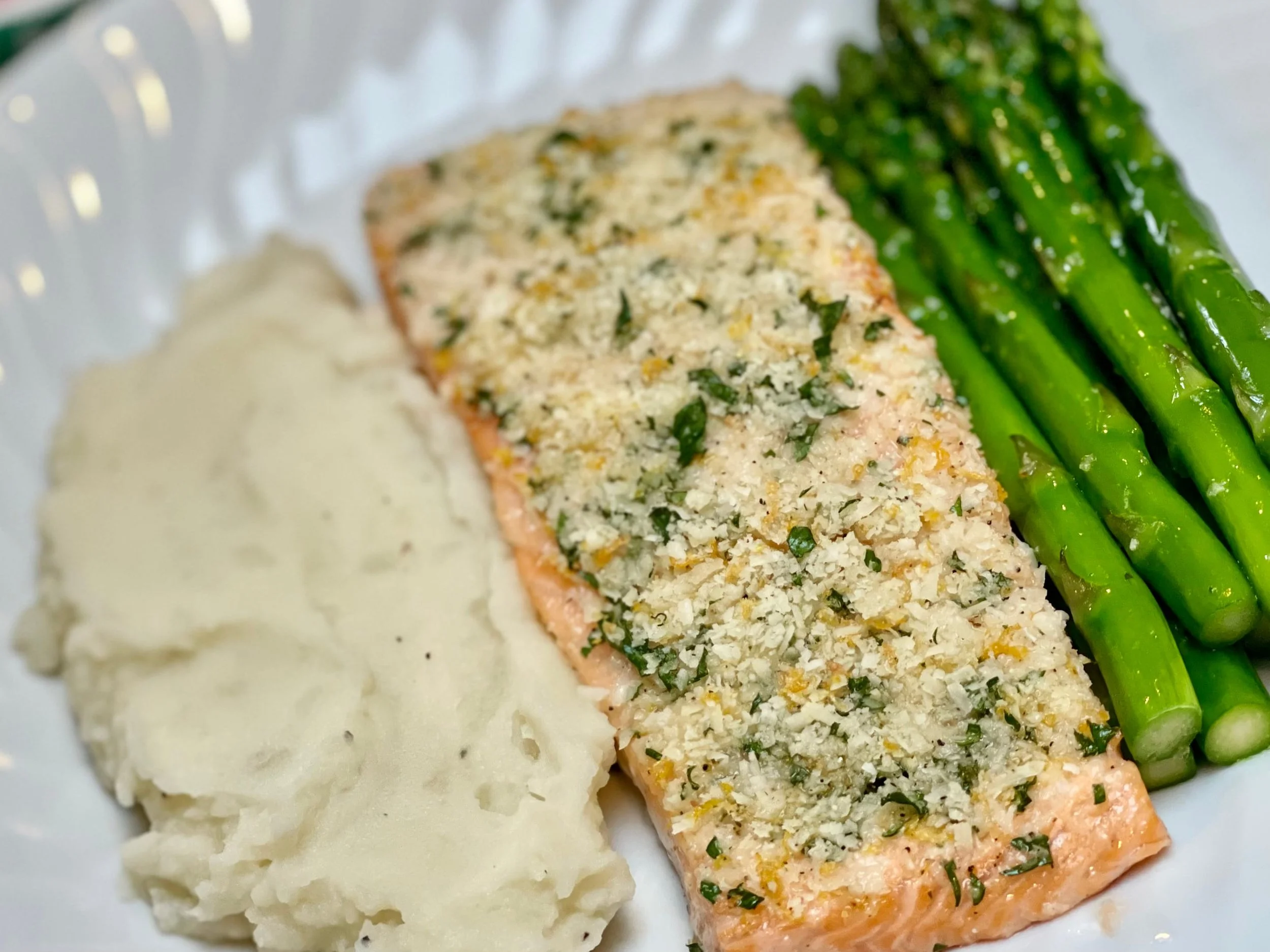
For an easy weeknight dinner, keep it simple and low-effort. Complement the salmon with any of the following:
A big green salad with a light vinaigrette
Steamed or roasted rice
Buttery or lo-cal mashed potatoes
Simple garlic butter pasta or lemon pasta
Roasted vegetables kebabs
For a dinner party, dress things up a bit. Consider serving any of the following:
Creamy risotto or garlic mashed potatoes
Roasted ratatouille
A crisp arugula salad with shaved Parmesan and lemon vinaigrette (it echoes the flavors in the crust beautifully)
Crusty bread and a chilled glass of white wine—a Sauvignon Blanc or unoaked Chardonnay pairs perfectly with the lemon and Parmesan
Whatever side dishes you choose, this dish is so delicious, it can make any night feel a little more special.
Frequently Asked Questions
Can I make Parmesan-Crusted Salmon ahead of time?
Yes. You can prep the Parmesan crust mixture up to 2 days in advance and store it in an airtight container in the fridge. You can also portion and season the salmon ahead of time, then top it with the crust and bake right before serving.
I don’t recommend fully baking it too far in advance, since salmon is best enjoyed fresh out of the oven while the crust is still crisp.
How do I store leftover Parmesan-Crusted Salmon?
Let any leftovers cool completely, then store them in an airtight container in the refrigerator for up to 3 days.
To reheat salmon, warm in a 350°F oven for about 10 minutes, or until heated through. If microwaving, cut salmon into small pieces and heat on medium power at 30-second intervals, rotating pieces in-between.
I actually think this salmon is still pretty yummy the next day cold out of the fridge or at room temperature.
Can I freeze Parmesan-Crusted Salmon?
You can, though the texture of the crust is best fresh. If you’d like to freeze it, let the cooked salmon cool completely, wrap each portion tightly in plastic wrap, then place in a freezer-safe bag or container for up to 2 months.
Thaw overnight in the refrigerator, then reheat gently in the oven. For the best texture, I actually recommend freezing the raw salmon (without the crust) and making the Parmesan topping fresh when you’re ready to cook.
Can I use frozen salmon for this recipe?
Absolutely. Just make sure it’s fully thawed in the refrigerator before you start, and pat it very dry with paper towels. Extra moisture will prevent the Parmesan crust from getting crisp and golden in the oven.
Can I use the crust mixture for other dishes?
Definitely. This Parmesan, lemon, and herb topping is delicious on baked chicken, roasted vegetables like zucchini or asparagus, or even sprinkled over pasta. Make a double batch and keep the extra in the fridge for up to 3 days.
What temperature should salmon be cooked to?
Salmon is done when it reaches an internal temperature of 145°F and flakes easily with a fork. If you prefer it slightly more medium in the center, you can pull it out of the oven at around 125–130°F, keeping in mind it will continue to cook slightly even after it is out of the oven.
Can I make this recipe with a different fish?
Yes. Salmon is my favorite fish for this recipe, but this crust is also tasty on other firm, mild fish like halibut, cod, or trout. Adjust the baking time slightly based on the thickness of the fillet you’re preparing.
Is Parmesan-Crusted Salmon healthy?
Salmon is an excellent source of protein and omega-3 fatty acids, and this recipe keeps things light. There’s no butter, mayonnaise, or breadcrumbs weighing down the crust, just cheese, lemon, and herbs. This preparation is a great option if you’re looking for a dish that feels indulgent but is still nutritious.
Check out these other Amazing fish REcipes:
Fish Francaise
Blackened Fish Tacos
Salmon & Pesto Pasta
Sesame & Wasabi Crusted Salmon
Hawaiian Tilapia With Toasted Coconut
Best Smoked Fish Dip
Smoked Whitefish Crostini
Banh Mi Salmon Sandwich